Rising energy costs have prompted millions of American households to reassess their energy habits. With the average U.S. family spending approximately $2,000 annually on utility bills, according to the U.S. Department of Energy, finding ways to reduce consumption has become both an environmental priority and a financial necessity. This comprehensive guide explores proven strategies that homeowners and renters can implement to lower their energy usage, reduce monthly expenses, and contribute to a more sustainable future.
Understanding Home Energy Waste
Before implementing changes, it is essential to understand where energy waste occurs in most households. The U.S. Energy Information Administration reports that residential buildings account for nearly 21% of total energy consumption in the United States, making household efficiency a significant factor in national energy goals.
Heating and cooling systems represent the largest portion of home energy use, accounting for approximately 48% of the average household’s energy consumption. Water heating follows at around 18%, while lighting and appliances combined account for an additional 20-25%. Understanding these percentages helps homeowners prioritize their efficiency efforts for maximum impact.
Many households unknowingly waste energy through inefficient practices, outdated equipment, and air leaks. The Environmental Protection Agency estimates that the average home has enough air leaks to equal the size of a basketball. These leaks force heating and cooling systems to work harder, increasing energy waste and utility costs substantially.
Heating and Cooling Optimization
Heating and cooling represent the most significant opportunity for energy savings in most homes. The Department of Energy reports that proper thermostat management can save homeowners up to 10% annually on heating and cooling costs.
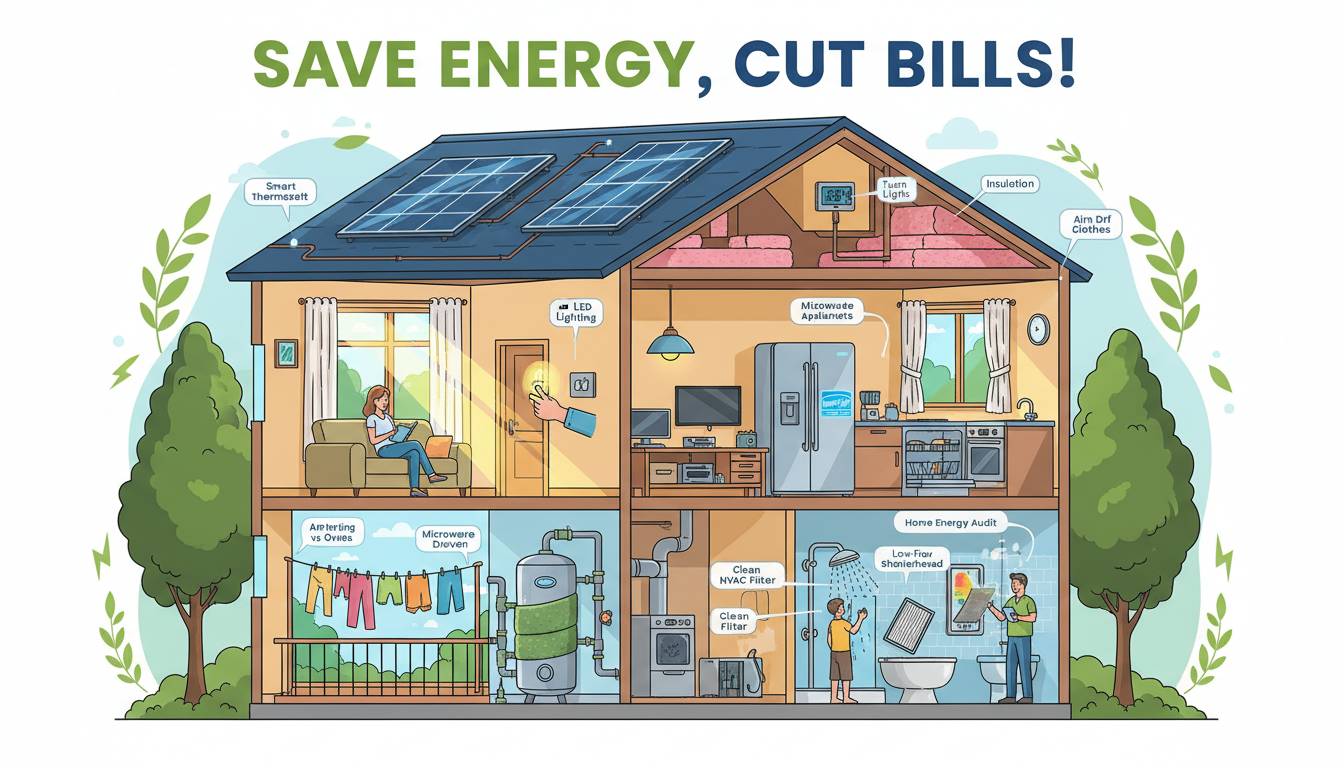
Installing a programmable or smart thermostat allows homeowners to automatically adjust temperatures based on their schedules. These devices can reduce heating costs by approximately 8-10% and cooling costs by a similar margin. Smart thermostats learn household patterns and optimize temperature settings automatically, providing convenience alongside savings.
Regular HVAC maintenance ensures systems operate at peak efficiency. Replacing air filters every 1-3 months prevents systems from working harder than necessary. The EPA recommends scheduling professional HVAC inspections annually to identify and address efficiency issues before they escalate.
Ceiling fans provide an affordable way to improve comfort while reducing reliance on air conditioning. Ceiling fans consume approximately 10% of the energy used by central air conditioning units. However, it is important to remember that ceiling fans cool people, not rooms, so turning them off when leaving a room prevents unnecessary energy use.
Lighting and Electrical Solutions
Lighting accounts for roughly 10-15% of residential energy consumption in typical U.S. households. Switching to more efficient lighting options yields immediate and noticeable savings.
LED bulbs use up to 75% less energy than traditional incandescent bulbs and last 25 times longer. While LED bulbs have a higher upfront cost, the U.S. Department of Energy estimates that switching all bulbs in a home can save approximately $75 per year in energy costs.
Natural light utilization reduces artificial lighting needs during daylight hours. Opening curtains and blinds on sunny winter days allows solar heat to warm interior spaces while reducing heating demands. Conversely, blocking direct sunlight during summer months helps keep homes cooler naturally.
Unplugging devices and chargers when not in use eliminates phantom energy draw. The U.S. Department of Energy reports that standby power accounts for 5-10% of residential energy use. Using power strips with on/off switches makes it easy to disconnect multiple devices simultaneously.
Water Heating Efficiency
Water heating is typically the second-largest energy expense in American homes, accounting for approximately 18% of household energy consumption. Several strategies can reduce water heating costs significantly.
Lowering the water heater thermostat to 120 degrees Fahrenheit provides comfortable hot water while reducing energy waste. The Department of Energy recommends this temperature setting for most households, as higher temperatures increase energy costs without providing significant additional comfort.
Insulating hot water heaters and pipes reduces heat loss during storage and distribution. Water heater blankets cost approximately $20-40 and can reduce standby heat loss by 25-45%, according to Energy Star recommendations. Insulating the first six feet of hot water pipes leading from the water heater delivers additional savings.
Reducing water usage directly decreases energy consumption for heating. Installing low-flow showerheads can reduce water usage by 40% or more while still providing satisfying water pressure. The EPA’s WaterSense program certifies products that meet efficiency and performance standards.
Tankless water heaters heat water on demand rather than maintaining a constant reservoir of hot water. While the initial investment is higher, tankless units can be 24-34% more efficient than traditional tank heaters for households that use less than 41 gallons daily, according to Energy Star.
Appliance Management Strategies
Household appliances represent a substantial portion of energy consumption, and proper management can yield significant savings.
Energy Star certified appliances meet strict efficiency guidelines established by the EPA and Department of Energy. Energy Star refrigerators use approximately 15% less energy than non-certified models, while Energy Star dishwashles use approximately 3.5 gallons per cycle compared to the standard 4.25 gallons.
Proper refrigerator operation ensures optimal efficiency. Keeping coils clean and ensuring door seals are tight prevents cold air from escaping. The Department of Energy recommends keeping refrigerators at 35-38 degrees Fahrenheit and freezers at 0 degrees Fahrenheit for optimal performance and food preservation.
Running dishwashers and washing machines with full loads maximizes energy efficiency per cycle. Using cold water for laundry when appropriate eliminates water heating energy entirely. Most modern detergents perform effectively in cold water, making this switch practical for most clothing types.
Building Envelope and Insulation
The building envelope—walls, windows, doors, and insulation—determines how effectively a home maintains comfortable temperatures. Improving the envelope reduces the workload on heating and cooling systems.
The Department of Energy reports that proper insulation can reduce heating and cooling costs by an average of 30%. attic insulation is particularly important because heat rises, and inadequate attic insulation allows significant energy loss. Most homes in the U.S. benefit from attic insulation of R-38 to R-60, depending on climate zone.
Weatherstripping and caulking seal air leaks around windows, doors, and other openings. These relatively inexpensive improvements can save homeowners 10-20% on energy bills annually, according to the EPA. Common leak locations include electrical outlets, window frames, and where walls meet ceilings.
Window treatments provide additional insulation control. Cellular shades, also known as honeycomb shades, trap air in their cellular structure, providing insulation values of R-10 or higher. During summer months, reflective window films can reduce solar heat gain significantly.
Behavioral Changes That Make a Difference
Technical solutions work best when combined with conscious energy habits. Simple behavioral changes amplify the impact of efficiency investments.
Developing awareness of energy usage patterns helps identify opportunities for savings. The Department of Energy recommends creating a checklist of energy-wasting habits to address systematically. Turning off lights when leaving rooms, unplugging unused devices, and adjusting thermostat settings when away from home require minimal effort but deliver meaningful savings.
Efficient cooking practices reduce kitchen energy consumption. Using microwave ovens rather than conventional ovens consumes significantly less energy. Covering pots while cooking reduces cooking time by retaining heat more effectively.
Laundry drying practices significantly impact energy consumption. Air drying clothes, either on a clothesline or drying rack, eliminates dryer energy use entirely. When using a dryer, cleaning the lint trap after each load improves efficiency and safety.
Government Programs and Incentives
Federal, state, and local governments offer various programs to support household energy efficiency improvements.
The Department of Energy’s Weatherization Assistance Program provides free weatherization services to qualifying low-income households. This program includes insulation, air sealing, and efficient appliance upgrades.
Many states offer rebates and tax incentives for energy-efficient home improvements. The Database of State Incentives for Renewables and Efficiency provides comprehensive information about available programs in each state.
Utility companies frequently offerrebates for purchasing Energy Star appliances, smart thermostats, and other efficiency improvements. Checking with local utilities reveals available incentives that can offset upgrade costs.
Conclusion
Reducing energy consumption at home requires a multifaceted approach combining equipment upgrades, structural improvements, and conscious behavioral changes. While the initial investment for some improvements may seem substantial, the long-term savings on utility bills typically provide attractive returns on investment. Beginning with simple, low-cost changes such as adjusting thermostat settings and switching to LED bulbs creates immediate momentum toward greater efficiency. Homeowners who systematically address heating, cooling, water heating, and appliance usage can realistically reduce their energy bills by 30% or more while contributing to environmental sustainability. The combination of available government incentives and steadily rising energy costs makes energy efficiency improvements more accessible and financially attractive than ever before.
Frequently Asked Questions
What is the most effective way to reduce energy consumption at home?
The most effective approach combines multiple strategies, with heating and cooling optimization typically offering the greatest savings since these systems account for nearly half of home energy use. Installing a smart thermostat, improving insulation, and sealing air leaks together can reduce energy bills by 30% or more.
How much can I save by switching to LED light bulbs?
Replacing all incandescent bulbs with LED alternatives can save approximately $75 per year in energy costs, according to the U.S. Department of Energy. LED bulbs also last 25 times longer, reducing replacement costs.
Do smart thermostats really save money?
Yes, smart thermostats typically save 8-10% on heating and cooling costs annually. They learn household schedules and adjust temperatures automatically, optimizing comfort while minimizing energy waste.
What temperature should I set my thermostat to for optimal savings?
The Department of Energy recommends setting thermostats to 68 degrees Fahrenheit when awake during winter and lowering it 7-10 degrees when away. In summer, 78 degrees Fahrenheit provides comfortable cooling while maximizing efficiency.
Are government rebates available for energy-efficient home improvements?
Many federal, state, and utility programs offer rebates and tax incentives for energy efficiency upgrades. Programs include the Weatherization Assistance Program for qualifying households and various state-level rebate programs for appliances and home improvements.
How much energy do appliances use when turned off?
Standby power, also called phantom energy, accounts for 5-10% of residential energy use. Unplugging devices or using power strips with on/off switches eliminates this unnecessary energy consumption.