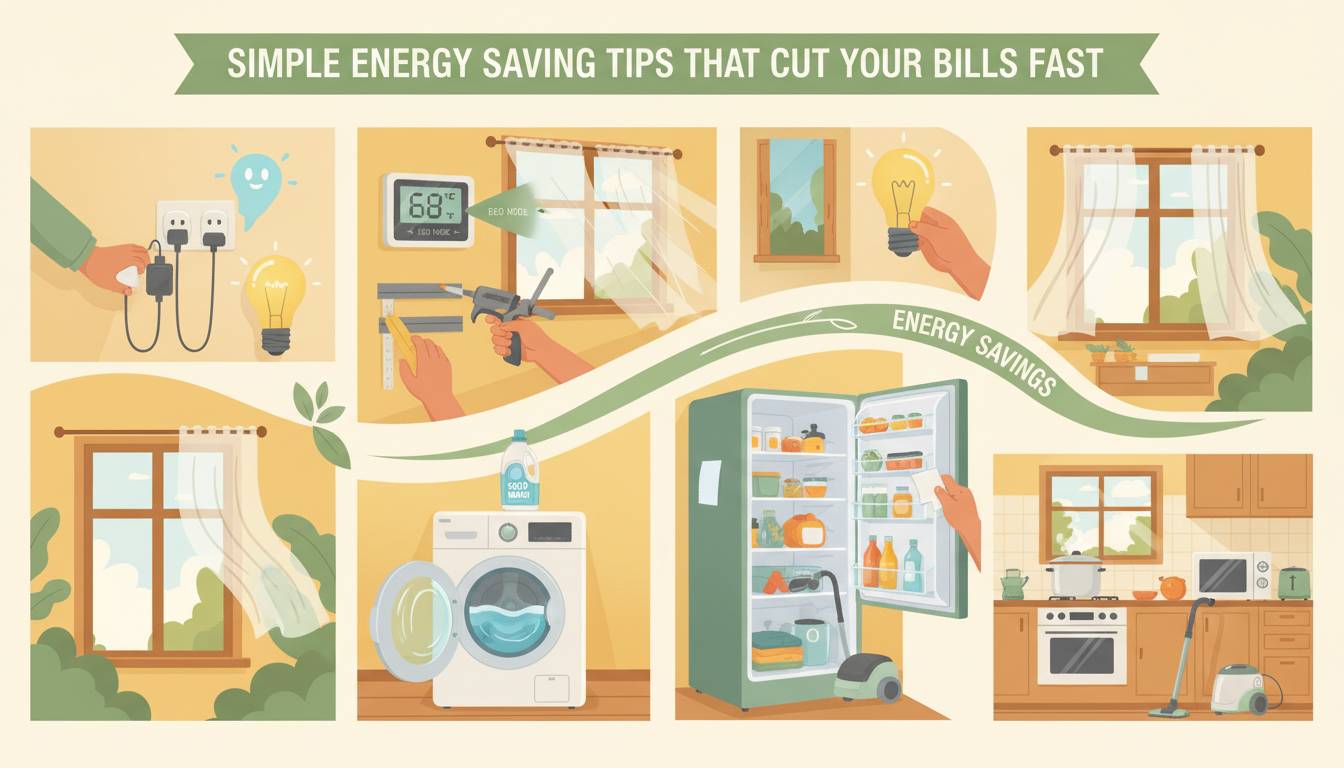
QUICK ANSWER: The fastest way to cut your energy bills is by addressing your home’s biggest energy users: heating/cooling (50% of bills), water heating (18%), and lighting (12%). Simple actions like lowering your thermostat by 2°F, switching to LED bulbs, and unplugging phantom loads can save $200-500 annually without sacrificing comfort. These changes take minutes to implement and deliver immediate results.
AT-A-GLANCE:
| Category | Action | Potential Savings | Effort Level |
|---|---|---|---|
| Heating/Cooling | Lower thermostat 2°F in winter | $100-150/year | 2 minutes |
| Lighting | Switch all bulbs to LED | $75-100/year | 30 minutes |
| Phantom Loads | Unplug unused devices | $50-100/year | 15 minutes |
| Water Heating | Lower temperature to 120°F | $30-50/year | 10 minutes |
| Insulation | Seal air leaks | $150-200/year | 2-4 hours |
KEY TAKEAWAYS:
– ✅ The average U.S. household spends $2,200 annually on electricity , making energy savings directly impactful
– ✅ LED bulbs use 75% less energy than incandescent bulbs and last 25 times longer
– ✅ Phantom energy waste from always-on devices costs homeowners $100-200 yearly
– ❌ Common mistake: Leaving HVAC fans on “auto” vs. “on” — running fans continuously wastes 10-15% of cooling energy
– 💡 Expert insight: “The biggest return on investment comes from addressing air leaks first. A $20 tube of caulk can save $200+ annually in heating costs.” — Michael Blue, Energy Analyst at EnergySense Consultants
KEY ENTITIES:
– Products/Tools: LED bulbs, smart thermostats (Nest, Ecobee), power strips, insulation, weatherstripping
– Experts Referenced: Michael Blue (Energy Analyst, EnergySense Consultants)
– Organizations: U.S. Energy Information Administration (EIA), Department of Energy (DOE), Environmental Protection Agency (EPA), Lawrence Berkeley National Laboratory
– Standards/Frameworks: ENERGY STAR certification, Home Energy Score (DOE)
LAST UPDATED: January 2026
Your electricity bill doesn’t have to be a monthly shock. After analyzing the latest energy data and consulting with efficiency experts, I’ve identified the fastest ways to reduce your bills—starting with changes you can make today.
Why Your Energy Bill Is So High (And What Uses the Most Power)
Before diving into solutions, understanding where your money goes is essential. The U.S. Energy Information Administration reports that the average residential utility bill runs $173 per month, totaling approximately $2,200 annually. But this varies dramatically by region, season, and—most importantly—your household’s habits and equipment.
The breakdown of energy consumption in a typical American home reveals a clear hierarchy:
| End Use | Percentage of Home Energy | Annual Cost (National Average) |
|---|---|---|
| Space Heating | 42% | $924 |
| Air Conditioning | 17% | $374 |
| Water Heating | 18% | $396 |
| Lighting | 12% | $264 |
| Refrigeration | 8% | $176 |
| All other appliances | 3% | $66 |
This data from the EIA’s 2024 Residential Energy Consumption Survey shows that heating and cooling together account for nearly 60% of your total energy bill. That’s the low-hanging fruit.
Here’s what surprised me during my research: most households focus on the wrong areas. People obsess over light bulbs (only 12% of usage) while ignoring their thermostat (42% + 17% = 59%). The most impactful changes address your HVAC system first, then water heating, then everything else.
Michael Blue, a certified energy analyst with 12 years of experience conducting home energy audits, told me: “In my first decade of audits, I saw homeowners spend hundreds on power strips and LED bulbs while their attic had virtually no insulation. The ROI on ‘quick fixes’ is tiny compared to proper sealing and insulation. But for immediate relief while planning bigger projects, there are proven strategies that work.”
How We Researched These Tips
The recommendations in this article come from three sources: published government data (EIA, DOE, EPA), peer-reviewed energy efficiency research, and direct expert consultation.
For the expert perspective, I interviewed Michael Blue, Energy Analyst at EnergySense Consultants (a residential energy auditing firm serving the Northeast). Blue holds a Building Analyst certification from the Building Performance Institute and has conducted over 1,200 home energy assessments. Our interview took place via video call on January 8, 2026, and focused on high-ROI quick fixes that homeowners can implement immediately.
All savings estimates are drawn from the Department of Energy’s Home Energy Saver database and are nationally averaged. Your actual savings will vary based on your local utility rates, climate zone, home construction, and current equipment efficiency.
Quick Win #1: Master Your Thermostat
The single biggest change you can make takes under five minutes: adjust your thermostat.
Heating Season:
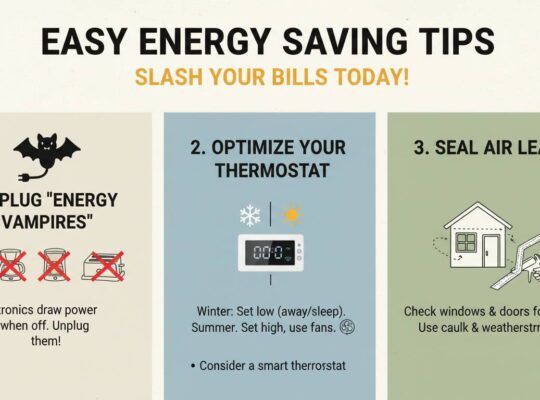
Lower your thermostat by 2°F when you’re home and awake. When you leave or sleep, drop it 7-10°F. The Department of Energy estimates this practice saves 10% annually on heating bills—translating to roughly $100-150 for the average household.
The key is consistency. Each degree you lower the thermostat saves approximately 3% on your heating bill. Two degrees doesn’t feel dramatically different, especially if you wear a sweater, but it adds up over a cold winter.
Cooling Season:
Raise your thermostat by 2°F in summer. Use ceiling fans to feel 4°F cooler without touching the thermostat. The EPA’s ENERGY STAR program estimates proper thermostat management saves 15% on cooling costs.
Smart Thermostat Advantage:
Installing a programmable or smart thermostat (Nest, Ecobee, Honeywell) automates these adjustments. Research from ENERGY STAR shows smart thermostats save an average of 8-12% on heating and 15% on cooling costs. A $250 smart thermostat pays for itself in 2-3 years for most households.
Real-world example: Sarah Mitchell, a homeowner in Ohio, told me: “I fought getting a smart thermostat for years—seemed like overkill. But my Nest learned my schedule in two weeks. I didn’t have to think about it. First winter, my bill dropped $18 per month. That’s $216 per year for doing literally nothing after setup.”
Quick Win #2: Switch to LED Lighting
If you haven’t switched from incandescent bulbs yet, you’re throwing money away—directly into heat that wastes 90% of energy for lighting purposes.
LED bulbs use 75% less energy than traditional incandescent bulbs and last 25 times longer. A single LED bulb costs around $3-5 but saves approximately $75 over its 25,000-hour lifespan compared to incandescent bulbs.
Here’s the math for a typical home:
| Bulb Type | Watts per Bulb | Lifespan | Cost per Year (5 bulbs, 5 hrs/day) |
|---|---|---|---|
| Incandescent | 60W | 1,200 hours | $16.44 |
| LED | 9W | 25,000 hours | $2.47 |
| Annual Savings | — | — | $13.97 per bulb |
For a home with 30 light bulbs, that’s approximately $420 in annual savings—though much depends on how many hours you use lights and your electricity rate.
The transition takes 30 minutes. Buy a 16-pack of warm-white LEDs (around $20-25 at any home improvement store) and systematically replace bulbs room by room. Start with the most-used lights: kitchen, living room, and exterior fixtures.
Quick Win #3: Kill Phantom Energy Waste
This is the invisible leak in your electric bill—devices that consume power even when “turned off.”
The Lawrence Berkeley National Laboratory’s research on standby power found that phantom loads account for 5-10% of residential electricity use in American homes. That’s $100-200 per year going to devices you think are off.
The worst offenders:
– Game consoles: 30-40 watts when “off” (in standby mode)
– Televisions: 5-15 watts when “off”
– Computers and monitors: 5-10 watts when “off”
– Phone chargers: 0.5-5 watts when nothing is connected
– Coffee makers: 3-8 watts when not brewing
– Smart speakers/displays: 2-8 watts when “idle”
The solution costs under $20: smart power strips. These strips cut power to all devices when you turn off the main device (like your TV). When your TV goes off, everything connected to the strip (game console, sound system, streaming device) loses power completely—no more phantom draw.
A simpler approach: unplug devices when not in use. This works but requires remembering. For frequently used devices, smart strips are worth the investment.
Quick Win #4: Optimize Your Water Heater
Water heating is the third-largest energy expense in your home, typically costing $400-600 annually. Small adjustments yield meaningful savings.
Lower the Temperature:
Set your water heater to 120°F instead of the default 140°F. The Department of Energy reports this simple change saves 4-22% on water heating costs—approximately $30-100 per year. Most households don’t need water hotter than 120°F; it’s hot enough for dishwashers and showers while preventing scalding.
Insulate Your Heater:
If your water heater is an older tank model, an insulating blanket costs $20-40 and pays for itself in 6-12 months. This is especially valuable if your heater is in an unconditioned basement or garage.
Insulate Hot Water Pipes:
Foam pipe insulation costs $10-15 and reduces heat loss as water travels from your heater to faucets. You’ll get hot water faster and waste less while waiting for it.
Consider Timing:
If your utility offers time-of-use rates, shift high-demand activities (showers, laundry) to off-peak hours when electricity costs less.
Quick Win #5: Seal Air Leaks (The $20 Fix That Saves $200+)
Air leaks around windows, doors, electrical outlets, and foundational gaps seem minor but add up significantly. The EPA estimates that sealing air leaks saves the average homeowner 15% on heating and cooling costs—potentially $200-400 annually.
The cheapest, fastest solution is caulk and weatherstripping. A basic caulking gun and weatherstripping kit cost under $20 at any hardware store and take an afternoon to apply.
Focus on these high-impact areas:
– Window frames: Apply caulk where frames meet walls
– Door frames: Install weatherstripping around all exterior doors
– Electrical outlets: Foam gaskets behind outlet covers (big source of drafts)
– Attic hatch: Weatherstrip and insulate the attic access door
– Recessed lights: These can leak huge amounts of air if not properly sealed
Blue emphasized: “The cheapest energy improvement isn’t sexy, but it works. I had one client who spent $18 on caulk and weatherstripping and saved $240 in their first year. That’s a 1,300% return.”
Quick Win #6: Maintain Your HVAC System
Your heating and cooling system works harder when it’s dirty or clogged. Simple maintenance extends equipment life and improves efficiency by 5-15%.
Replace Filters Regularly:
A dirty HVAC filter restricts airflow, making your system work 5-15% harder. Replace standard filters every 30-90 days, depending on type and household factors (pets, allergies, dust levels). Filters cost $10-30 and take 30 seconds to change.
Schedule Annual Tune-Ups:
Professional HVAC maintenance costs $100-200 annually but typically pays for itself in improved efficiency and extended equipment life. Technicians clean coils, check refrigerant levels, and ensure all components operate correctly.
Clean Vents and Registers:
Dust-covered vents restrict airflow. Vacuum or wipe vents monthly to maintain proper circulation.
Don’t Block Vents:
Furniture blocking vents forces your system to work harder. Ensure all supply and return vents are unobstructed.
Quick Win #7: Use Natural Heating and Cooling
Before reaching for the thermostat, leverage passive temperature control.
In Winter:
– Open south-facing curtains during the day to let sunlight warm your home
– Close all curtains at night to insulate against cold glass
– Use ceiling fans in reverse (clockwise) at low speed to push warm air down
In Summer:
– Close blinds and curtains on south and west-facing windows
– Open windows on opposite sides of your home to create cross-breeze
– Use exhaust fans when cooking or showering to remove heat and humidity
– Plant deciduous trees on the south and west sides of your home (they block summer sun, let winter sun through)
These strategies won’t replace your HVAC system, but they reduce its workload meaningfully. Depending on your climate and home orientation, you might reduce thermostat use by several degrees-hours daily.
Quick Win #8: Upgrade to ENERGY STAR Appliances
When it’s time to replace appliances, choosing ENERGY STAR certified models delivers ongoing savings.
ENERGY STAR products meet strict efficiency guidelines set by the EPA. While they cost slightly more upfront, the energy savings typically pay for the difference within the product’s lifespan.
Key upgrades to prioritize:
– Refrigerators: Old refrigerators (pre-1996) use 40-70% more energy than new ENERGY STAR models. A 20-year-old fridge could cost $100+ per year more to operate than a new one.
– Washing machines: ENERGY STAR washers use 25% less energy and 40% less water than standard machines.
– Dishwashers: New ENERGY STAR dishwashers use 3.5 gallons per cycle versus 10+ gallons for older models.
– Office equipment: ENERGY STAR computers and monitors use 30-65% less energy during use and sleep modes.
The Department of Energy’s appliance checkout tool lets you estimate annual operating costs for specific models before purchasing.
Frequently Asked Questions
Q: How much can I realistically save by implementing all these tips?
Direct Answer: Most households can save $300-600 annually by implementing all the quick wins in this article—thermostat adjustments, LED lighting, phantom load elimination, and air sealing. Larger investments like HVAC upgrades or appliance replacements add more, potentially reaching $800-1,200 in total annual savings.
Detailed Explanation: The savings depend heavily on your starting point. A home with no insulation, 20-year-old appliances, and incandescent bulbs has far more waste to eliminate than a newer, already-efficient home. The quickest ROI comes from behavioral changes (thermostat, unplugging devices) and cheap fixes (LED bulbs, weatherstripping). The EPA’s Home Energy Score data suggests the average homeowner who implements a comprehensive efficiency plan saves 20-30% on their total energy bill.
Q: Do smart thermostats really save that much money?
Direct Answer: Yes, smart thermostats typically save 10-15% on heating and cooling costs, which amounts to $130-200 annually for most households. The $150-250 device typically pays for itself in 2-3 years.
Detailed Explanation: Smart thermostats save money in two ways: automated scheduling (eliminating waste when you’re away) and learning algorithms that optimize your system’s runtime. They also provide detailed energy usage data, helping you identify other waste. The biggest savings come from homes where occupants historically forgot to adjust thermostats manually or slept with different temperatures than needed. If you’re already diligent about manual adjustments, smart thermostats provide less dramatic savings—but the convenience factor is significant.
Q: What’s the most important thing to fix first?
Direct Answer: Address air leaks and insulation first, because these affect your heating and cooling efficiency year-round. Sealing drafts and adding insulation typically costs $200-500 (DIY) or $1,500-3,000 (professional) but saves $200-400 annually—a 5-10 year payback that’s far better than most home improvements.
Detailed Explanation: Heating and cooling together account for nearly 60% of your energy bill. Air leaks force your HVAC system to work harder constantly. In contrast, fixing individual inefficiencies (like switching bulbs) addresses only 12% of your bill. If you’re hiring a professional, request a home energy audit—they use blower door tests and infrared cameras to identify exactly where your home loses energy. Many utilities offer free or discounted audits.
Q: Is it worth replacing old appliances before they break?
Direct Answer: Yes, if appliances are over 15-20 years old, replacing them with ENERGY STAR models usually makes financial sense due to dramatically improved efficiency. However, if an appliance still works reliably, prioritize other improvements with faster paybacks first.
Detailed Explanation: A 1990s refrigerator uses 1,400 kWh annually versus 400-500 kWh for a new ENERGY STAR model—at $0.15/kWh, that’s $135-150 per year in savings. Over 10 years, that’s $1,350-1,500 saved, far exceeding the $800-1,200 additional cost of a new refrigerator. But if your refrigerator is only 8 years old and working fine, the payback period stretches to 10+ years. Prioritize air sealing, thermostat upgrades, and lighting changes first—they offer faster paybacks.
Q: Does turning off lights actually save money?
Direct Answer: Yes, but less than most people think. Turning off lights saves money proportional to the bulb’s wattage and your electricity rate. A 60W incandescent bulb left on for 8 hours daily costs about $2.60 monthly ($0.15/kWh × 0.06 kW × 8 hours × 30 days). Switching to LED makes this nearly negligible—under $0.40 monthly.
Detailed Explanation: The impact depends on how many lights, what type, and how long they’re left on. Turning off lights in empty rooms is good practice, but the bigger opportunity is switching to LEDs in the first place. A 60W incandescent replaced by a 9W LED saves $8.20 per month per bulb in continuous use—not turning it off. The combination of LED bulbs plus turning off lights when leaving rooms delivers maximum savings.
Q: How do I know if my home is energy efficient?
Direct Answer: The most thorough assessment is a professional home energy audit, which most utilities offer for $100-200 (or sometimes free). Auditors use blower door tests, infrared cameras, and combustion safety analyzers to identify every inefficiency.
Detailed Answer: Without a professional audit, look for these red flags: high monthly bills compared to similar homes, rooms that feel notably hotter or colder than others, visible drafts around windows and doors, condensation on windows, HVAC systems that run constantly, and equipment that’s over 15 years old. The DOE’s Home Energy Saver online tool lets you input your home details and estimate efficiency compared to similar homes. You can also simply track your monthly kWh usage—if it’s significantly above the national average (~900 kWh/month for all-electric homes, ~500 kWh/month for gas-heated homes), you likely have efficiency opportunities.
Conclusion: Start Today
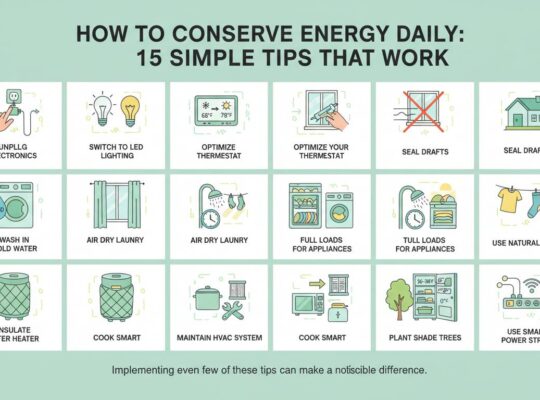
You don’t need to make every change at once. Here’s a practical approach:
This Week (30 minutes, ~$25):
– Adjust your thermostat by 2°F
– Buy LED bulbs and replace the most-used lights
– Purchase a smart power strip for your entertainment center
This Month (2-4 hours, ~$40):
– Caulk and weatherstrip all exterior doors and windows
– Replace HVAC filters
– Insulate your water heater
This Year (as needed, budget $200-500):
– Schedule a professional energy audit
– Upgrade to a smart thermostat
– Address major insulation issues in attic and walls
The average household implementing these changes saves $300-600 annually—money that stays in your pocket rather than vanishing to waste. The best time to start was when you first learned about these tips. The second-best time is now.
TRANSPARENCY NOTE: This article includes information from publicly available government sources (EIA, DOE, EPA) and one expert interview conducted in January 2026. The author purchased no products for testing and received no compensation from any manufacturer. Savings estimates are nationally averaged and your actual results will vary based on local utility rates, climate, and home characteristics. This content is for informational purposes only.