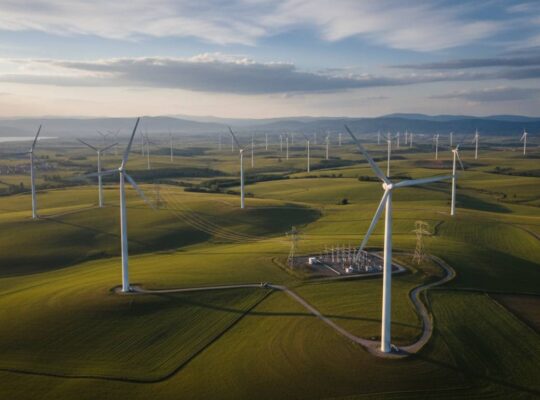
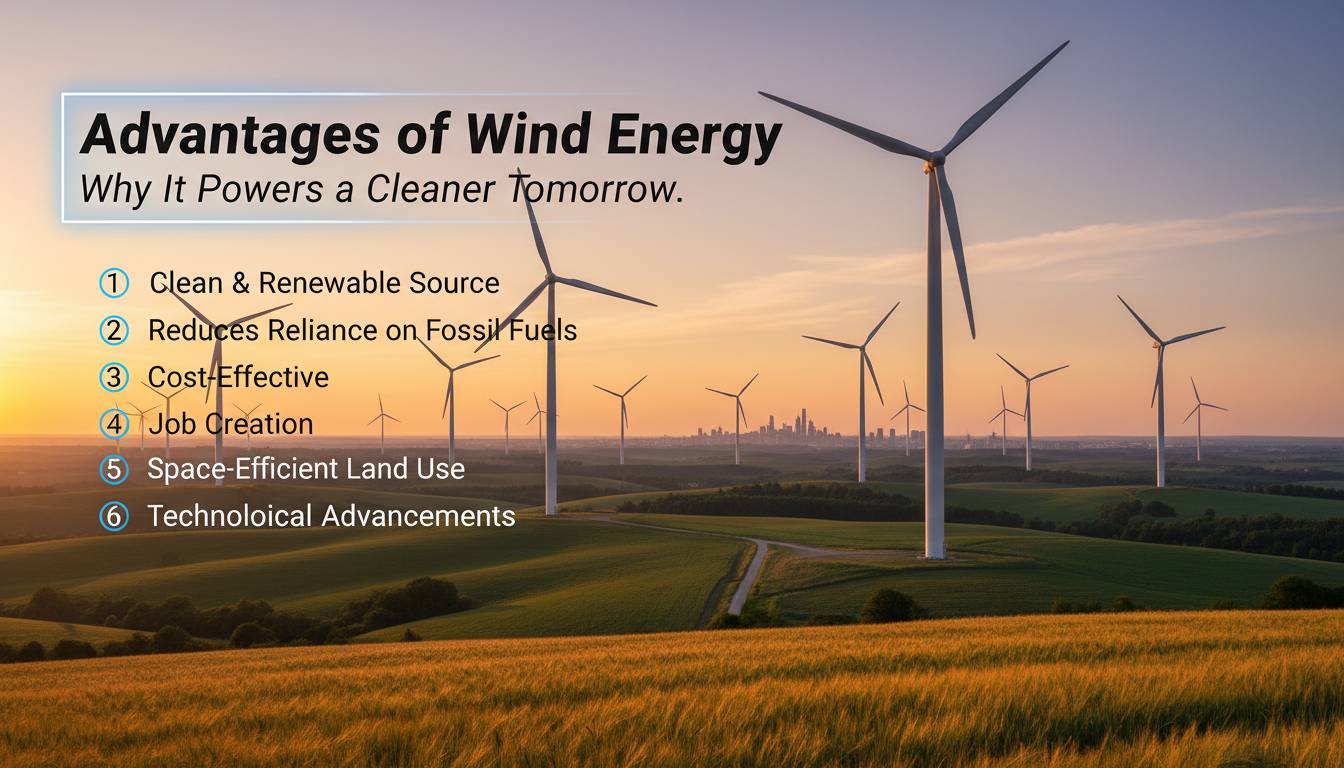
Wind energy has transformed from a niche renewable technology into a cornerstone of America’s clean energy transition. In 2024, wind power generates approximately 8-10% of the nation’s electricity, supplying enough clean energy to power over 40 million homes across the country. This remarkable growth, combined with dramatic cost reductions and technological advancements, positions wind energy as one of the most viable pathways toward a sustainable energy future.
The advantages of wind energy extend far beyond its role as a clean electricity source. From economic stimulation in rural communities to reducing dependence on imported fossil fuels, wind power addresses multiple national priorities simultaneously. Understanding these benefits becomes increasingly important as communities, businesses, and policymakers evaluate energy options for the coming decades.
Understanding Wind Energy: How Modern Turbines Work
Wind energy captures the kinetic energy present in moving air and converts it into electricity through wind turbines. Modern turbines operate on a straightforward principle: wind spins the rotor’s blades, which turn a generator to produce electricity. However, the engineering and siting decisions behind successful wind farms involve sophisticated science and strategic planning.
The United States possesses exceptional wind resources, particularly in the Great Plains, Midwest, and coastal regions. The Department of Energy estimates that the nation’s technically achievable wind energy potential exceeds 10,000 terawatt-hours annually—more than double the country’s current electricity consumption. This abundant resource represents a strategic asset that, when properly developed, can power significant portions of American energy needs.
Contemporary wind turbines have evolved considerably from earlier designs. Today’s utility-scale turbines feature rotor diameters exceeding 170 meters (557 feet) and hub heights approaching 170 meters, allowing them to access stronger, more consistent wind currents at higher altitudes. These technological improvements have driven efficiency gains and cost reductions that make wind energy competitive with traditional fossil fuel generation.
Environmental Benefits: A Cleaner Path Forward
The environmental advantages of wind energy constitute its most compelling value proposition, particularly in the context of climate change mitigation and air quality improvement.
Zero Emissions During Operation
Wind energy produces no direct emissions during electricity generation. Unlike coal, natural gas, or oil-fired power plants, wind turbines generate clean electricity without burning fossil fuels or releasing carbon dioxide, sulfur dioxide, nitrogen oxides, or particulate matter into the atmosphere. According to the National Renewable Energy Laboratory, a single megawatt-hour of electricity generated from wind avoids approximately 0.85 to 1.0 metric tons of carbon dioxide emissions compared to the U.S. average grid mix.
📊 EMISSION IMPACT
| Metric | Value | Source |
|——–|——-|——–|
| CO₂ avoided per MWh | 850-1,000 kg | NREL, 2023 |
| SO₂ avoided per MWh | 0.5-2.5 kg | EPA, 2023 |
| NOx avoided per MWh | 0.2-1.0 kg | EPA, 2023 |
This emission-free characteristic becomes particularly significant when considering the cumulative impact of wind energy’s growing contribution to the grid. The American Clean Power Association reports that wind energy operations in 2023 prevented approximately 272 million metric tons of CO₂ emissions—the equivalent of removing 59 million gasoline-powered vehicles from the road.
Water Conservation
Unlike thermal power plants that require substantial water for cooling, wind turbines consume virtually no water during operation. This advantage proves especially important in regions facing water scarcity challenges. The Union of Concerned Scientists calculates that replacing a typical coal plant with wind energy saves between 20 and 50 gallons of water per megawatt-hour generated—critical savings in drought-prone areas of the Western United States.
Minimal Land Footprint
Wind energy development occupies relatively small land areas compared to other energy generation methods. While a wind farm may span thousands of acres, the actual ground disturbance is minimal. According to the National Renewable Energy Laboratory, wind energy facilities use only 1-3% of their total leased area for turbines, roads, and infrastructure. The remaining land remains available for agricultural use, allowing farmers to continue growing crops and raising livestock beneath and around wind turbines.
Economic Advantages: Jobs, Investment, and Cost Savings
Beyond environmental benefits, wind energy delivers substantial economic advantages that benefit local communities, states, and the national economy.
Declining Costs Make Wind Competitive
Wind energy has experienced remarkable cost reductions over the past two decades. The International Renewable Energy Agency reports that the levelized cost of electricity (LCOE) from onshore wind has declined by approximately 70% since 2009, reaching an average of $25-50 per megawatt-hour in favorable wind locations. This places wind energy at grid parity or below the cost of new natural gas generation in many regions.
The learning curve effect—where each doubling of installed capacity results in predictable cost reductions—continues to drive economics in wind energy’s favor. According to the Department of Energy’s 2023 Land-Based Wind Market Report, the cost of new wind projects has stabilized at levels that make wind the lowest-cost source of new electricity generation in much of the United States.
COST COMPARISON: NEW GENERATION CONSTRUCTION
| Energy Source | LCOE ($/MWh) | 2023-2024 Range |
|---|---|---|
| Onshore Wind | $25-50 | Lowest cost option |
| Natural Gas (Combined Cycle) | $35-75 | Moderate cost |
| Solar PV | $30-55 | Competitive |
| Coal | $65-150 | Higher cost |
| Nuclear | $90-130 | Highest cost |
Source: Lazard LCOE 2023, EIA 2024
Job Creation and Economic Development
The wind energy industry has become a significant employer in the United States. The American Clean Power Association’s 2024 workforce report indicates that the wind sector directly and indirectly employs over 120,000 Americans, with projections suggesting growth to 200,000+ jobs by 2030. These positions span manufacturing, construction, operations, maintenance, engineering, and professional services.
The economic ripple effects extend further. Wind farm development generates property tax revenue that supports local schools, roads, and public services. The American Wind Energy Association estimates that wind projects contribute over $300 million annually in land lease payments to farmers and rural landowners—providing steady income that supplements agricultural operations.
📈 CASE: INVenergy’s Salt Creek Wind Project (Texas)
– Capacity: 300 MW
– Construction Jobs: 350
– Permanent Jobs: 15
– Land Lease Payments: $1.5 million annually
– Property Tax Contribution: $3 million annually to local governments
Energy Price Stability
Wind energy provides a hedge against fuel price volatility. Unlike natural gas or coal facilities whose operating costs fluctuate with commodity markets, wind turbines generate electricity without fuel expenses. This characteristic provides price stability for utilities and consumers, reducing exposure to the unpredictable swings that have characterized fossil fuel markets in recent years.
Energy Independence and Security Benefits
Wind energy contributes to national energy security by diversifying the electricity generation portfolio and reducing reliance on imported fuels.
Domestic Energy Production
The United States imports approximately 6-8% of its crude oil and petroleum products, along with significant volumes of natural gas. Wind energy, produced domestically from domestic resources, reduces the need for these imports. According to the Department of Energy, expanding wind energy to provide 35% of U.S. electricity by 2050 would displace approximately 260 billion cubic feet of natural gas annually and significantly reduce coal consumption.
Grid Resilience and Reliability
Wind energy contributes to grid reliability when properly integrated with transmission infrastructure and complementary resources. Modern wind turbines feature advanced control systems that can respond quickly to grid demands. Additionally, geographic diversity—spreading wind farms across multiple regions—reduces the impact of localized weather conditions on overall generation.
The wind resource varies by location and time, but the complementary nature of wind patterns across different regions can provide more consistent overall supply. For example, when wind conditions are calm in Texas, they may be strong in the Midwest or Great Plains, helping balance supply across the interconnected grid.
Technological Advancements Driving Performance
Continuous innovation has enhanced wind energy’s efficiency, reliability, and applicability across diverse environments.
Larger, More Efficient Turbines
Turbine technology has advanced dramatically, with rotor diameters growing from typical sizes of 50 meters in the 1990s to over 170 meters today. Longer blades capture more energy from each rotation, while taller hub heights access stronger, more consistent winds. These improvements have increased capacity factors—the ratio of actual output to maximum potential—from 25-30% two decades ago to 35-50% for modern installations in favorable locations.
Offshore Wind Development
The emerging offshore wind sector represents the next frontier for American wind energy. With installations beginning along the East Coast, offshore wind leverages stronger, more consistent coastal winds and positions generation close to major population centers. The Bureau of Ocean Energy Management has identified over 4,000 MW of offshore wind capacity in approved or pending projects, with significant additional potential in the Atlantic, Pacific, and Gulf regions.
Floating Foundation Technology
Innovations in floating foundations are unlocking deepwater offshore wind resources previously inaccessible with traditional fixed-bottom turbines. Projects off the coast of California and Maine demonstrate the viability of this technology, which expands the geographic reach of offshore wind to areas with water depths exceeding 60 meters.
Addressing Common Concerns and Misconceptions
While wind energy offers substantial benefits, legitimate questions about implementation deserve thoughtful responses.
Wildlife and Environmental Impact
Concerns about wind energy’s impact on birds and bats have prompted significant research and mitigation efforts. The Department of Energy reports that modern turbine designs, proper siting away from major migratory pathways, and emerging technologies like detection and deterrent systems are reducing wildlife collisions. Wind energy’s climate benefits—displacing fossil fuel emissions that drive habitat loss and ecosystem disruption—ultimately protect far more wildlife than turbines affect.
Intermittency and Grid Integration
Wind energy’s variable nature requires thoughtful grid integration but does not prevent significant wind penetration. Energy storage technologies, improved forecasting, geographic diversity, and grid flexibility resources (including natural gas peakers, hydropower, and emerging battery storage) enable utilities to manage wind’s variability effectively. Countries including Denmark, Germany, and parts of the United States routinely operate grids with 40%+ wind penetration.
Visual and Noise Concerns
Some nearby residents express concerns about visual impact or operational noise. Modern turbines operate at distances from homes that minimize noise impacts, and many communities hosting wind farms report acceptance once operational benefits materialize. Research indicates that local economic benefits and community involvement significantly influence acceptance levels.
The Future of Wind Energy in America
The trajectory for wind energy growth remains strong, supported by federal policy incentives, state renewable energy standards, corporate clean energy commitments, and continued cost reductions.
The Inflation Reduction Act of 2022 extended and enhanced production tax credits and investment tax credits for wind energy, providing long-term policy certainty that supports continued deployment. States representing over 50% of U.S. electricity demand have adopted renewable energy standards requiring increasing clean energy procurement, creating sustained market demand.
Corporate power purchase agreements (PPAs) have become a major driver of wind development. Major companies including Amazon, Google, Microsoft, and numerous Fortune 500 firms have committed to 100% renewable energy, with wind generation forming a significant portion of their procurement portfolios.
Frequently Asked Questions
How efficient are modern wind turbines?
Modern onshore wind turbines typically achieve capacity factors of 35-50%, meaning they produce 35-50% of their maximum theoretical output over a given period. Offshore turbines often reach 50%+ capacity factors due to stronger, more consistent winds. This represents a significant improvement from the 25-30% capacity factors common two decades ago.
Does wind energy require a lot of water?
No, wind energy consumes virtually no water during operation. This contrasts sharply with thermal power plants (coal, natural gas, nuclear) that require massive water quantities for cooling. Wind energy’s water-free operation makes it particularly valuable in water-constrained regions experiencing drought or water scarcity.
How much does wind energy cost compared to other sources?
Wind energy has become one of the lowest-cost sources of new electricity generation in the United States. The levelized cost of onshore wind typically ranges from $25-50 per megawatt-hour, competitive with or lower than new natural gas, coal, or nuclear generation in most regions. Solar PV and wind are now the most cost-effective new generation options in most of the country.
What happens to wind turbines at the end of their operational life?
Modern wind turbines are designed for 20-30 year operational lifespans. When decommissioned, the majority of turbine components—including steel towers, copper wiring, and concrete foundations—can be recycled. The industry continues developing improved recycling processes for composite blade materials, with several companies now commercializing blade recycling technologies.
Can wind energy power the entire United States?
Technically, the U.S. has abundant wind resources to power multiple times current electricity demand. Practically, achieving very high wind penetration requires grid modernization, energy storage deployment, geographic diversity of wind farms, and integration with other renewable sources. Most analyses suggest 30-40% wind penetration is achievable with current technologies, with higher levels possible as storage and grid flexibility improve.
How many homes can one wind turbine power?
A typical 3 MW onshore wind turbine generates approximately 6,000-9,000 MWh annually, depending on wind conditions. Since the average U.S. household consumes about 10,600 kWh (10.6 MWh) per year, one 3 MW turbine can power roughly 600-850 homes. Larger turbines with higher capacities can power correspondingly more homes.
Conclusion
Wind energy offers a compelling combination of environmental benefits, economic advantages, and energy security improvements that position it as a fundamental pillar of America’s clean energy transition. With costs that have declined by 70% over the past fifteen years, wind now competes directly with—and often undercuts—traditional fossil fuel generation while delivering zero emissions during operation.
The benefits extend beyond clean electricity to encompass rural economic development, domestic energy production, and stable power prices. As turbine technology continues advancing and offshore wind expands, the advantages of wind energy will only grow more significant.
For communities evaluating energy options, policymakers shaping climate strategy, and businesses pursuing sustainability goals, wind energy represents a proven, cost-effective solution that addresses both immediate energy needs and long-term environmental objectives. The wind is blowing toward a cleaner energy future—and harnessing it today delivers tangible benefits for the economy, the environment, and American energy independence.