
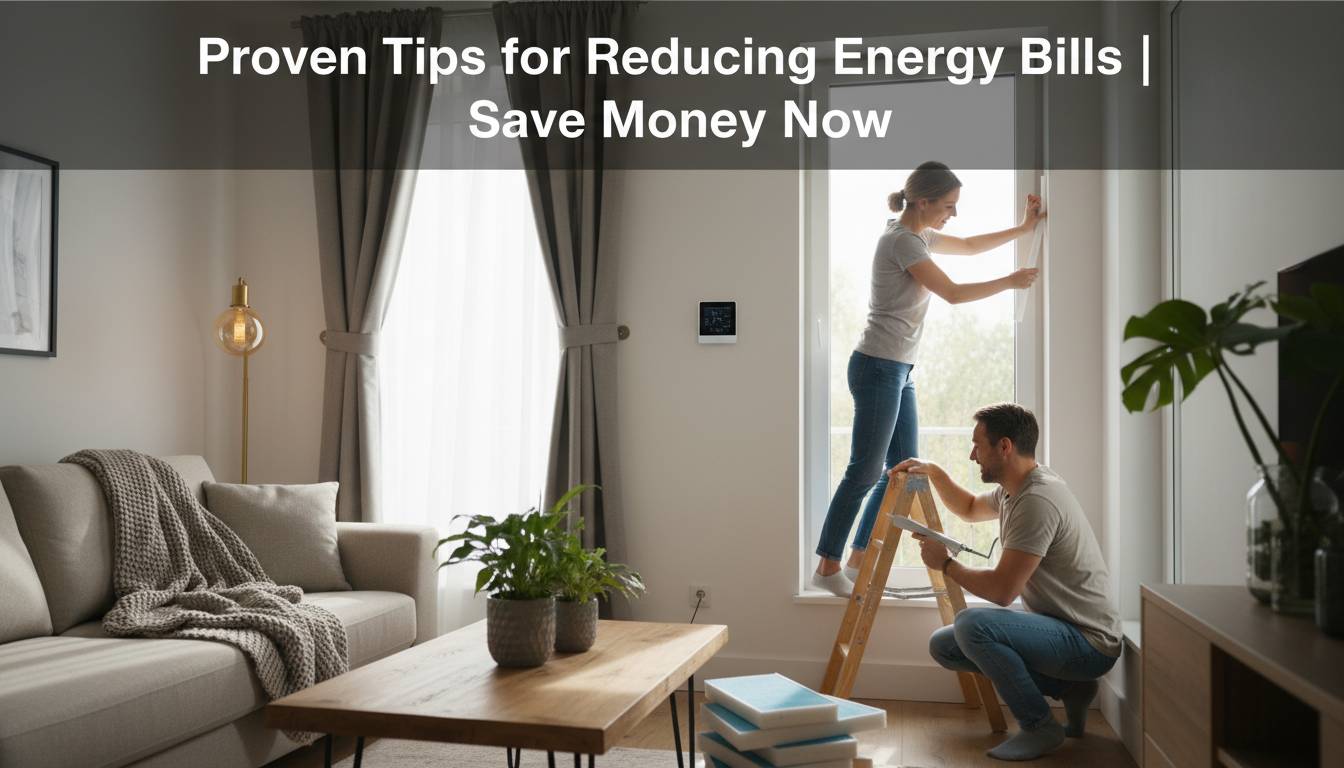
Energy costs continue to climb, and chances are you’re looking for practical ways to lower your monthly bills without sacrificing comfort. The good news: most households can cut their energy expenses by 25% to 30% through a combination of behavior changes, low-cost improvements, and strategic upgrades. Whether you rent or own, these proven strategies will help you start saving today.
This guide covers everything from quick behavioral shifts that cost nothing to smarter investments that pay off over time. You’ll learn exactly where your money goes, what changes deliver the biggest returns, and how to prioritize your efforts based on your situation.
Understanding Where Your Energy Goes
Before you can cut costs, you need to understand where your energy dollars actually go. The U.S. Department of Energy reports that heating and cooling account for roughly 50% of most home energy costs, making this the most impactful area to address. Water heating follows at about 18%, while lighting and appliances round out the remaining consumption.
Your utility company’s website likely offers an energy usage dashboard that breaks down consumption by category and compares your home to similar ones in your area. Take advantage of this free tool—it identifies your biggest energy drains so you can focus your efforts where they’ll matter most.
The U.S. Energy Information Administration publishes monthly average retail price data for electricity by state, which shows significant variation—from around 10 cents per kWh in some states to over 30 cents in others. Knowing your local rate helps you calculate potential savings accurately. For example, reducing your monthly consumption by 200 kWh saves approximately $30 per month in states with a 15-cent average rate, but only $15 in states with lower rates.
Quick Behavioral Changes That Save Money Immediately
You don’t need to spend any money to start reducing your bills. Behavioral adjustments often deliver the fastest results.
Adjust your thermostat. The U.S. Department of Energy estimates that lowering your thermostat by 7-10 degrees Fahrenheit for eight hours daily can save up to 10% annually on heating and cooling costs. In winter, set it to 68°F while you’re awake and lower it further when you’re asleep or away. Summer settings of 78°F provide comfort while minimizing cooling costs. A programmable thermostat automates these adjustments and typically pays for itself within two years.
Unplug vampire electronics. Devices like televisions, computers, game consoles, and kitchen appliances draw power even when turned off—a phenomenon called phantom load or vampire power. The U.S. Office of Energy Efficiency and Renewable Energy estimates that phantom power accounts for 5-10% of residential electricity use. Use power strips to easily disconnect multiple devices at once, or simply unplug chargers and electronics when not in use.
Wash clothes efficiently. Hot water heating accounts for a significant portion of energy use. Switching to cold water for laundry typically cleans clothes effectively and can reduce energy consumption by 80-90% per load. When you do need hot water, ensure you’re running full loads—energy waste from underloaded machines adds up quickly.
Lighting Upgrades with the Biggest Impact
Lighting accounts for about 12% of home energy use, and upgrading is one of the simplest ways to cut costs.
Switch to LEDs. The U.S. Department of Energy states that LED bulbs use up to 75% less energy than incandescent bulbs and last 25 times longer. While LEDs cost more upfront, the savings compound quickly. A single 60-watt equivalent LED uses about 9 watts and can save approximately $150 over its lifetime compared to incandescent options.
Use natural light strategically. Open curtains and blinds during sunny winter days to warm your home naturally, then close them at night to insulate against cold. In summer, block direct sunlight to reduce cooling needs. This free strategy requires no investment beyond moving curtain panels.
Install motion sensors and timers. Outdoor lights, garage lighting, and occasionally-used spaces benefit from automated controls. Motion-activated exterior lighting provides security benefits alongside energy savings, while timers ensure lights don’t run unnecessarily in basements, closets, or other low-traffic areas.
Maximizing Heating and Cooling Efficiency
Since heating and cooling dominate your energy costs, optimizing these systems delivers the most significant savings.
Maintain your HVAC system. The U.S. Department of Energy reports that replacing a dirty air filter can lower your energy consumption by 5-15%. Check filters monthly during heavy-use seasons and replace them when they appear dirty—typically every 1-3 months. Annual professional maintenance also improves efficiency and extends system lifespan.
Seal air leaks. Gaps around windows, doors, electrical outlets, and where walls meet foundations allow conditioned air to escape. The U.S. Environmental Protection Agency estimates that sealing air leaks and adding insulation can save homeowners an average of 15% on heating and cooling costs. Simple weatherstripping around doors and caulking around windows costs less than $50 and provides immediate returns.
Use ceiling fans correctly. Ceiling fans cool people directly but don’t lower room temperature. Run fans counterclockwise in summer (when viewed from below, blades should move left to right at the top), and clockwise in winter to circulate warm air that rises to the ceiling. Always turn fans off when leaving rooms—fans cool people, not spaces.
Close vents and doors in unused rooms. If your system allows zone heating and cooling, closing vents in empty rooms prevents conditioned air from wasting on spaces you aren’t using. However, this strategy only works efficiently with systems designed for zoning—forced air systems can experience pressure imbalances when too many vents close.
Smart Appliance Strategies
Your kitchen and laundry appliances consume substantial energy, often more than people realize.
Run dishwashers efficiently. Run full loads only, and use the air-dry setting instead of the heat-dry function. Dishwashers typically use 3-7 gallons per cycle, while hand washing can use up to 27 gallons, according to EPA data. Scrape dishes clean instead of pre-rinsing—you’ll save water and energy without compromising cleaning results.
Optimize refrigerator settings. Refrigerators run 24 hours a day, making efficiency particularly important. Keep the temperature between 35-38°F for optimal food preservation without excess energy draw. Ensure door seals are airtight by testing with the dollar bill test—if a dollar bill slides out easily when placed between closed door gaskets, your seal needs replacement. Keep the condenser coils clean and ensure adequate airflow around the refrigerator.
Cook strategically. Using the right burner size for your pot prevents energy waste—a small pot on a large burner wastes heat. Microwaves use significantly less energy than conventional ovens for reheating and cooking small portions. When using ovens, avoid opening the door unnecessarily—each opening drops temperature by 25-50°F, requiring additional energy to recover.
Smart Home Investments That Pay Off
Technology has made energy management more accessible and affordable than ever.
Smart thermostats. Devices like the Nest, ecobee, and Honeywell T6 learn your schedule and preferences, automatically adjusting temperatures for maximum efficiency. Most smart thermostats cost $100-250 and can reduce heating and cooling costs by 10-15%, according to ENERGY STAR. Many utility companies offer rebates that offset purchase costs.
Energy monitors. Whole-home energy monitors like Sense or Emporia provide real-time data on your electricity consumption, identifying which devices and circuits use the most power. This visibility helps you confirm that your efficiency efforts are working and identify unexpected energy drains. Basic plug-in monitors work well for tracking individual appliances.
Smart power strips. These devices eliminate phantom load automatically, cutting power to groups of electronics when they’re not in use. Some models detect when a “master” device (like a TV) is off and cut power to peripheral devices (like gaming consoles or sound systems) accordingly.
When Upgrades Make Sense
Sometimes spending money saves more money over time through dramatically improved efficiency.
Upgrade to an ENERGY STAR-certified appliance. Modern ENERGY STAR appliances use 10-50% less energy than standard models, depending on the appliance category. The U.S. EPA estimates that ENERGY STAR refrigerators use about 15% less energy than non-certified models. When replacing failed appliances, always choose ENERGY STAR—the incremental cost typically pays back within a few years through lower operating costs.
Consider insulation improvements. The U.S. Department of Energy reports that adding insulation can save 10-20% on heating and cooling costs. Attic insulation is often the highest-impact location since heat rises and escapes through the roof. The Department of Energy recommends specific R-values (insulation effectiveness ratings) based on climate zones—check their map to determine appropriate levels for your region.
Evaluate window replacements. If your windows are single-pane, outdated, or damaged, upgrading to double or triple-pane windows can significantly reduce heat transfer. However, windows represent a substantial investment—full replacement costs thousands of dollars. Consider this upgrade when windows already need replacement for other reasons, or focus first on less expensive improvements like weatherstripping and window films.
Reducing Energy Bills in Rental Properties
Renters face unique challenges since they typically can’t make structural improvements, but plenty of options remain.
Request HVAC maintenance. Landlords are generally responsible for maintaining heating and cooling systems. Request regular filter changes and annual tune-ups—you’ll benefit from better performance while the landlord pays.
Use portable solutions strategically. Inefficient window air conditioning units often plague rentals. If possible, use portable dehumidifiers instead—they remove moisture that makes heat feel more oppressive, allowing you to raise thermostat settings without sacrificing comfort. Ceiling fans and portable fans amplify the cooling effect of air conditioning at lower settings.
Negotiate with your landlord. If you’re paying utilities directly, propose a deal: you’ll cover weatherstripping, LED bulbs, and smart thermostat costs in exchange for the landlord allowing these modifications. Frame it as a mutually beneficial arrangement—you save on bills, they improve their property’s efficiency.
Frequently Asked Questions
What’s the single most effective way to reduce energy bills?
Adjusting your thermostat offers the biggest immediate impact because heating and cooling represent roughly half of most household energy costs. Lowering winter thermostat settings by 7-10 degrees for eight hours daily can reduce annual heating costs by up to 10%, according to the U.S. Department of Energy. Pair this with a programmable or smart thermostat to automate the adjustments.
How much can I realistically save by implementing these tips?
Most households can reduce their energy bills by 25-30% through comprehensive efficiency improvements. The U.S. Department of Energy estimates that sealing air leaks and adding insulation alone saves an average of 15% on heating and cooling. Individual savings vary based on your starting efficiency, local energy rates, and which strategies you implement.
Do smart thermostats really save money?
Yes. Multiple studies and ENERGY STAR data confirm that smart thermostats typically reduce heating and cooling costs by 10-15%. They optimize temperature based on your schedule, learn your preferences, and provide usage data that helps you make informed decisions. Most users recoup the purchase cost within 2-3 years through lower utility bills.
How often should I replace my HVAC air filter?
Check filters monthly and replace every 1-3 months, depending on usage, filter type, and whether you have pets. The U.S. Department of Energy reports that a dirty filter can increase energy consumption by 5-15%. More frequent replacements are necessary during heavy-use seasons or in homes with pets or allergies.
Is it worth the cost to upgrade to LED light bulbs?
Absolutely. While LEDs cost more upfront than incandescent bulbs, they use 75% less energy and last 25 times longer. The U.S. Department of Energy calculates that replacing a single frequently-used incandescent with an LED can save about $150 over the bulb’s lifetime. For a typical household with 30-40 bulbs, the total savings are substantial.
Does turning off lights really make a significant difference?
Yes, though the impact depends on what you’re turning off and what replaces them. Replacing incandescent bulbs with LEDs matters more than simply turning lights off, since LEDs use far less energy. However, turning off lights in unoccupied rooms—especially halogen and incandescent fixtures—adds up. A single 60-watt bulb left on eight hours daily costs roughly $5-7 per month in electricity.
Conclusion
Reducing your energy bills requires both immediate action and strategic planning. Start with the free behavioral changes—adjusting your thermostat, unplugging electronics, and using lighting efficiently. These require no investment but deliver immediate returns. Next, tackle low-cost improvements like weatherstripping and air filter replacements. Once you’ve established baseline savings, consider smart home investments like programmable thermostats that automate efficiency.
Remember: energy efficiency is cumulative. Every watt you save compounds over months and years. The strategies outlined here work together—sealing air leaks makes your HVAC run less, using LEDs reduces cooling needs, and maintaining appliances extends their efficient lifespan. Start implementing these tips today, and you’ll likely see meaningful reductions in your next utility bill.