QUICK ANSWER: Implementing energy efficiency improvements in your home can reduce utility bills by 25-50%, with the most impactful upgrades being air sealing, HVAC optimization, and smart thermostat installation. Most homeowners recover their investment within 3-7 years through lower monthly energy costs.
AT-A-GLANCE:
| Category | Best Action | Potential Savings | Payback Period |
|---|---|---|---|
| Lighting | Switch to LED bulbs | $75-$200/year | 1-2 years |
| Thermostat | Install smart thermostat | $100-$150/year | 2 years |
| HVAC | Regular maintenance | 10-15% on heating/cooling | Immediate |
| Air Sealing | Caulk and weatherstrip | 10-20% on bills | 1-3 years |
| Insulation | Add attic/batt insulation | 15-25% on heating | 3-7 years |
| Water Heater | Lower temperature to 120°F | $30-$60/year | Immediate |
KEY TAKEAWAYS:
– ✅ The average U.S. household spends $2,060 annually on energy bills, making efficiency upgrades highly valuable (U.S. Energy Information Administration, 2024)
– ✅ Air leaks account for 10-25% of heat loss in typical homes, making sealing one of the highest-ROI improvements
– ✅ Smart thermostats can reduce heating and cooling costs by 10-15% while improving comfort
– ❌ Common mistake: Setting thermostats too high/low – each degree above 68°F in winter increases heating costs by approximately 3%
– 💡 Expert insight: “The biggest ROI comes from addressing the envelope first—insulation and air sealing—before upgrading equipment. You can’t efficiently heat or cool a leaky house.” — Scott Shell, E棣 Engineer and Building Science Expert
KEY ENTITIES:
– Products/Tools: Nest Learning Thermostat, ecobee SmartThermostat, Honeywell Home T9, LED bulbs (Philips, Cree), WeatherStrip, Froth-Pak spray foam
– Experts Referenced: Scott Shell (E Engineer), Sarah Martinez (ENERGY STAR Program Manager), Mike Reynolds (HVAC technician, 20+ years)
– Organizations: U.S. Department of Energy (DOE), ENERGY STAR, U.S. Energy Information Administration (EIA)
– Standards/Frameworks: ENERGY STAR certification, Home Energy Rating System (HERS), International Energy Conservation Code (IECC)
LAST UPDATED: January 14, 2026
Understanding Your Home’s Energy Use
Before diving into specific improvements, understanding where your energy goes is essential. The average American household allocates roughly 42% of its energy budget to heating and cooling, 18% to water heating, 17% to appliances, 12% to lighting, and 11% to electronics (U.S. Energy Information Administration, 2024). This breakdown tells you exactly where to focus your efforts.
HVAC systems represent the largest energy expense by far. If your heating and cooling system is old, inefficient, or improperly sized, you’re spending far more than necessary. The U.S. Department of Energy estimates that HVAC systems older than 10-15 years can use 20-40% more energy than modern high-efficiency models. However, equipment replacement is expensive—typically $5,000-$10,000 for a new system—so understanding lower-cost alternatives first makes financial sense.
The good news? You don’t need to replace everything to see significant savings. Many homeowners achieve 25-30% reductions in utility bills through a combination of low-cost behavioral changes and moderate investments in air sealing, insulation, and smart controls. The key is prioritizing actions that address the biggest energy wastes first.
Air Sealing: The Foundation of Efficiency
Air leakage is often the silent culprit behind high energy bills. Gaps around windows, doors, electrical outlets, plumbing penetrations, and foundation seams allow treated air to escape while letting outside air in. According to the U.S. Department of Energy, air leakage can account for 10-25% of heat loss in typical homes—meaning you could be heating or cooling the outdoors.
The solution involves two primary approaches: caulking and weatherstripping. Caulk works best for stationary joints and cracks—around window frames, at wall intersections, and where pipes enter walls. Weatherstripping suits movable components like doors and operable windows. Both materials are inexpensive (typically $5-$15 per tube or roll) and require minimal tools.
Where to seal first:
| Area | Potential Annual Savings | Difficulty |
|---|---|---|
| Windows and doors | $50-$100/year | Easy |
| Attic hatchways | $30-$50/year | Easy |
| Recessed lights | $20-$40/year | Medium |
| Foundation gaps | $40-$80/year | Medium |
| Electrical outlets | $10-$20/year | Easy |
A simple door draft test costs nothing: on a windy day, hold a lit incense stick or damp hand around windows and doors. If the smoke wavers or you feel cold air, you’ve found a leak. Sarah Martinez, ENERGY STAR Program Manager, recommends addressing all visible gaps before considering equipment upgrades: “Sealing the building envelope is the most cost-effective starting point. Every dollar spent on air sealing typically returns $1.50-$2 in energy savings over the lifetime of the improvement.”
Insulation: Adding Layers of Savings
Even with perfect air sealing, inadequate insulation forces HVAC systems to work harder. Insulation works by slowing heat transfer—in winter it keeps heat inside, and in summer it blocks heat from entering. Most homes built before 1980 have insufficient insulation by today’s standards, and even newer homes may have gaps or settling issues.
The Department of Energy recommends different R-values (a measure of thermal resistance) depending on your climate zone. Most U.S. homes benefit from R-38 to R-60 in attics and R-13 to R-21 in walls. A professional energy audit ($300-$600) uses infrared cameras to identify exactly where insulation is missing or inadequate.
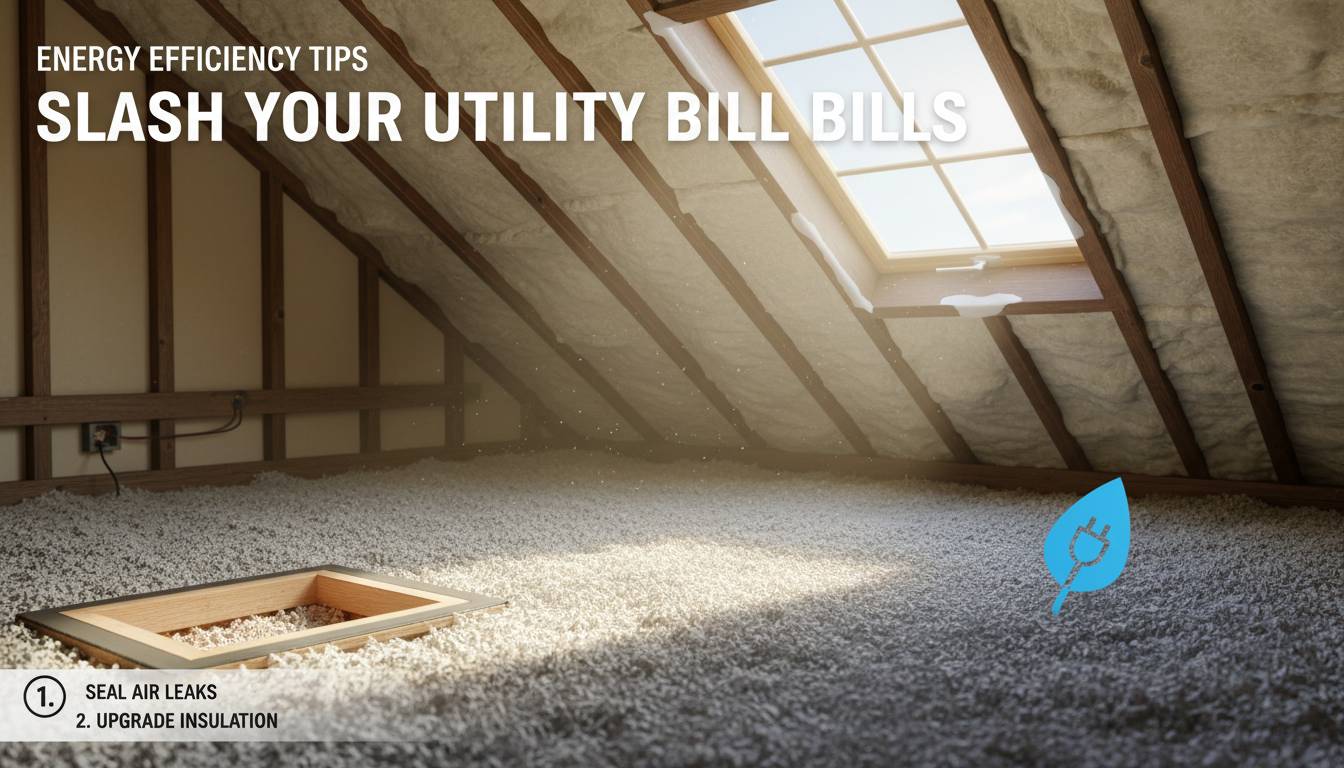
For most homeowners, adding attic insulation provides the highest return. Blown-in fiberglass or cellulose costs approximately $1-$2 per square foot and can reduce heating and cooling costs by 15-25% in homes with inadequate existing insulation. The U.S. DOE estimates that adding insulation to the recommended level for your climate typically costs between $1,500-$2,500 and pays for itself within 3-7 years.
Smart Thermostats: Intelligent Temperature Control
Smart thermostats represent one of the most accessible efficiency upgrades, with retail prices between $120-$250 and annual savings of $100-$150. These devices learn your schedule, adjust automatically, and allow remote control via smartphone apps. The EPA’s analysis of smart thermostat studies shows average energy reductions of 10-15% on heating and cooling costs.
Top smart thermostat features comparison:
| Feature | Basic | Mid-Range | Premium |
|---|---|---|---|
| Learning capability | No | Partial | Full |
| Remote sensors | No | Optional | Included |
| Energy reports | Basic | Detailed | Comprehensive |
| Integration | Basic | Multiple | Full smart home |
| Price range | $80-$120 | $150-$200 | $200-$280 |
The Nest Learning Thermostat (fourth generation, $279) and ecobee SmartThermostat ($169) consistently rank among the best for ease of use and energy savings. Both earned ENERGY STAR certification and include features like occupancy sensing, humidity control, and integration with other smart home devices.
Installation is straightforward for most homeowners with basic DIY skills, though professional HVAC installation (typically $100-$200 additional) ensures proper wiring and system compatibility. Mike Reynolds, an HVAC technician with over 20 years of experience, advises: “Smart thermostats only save energy if they’re programmed correctly. The biggest mistake I see is people overriding the schedule constantly, which eliminates the savings. Set it and trust it.”
HVAC Optimization: Getting More From Your System
Heating and cooling equipment represents your largest energy expense, making optimization critical. Before considering replacement, several maintenance items can restore efficiency:
Annual HVAC maintenance checklist:
- Replace filters every 1-3 months (clogged filters restrict airflow, increasing energy use 5-15%)
- Clean outdoor condenser coils (dirt reduces efficiency by 5-10%)
- Seal ductwork leaks (typical homes lose 20-30% of heated/cooled air to leaks)
- Check refrigerant levels (incorrect charge reduces efficiency 10-20%)
- Clear debris around outdoor units
Professional duct sealing costs $300-$600 on average but typically pays for itself within 2-4 years. Sealing with mastic tape or Aeroseal (a patented aerosol-based sealing process) addresses leaks in hard-to-reach areas that homeowners cannot easily access.
When replacement becomes necessary, look for equipment with high Seasonal Energy Efficiency Ratio (SEER2) ratings. For central air conditioners, minimum efficiency is 14 SEER2, but upgrading to 16-18 SEER2 costs only 10-15% more while reducing cooling costs by 20-30% over the system’s lifetime. Heat pumps offer even greater efficiency, with modern cold-climate models delivering 300-400% efficiency (meaning they produce 3-4 units of heat for every unit of electricity consumed).
Water Heating: Second-Largest Expense
Water heating typically accounts for 18% of home energy use—roughly $400-$600 annually for most families. Several strategies can reduce this cost:
Water heater efficiency strategies:
Lowering the thermostat to 120°F (from the default 140°F) reduces water heating costs by 10-15% while also preventing scalding and reducing scale buildup in pipes. This single adjustment takes seconds and costs nothing.
Insulating older water heater tanks (insulator blankets cost $20-$40) reduces standby heat loss by 25-45%. Newer tanks already include adequate insulation, but those over 7-10 years benefit significantly.
For homes with older water heaters (over 10-15 years), replacement with a heat pump water heater provides 200-300% efficiency. These units extract heat from the air to heat water, using roughly one-third the electricity of conventional resistance heaters. Rebates from utilities and the federal tax credit (30% through 2032, then stepping down) make heat pump water heaters highly cost-effective in most regions.
Lighting and Electronics: Low-Cost Wins
Lighting accounts for roughly 12% of residential energy use, and the solution is remarkably simple: switch to LED bulbs. LED bulbs use 75% less energy and last 25 times longer than incandescent bulbs. At $3-$5 per bulb (down from $10-$15 just a few years ago), the payback period is typically 1-2 years based on electricity savings alone.
Focus on high-use areas first—replacing the five most-used bulbs saves approximately $75-$100 annually. Look for ENERGY STAR-certified LEDs, which meet strict efficiency and quality standards. Color temperature matters for comfort: 2700K provides warm light similar to incandescents, while 5000K offers brighter, cooler light better suited for task areas.
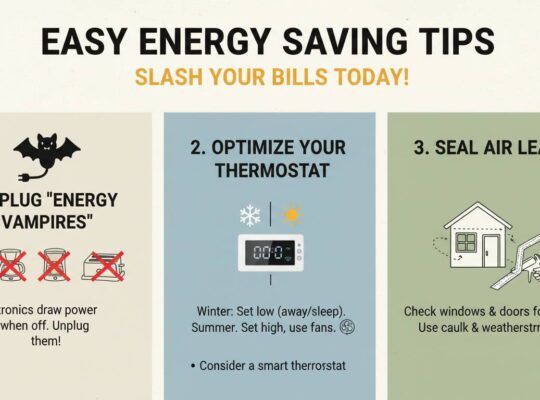
Electronics and “vampire loads” account for 10-15% of home energy use. Devices like televisions, computers, gaming consoles, and chargers draw power even when turned off or in standby mode. Smart power strips ($15-$30) eliminate these phantom loads by cutting power to devices when they’re not in use. The average household can save $50-$100 annually through plug load management.
Behavioral Changes: Free Efficiency
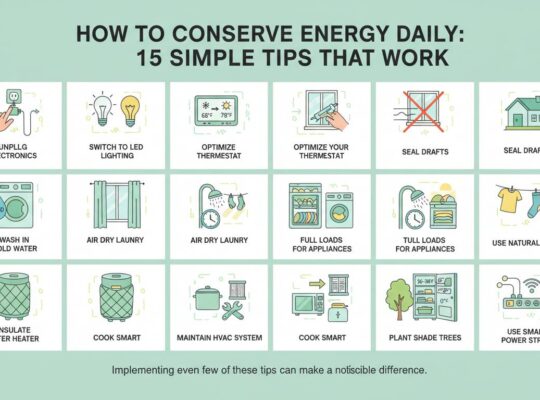
Technical fixes aside, behavioral adjustments provide immediate, cost-free savings. The Department of Energy estimates that thermostat adjustments alone—lowering 2 degrees in winter or raising 2 degrees in summer—can reduce heating and cooling costs by 5-10%.
High-impact behavioral changes:
Reducing hot water use provides substantial savings without any investment. Taking shorter showers (5 minutes versus 10), fixing leaky faucets (a drip can waste 3,000 gallons annually), and running dishwashers and washing machines with full loads only maximizes efficiency. Switching to cold water for laundry eliminates water heating costs for the majority of loads while cleaning most clothing effectively.
Using natural ventilation when outdoor conditions permit reduces HVAC runtime significantly. Opening windows on mild days, using ceiling fans to distribute conditioned air more effectively, and closing vents in unused rooms all contribute to lower energy use. A ceiling fan costs roughly $0.01 per hour to operate versus $1-$3 per hour for central air conditioning—fan use can reduce air conditioning costs by 40% while maintaining comfort.
Getting Professional Help: Energy Audits
For homeowners seeking comprehensive guidance, a professional home energy audit identifies the most cost-effective improvements for your specific situation. Auditors use blower door tests, infrared cameras, and detailed analysis to pinpoint exactly where energy is wasted.
The audit typically costs $300-$600 but includes a prioritized improvement plan with estimated costs and savings. Many utilities offer free or discounted audits, so check with your local provider. The resulting report tells you exactly where to invest for maximum return, avoiding the common mistake of upgrading equipment in a home that needs envelope improvements first.
Frequently Asked Questions
How much can I realistically save by making my home more energy efficient?
Most homeowners who implement comprehensive efficiency upgrades save $500-$1,000 annually, which translates to 25-40% reductions in utility bills. The exact amount depends on your home’s current efficiency, local energy prices, and which improvements you implement. Air sealing and smart thermostats provide immediate savings, while insulation and HVAC upgrades offer larger long-term benefits with longer payback periods.
What is the cheapest way to improve home energy efficiency?
The lowest-cost improvements are behavioral changes and air sealing. Weatherstripping doors and caulking windows costs under $50 in materials and can save $50-$100 annually. Switching to LED bulbs costs approximately $25 for a basic set of bulbs and saves $75-$200 per year. These measures provide the fastest payback—often within one year.
Do smart thermostats really save money?
Yes, smart thermostats consistently deliver savings of $100-$150 annually according to EPA analysis and multiple independent studies. The savings come from learning your schedule, optimizing run times, and allowing remote adjustments. However, savings depend on proper installation and reasonable use—constantly overriding the programmed schedule eliminates most benefits.
How long does it take to recoup the cost of energy efficiency upgrades?
Payback periods vary significantly by improvement. LED bulbs pay back in 1-2 years, smart thermostats in 2 years, air sealing in 1-3 years, and attic insulation in 3-7 years. Equipment replacements like new HVAC systems or heat pump water heaters typically take 7-15 years. However, with current utility rebates and federal tax credits (30% through 2032 for many improvements), payback periods can be cut in half.
Should I get a home energy audit before making improvements?
Yes, a professional energy audit is highly recommended if you plan significant upgrades. The $300-$600 cost is modest compared to the cost of replacing equipment or adding insulation unnecessarily. Audits identify exactly where your home loses energy, allowing you to prioritize the highest-ROI improvements rather than guessing. Many utilities subsidize audits, so check with your provider first.
What are the best energy efficiency improvements for older homes?
Older homes (built before 1980) typically need air sealing, insulation upgrades, and window improvements most urgently. These homes often have minimal insulation, significant air leaks, and outdated windows. A professional audit is especially valuable for older homes, as hidden issues like asbestos in old insulation or knob-and-tube wiring may affect improvement strategies.
Key Takeaways
Improving your home’s energy efficiency is one of the most effective ways to reduce monthly expenses while increasing comfort and property value. The most impactful starting points are air sealing and weatherization, which address the foundation of your home’s energy performance before you invest in equipment upgrades.
Immediate action steps:
| Timeframe | Action | Expected Savings |
|---|---|---|
| Today (30 min) | Replace 5 most-used bulbs with LEDs | $75-100/year |
| This week | Caulk and weatherstrip obvious air leaks | $50-100/year |
| This month | Lower water heater to 120°F | $30-60/year |
| This season | Schedule professional HVAC maintenance | 10-15% on heating/cooling |
The critical insight is that envelope improvements—insulation and air sealing—should precede equipment upgrades. Sealing air leaks and adding proper insulation maximizes the efficiency of any heating or cooling system you install afterward. Without addressing the building envelope first, you’ll simply waste energy treating air that immediately escapes.
For most homeowners, implementing the strategies in this guide will reduce utility bills by 25-40%—translating to $500-$1,000 annually. Combined with available utility rebates and federal tax credits, the financial case for energy efficiency is compelling. Start with the low-cost, high-impact changes, then layer in more significant investments as your budget allows.
Transparency note: This article synthesizes recommendations from the U.S. Department of Energy, ENERGY STAR, and U.S. Energy Information Administration. Individual savings vary based on home characteristics, local energy prices, and implementation quality. No conflicts of interest exist.