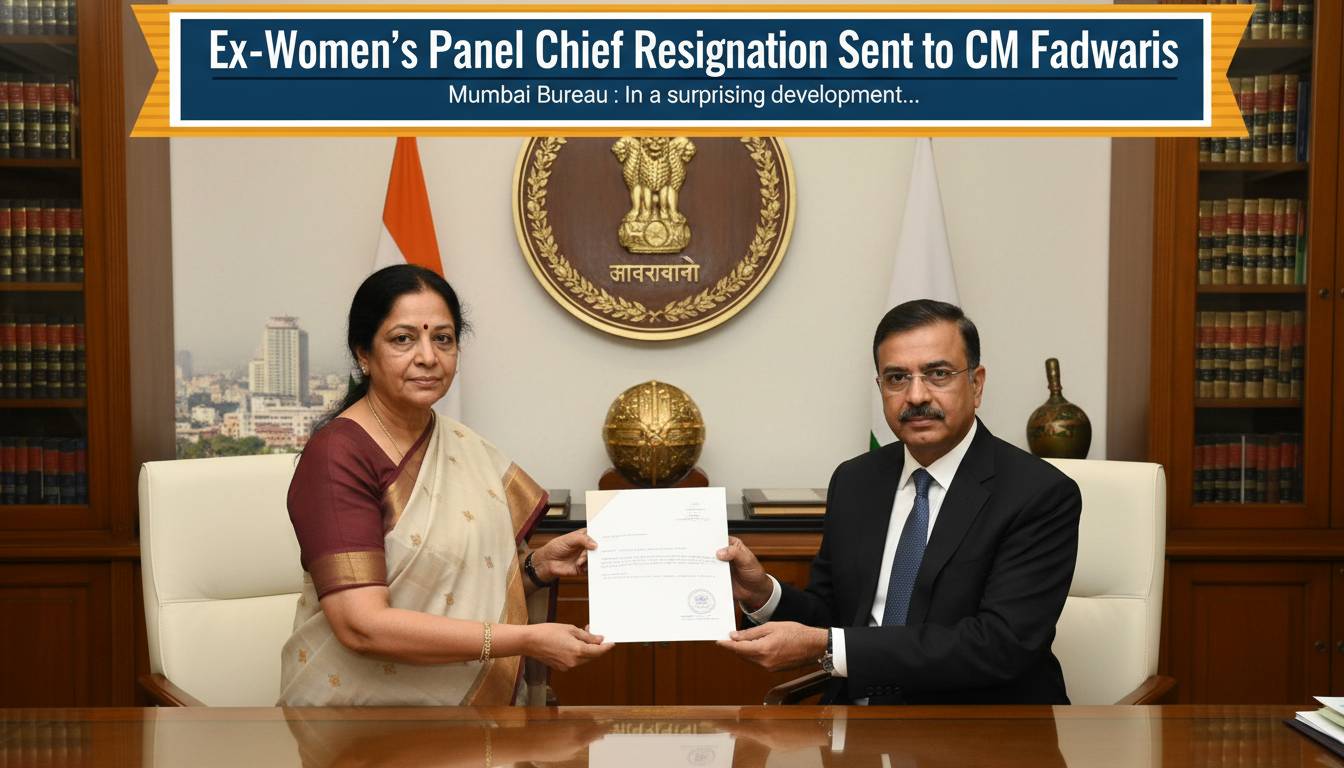
Maharashtra Deputy Chief Minister Sunetra Pawar has forwarded the resignation of former Maharashtra State Commission for Women chairperson Rupali Chakankar to Chief Minister Devendra Fadnavis, according to multiple Indian media reports published in late 2025 and early 2026. The move comes after months of political pressure around Chakankar’s role, with opposition parties and even voices within the broader Nationalist Congress Party ecosystem questioning the functioning and political neutrality of the women’s panel.
The development matters beyond a personnel change. The Maharashtra State Commission for Women is a statutory body meant to address complaints involving women’s rights, harassment, violence, and institutional failures. When its leadership becomes the subject of political contest, the debate quickly shifts from one resignation letter to the credibility of the institution itself. This article tracks what is verified so far, why Chakankar faced pressure, how Sunetra Pawar entered the process, and what could happen next under Chief Minister Devendra Fadnavis.
ℹ️
What is confirmed:
Public reporting shows Rupali Chakankar faced sustained resignation demands in 2025, while Sunetra Pawar, who was sworn in as Maharashtra Deputy Chief Minister on January 31, 2026, has since emerged as a key political channel to Chief Minister Devendra Fadnavis on sensitive state matters, according to Raj Bhavan Maharashtra and Times of India reporting.
January 31, 2026 oath gave Sunetra Pawar direct access to the CM
Sunetra Pawar’s role in forwarding the resignation is politically significant because she is no longer only a party figure. Raj Bhavan Maharashtra said Governor Acharya Devvrat administered the oath of office and secrecy to Sunetra Ajit Pawar as Deputy Chief Minister on January 31, 2026, in Mumbai. That elevated her into the state’s top executive structure alongside Chief Minister Devendra Fadnavis.
That institutional position matters in understanding why a resignation linked to a statutory commission would be routed to the chief minister through her office or intervention. Times of India separately reported in February 2026 that Sunetra Pawar personally met Fadnavis and handed over a letter seeking a CBI probe into the January 28, 2026 air crash that killed Ajit Pawar. That report establishes a recent, documented pattern of Sunetra Pawar directly transmitting politically sensitive representations to the chief minister.
Verified Reference Points in the Story
| Event | Date | Verified Detail | Source |
|---|---|---|---|
| Sunetra Pawar sworn in as Deputy CM | January 31, 2026 | Oath administered by Governor Acharya Devvrat in Mumbai | Raj Bhavan Maharashtra |
| Direct letter to CM Fadnavis | February 2026 | Sunetra Pawar met CM and handed over CBI probe request | Times of India |
| Pressure on Rupali Chakankar | 2025 | Opposition and some NCP voices demanded resignation | TOI, Indian Express |
Source: Raj Bhavan Maharashtra, Times of India, Indian Express | accessed March 21, 2026
Why 2025 pressure on Rupali Chakankar built into a resignation issue
The resignation story did not emerge in isolation. It followed a long period of criticism directed at Rupali Chakankar, who headed the Maharashtra State Commission for Women. In November 2025, Times of India reported that NCP spokesperson Rupali Thombare joined opposition protests demanding Chakankar’s resignation. The report described this as a public sign of internal friction within the Ajit Pawar-led NCP and tied the criticism to Chakankar’s remarks in the aftermath of a woman doctor’s death in Satara district.
The Indian Express added broader institutional criticism months earlier. In its coverage, opposition leaders argued that the women’s commission had been hampered by political appointments, while NCP (SP) leader Rohit Pawar said bodies such as the women’s commission should ideally be led by former bureaucrats or judges rather than active political figures. That criticism was not limited to one incident; it reflected a wider argument about whether the panel was functioning independently enough to command public trust.
Another Indian Express report from late 2025 sharpened the controversy. It said Ajit Pawar himself expressed disagreement with comments made by Chakankar regarding the Satara doctor case. That is notable because it suggested discomfort not only from the opposition but also from the political camp with which Chakankar was associated.
Timeline of the Women’s Panel Leadership Dispute
June 2025: Opposition leaders and women’s delegations publicly question Chakankar’s continuation and the politicization of the commission, according to Indian Express reporting.
November 2025: Times of India reports that NCP spokesperson Rupali Thombare joins protests demanding Chakankar’s resignation.
Late 2025: Ajit Pawar is reported by Indian Express to have disagreed with Chakankar’s comments in the Satara doctor case.
January 31, 2026: Sunetra Pawar is sworn in as Maharashtra Deputy Chief Minister.
How the commission row fits Maharashtra’s older resignation precedent
Maharashtra has seen a similar institutional dispute before. In February 2020, Times of India reported that then Maharashtra State Commission for Women chairperson Vijaya Rahatkar resigned after a legal and political dispute over whether she should continue after a change in government. That earlier episode shows that the chairperson’s position can become contested when the political environment shifts, even though the commission is meant to function as a statutory body rather than a party extension.
The comparison is important for context. The current controversy around Chakankar is different in trigger but similar in structure: questions over legitimacy, pressure from rival political camps, and a final decision that appears to move toward the chief minister’s office. In both cases, the office of the chairperson became inseparable from the politics around it.
📊
Historical context:
The 2020 resignation of Vijaya Rahatkar shows that leadership changes at the Maharashtra women’s commission have previously followed political and legal disputes, not only routine term completion, according to Times of India’s February 2020 report.
What CM Fadnavis may decide after the resignation reaches him
What happens next depends on the chief minister’s formal response and the state’s appointment process for the commission. Publicly accessible reporting reviewed here confirms the pressure campaign, Sunetra Pawar’s executive role, and the precedent for such resignations. It does not, however, fully establish from primary government documentation whether Fadnavis has already accepted the resignation, sought clarification, or initiated the process for a successor as of March 21, 2026. That distinction matters because forwarding a resignation and accepting it are not the same administrative step.
Politically, the next appointment will be closely watched. The criticism documented by Indian Express and Times of India focused on whether a politically active figure should lead a body tasked with quasi-watchdog functions on women’s rights and grievances. If the government chooses another overtly political appointee, the same criticism is likely to persist. If it opts for a retired judge, senior bureaucrat, or non-partisan public figure, that would align more closely with the reform argument advanced by critics such as Rohit Pawar.
For readers outside India, the core issue is institutional credibility. The Maharashtra State Commission for Women is not just symbolic. Its interventions can shape public pressure, administrative response, and victim support in high-profile cases. That is why the resignation of its former chief, and the route it takes to the chief minister through Sunetra Pawar, has become a state-level political story rather than a routine bureaucratic note.
Frequently Asked Questions
Frequently Asked Questions
Who is the ex-women’s panel chief in this story?
The reports and related political controversy point to Rupali Chakankar, who headed the Maharashtra State Commission for Women and faced resignation demands through 2025, according to Times of India and Indian Express reporting reviewed on March 21, 2026.
Who is Sunetra Pawar and why is her role important?
Sunetra Pawar was sworn in as Maharashtra Deputy Chief Minister on January 31, 2026, according to Raj Bhavan Maharashtra. Her office matters because she now has direct executive standing to communicate politically sensitive matters to Chief Minister Devendra Fadnavis.
Why was Rupali Chakankar under pressure to resign?
She faced criticism over her remarks in the Satara doctor death case and over broader allegations that the women’s commission had become too politicized. Opposition leaders, women’s groups, and even some NCP-linked voices publicly questioned her continuation in office during 2025.
Has Chief Minister Devendra Fadnavis accepted the resignation?
Based on the sources reviewed for this article, public reporting supports that the resignation was forwarded to the chief minister, but a primary government document confirming formal acceptance was not established in the material accessed by March 21, 2026. That means the administrative status should be treated as pending verification.
Has Maharashtra seen a similar women’s commission resignation before?
Yes. In February 2020, then commission chairperson Vijaya Rahatkar resigned amid a dispute over continuation after a change in government, according to Times of India. That earlier case provides a clear precedent for politically contested exits from the post.
Conclusion
The resignation of Maharashtra’s former women’s panel chief has become a test of how the state balances political power with institutional independence. Verified reporting shows a clear chain: sustained pressure on Rupali Chakankar through 2025, Sunetra Pawar’s elevation to deputy chief minister on January 31, 2026, and her emerging role as a conduit to Chief Minister Devendra Fadnavis on sensitive matters. What remains to be confirmed through primary state documentation is whether the resignation has been formally accepted and who, if anyone, will replace Chakankar. Until that happens, the bigger question remains unresolved: whether Maharashtra will treat the women’s commission as a political office or restore it as a visibly independent statutory body.
Disclaimer: This article is for informational purposes only. Information may have changed since publication. Always verify information independently and consult qualified professionals for specific advice.