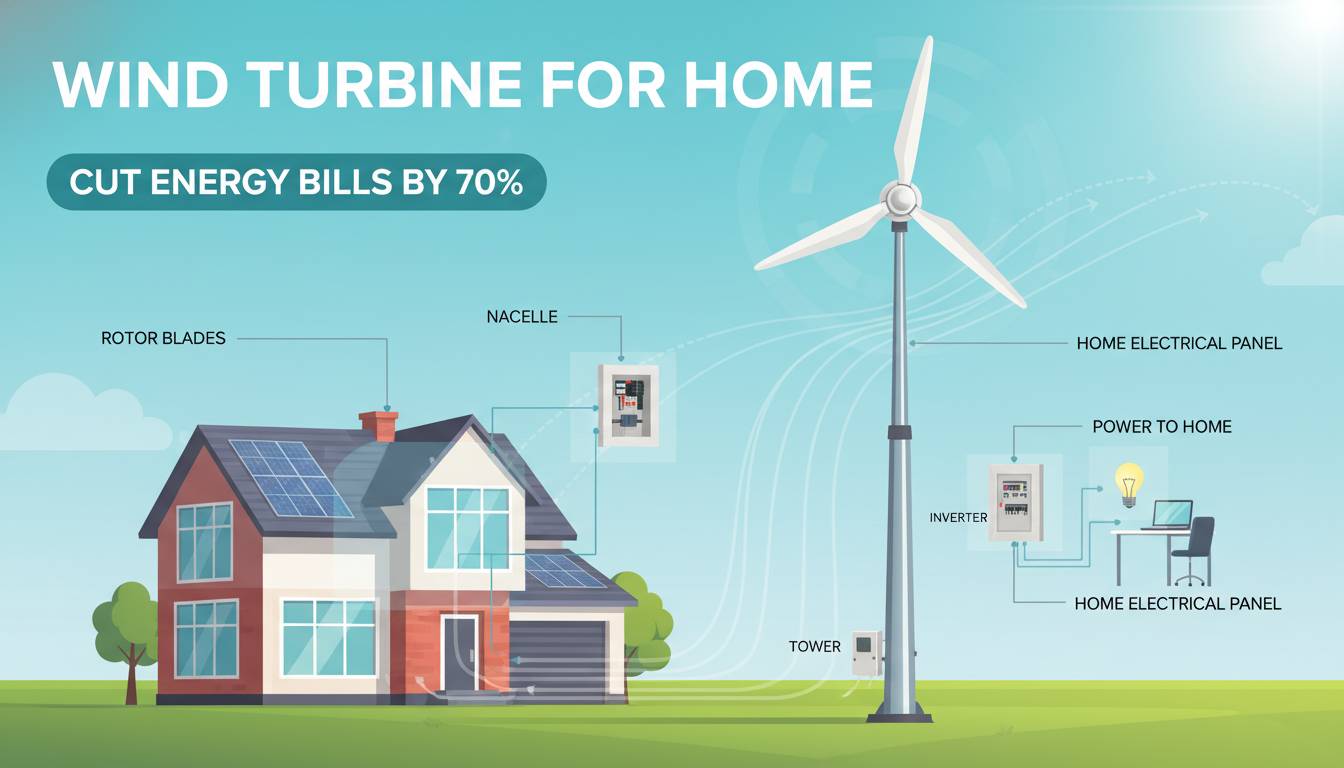
Small-scale wind turbines can reduce residential electricity costs by 50-90% in optimal conditions, with many homeowners reporting 60-70% reductions in their monthly utility bills. However, achieving these savings depends heavily on your location, property characteristics, and wind resources. This comprehensive guide examines whether a home wind turbine makes sense for your situation, the real costs involved, and how to determine if your property can deliver those claimed savings.
How Do Home Wind Turbines Work?
Residential wind turbines convert the kinetic energy of wind into electricity through a process called aerodynamic lift. When wind flows over the turbine’s blades, it creates a difference in air pressure that causes the blades to spin. This rotational energy drives a generator housed in the nacelle (the turbine’s body), producing electricity that can power your home’s electrical appliances and systems.
The fundamental principle relies on your local wind resources. A typical residential wind turbine begins generating power at wind speeds of around 7-9 mph, reaches rated capacity at approximately 25-35 mph, and automatically shuts down for safety at speeds exceeding 55 mph. This means your annual average wind speed dramatically impacts potential energy production.
Most home wind systems operate in two configurations: grid-tied and off-grid. Grid-tied systems remain connected to your local utility grid, allowing you to draw electricity when wind conditions are low and feed excess power back to the grid when production exceeds your needs. This arrangement often qualifies you for net metering credits, essentially using the grid as a massive battery. Off-grid systems require battery storage banks to maintain power during calm periods, making them more complex and expensive but essential for remote properties without utility access.
The power output formula follows physics principles: power equals one-half times air density times the swept area (blade diameter squared) times the cube of wind speed, multiplied by the turbine’s efficiency rating. This explains why doubling your rotor diameter quadruples potential power output, while doubling wind speed increases power output eightfold.
Types of Wind Turbines for Residential Use
Understanding the different turbine categories helps you select the appropriate system for your energy needs and property constraints.
Horizontal-Axis Wind Turbines (HAWT)
The most recognizable design, HAWTs feature a propeller-style rotor mounted on a horizontal shaft that faces into the wind. These turbines achieve the highest efficiency ratings, typically 35-45% of the wind’s theoretical energy conversion. For residential applications, systems range from 400-watt micro-turbines suitable for remote cabins to 10-kilowatt systems capable of offsetting most of a typical American home’s electricity consumption.
Best for: Properties with consistent, unobstructed wind exposure; homeowners seeking maximum energy production per dollar invested.
Vertical-Axis Wind Turbines (VAWT)
These turbines feature blades that rotate around a vertical axis, resembling an eggbeater or Darrieus design. While less efficient than HAWTs (typically 20-30% efficiency), VAWTs offer advantages: they don’t require wind direction orientation, produce less vibration, and operate quietly. However, they generally cost more per watt generated and remain less common in residential applications.
Best for: Urban environments with turbulent wind patterns; properties where directional orientation proves difficult.
Building-Mounted Systems
Smaller turbines, typically 400-1,500 watts, can mount directly on rooftops or integrated into building designs. These systems sacrifice some efficiency due to turbulent air currents but eliminate the space requirements of pole-mounted turbines. They work best in coastal or particularly windy locations where building height provides access to stronger, more consistent winds.
Best for: Urban homeowners with limited yard space; supplementary power alongside solar panels.
Comparison of Residential Wind Turbine Types
| Factor | Small HAWT (1-5 kW) | Medium HAWT (5-10 kW) | VAWT | Building-Mounted |
|---|---|---|---|---|
| Cost per Watt | $3-5 | $2-4 | $5-8 | $4-7 |
| Efficiency | 35-45% | 35-45% | 20-30% | 25-35% |
| Minimum Wind Speed | 7-9 mph | 7-9 mph | 6-8 mph | 8-10 mph |
| Space Required | 1-2 acres | 2-5 acres | 0.5-1 acre | Rooftop |
| Best Wind Class | Class 2+ | Class 3+ | Class 2+ | Class 3+ |
| Lifespan | 20-25 years | 20-25 years | 15-20 years | 15-20 years |
Can You Really Cut Energy Bills by 70%?
The 70% reduction claim requires important context. Research from the Wind Energy Foundation and field studies from the National Renewable Energy Laboratory (NREL) indicate that well-sited residential wind systems can offset 50-90% of a home’s electricity consumption. However, actual results vary dramatically based on several critical factors.
Wind Resource Quality represents the most significant variable. NREL’s wind resource maps show that most of the United States experiences average annual wind speeds between 9-14 mph at 80-meter heights—adequate but not exceptional. Coastal areas, the Great Plains, and elevated terrain typically offer superior wind resources. Properties in the “wind corridor” stretching from North Dakota to Texas can achieve the highest savings, while those in forested or urban areas may struggle to reach double-digit savings percentages.
System Sizing determines your offset potential. A 5-kilowatt system producing approximately 10,000 kWh annually (reasonable in moderate wind conditions) would fully offset a home consuming that amount. The average U.S. household uses around 10,700 kWh annually, meaning a properly sized turbine can theoretically cover 100% of consumption in good wind areas. However, production fluctuates seasonally—summer breezes often diminish when air conditioning demands peak, while winter winds may exceed electrical heating needs.
Energy Costs affect your financial return. The U.S. Energy Information Administration reports average residential electricity rates of 13-25 cents per kWh depending on location, with rates rising 3-5% annually. Higher utility rates accelerate your payback period and increase effective savings.
📊 REALISTIC SAVINGS BENCHMARKS
| Location (Wind Class) | Expected Annual Production (5kW System) | Annual Savings (at $0.15/kWh) | % Reduction |
|---|---|---|---|
| Class 1 (Poor) | 4,000-6,000 kWh | $600-$900 | 30-50% |
| Class 2 (Moderate) | 7,000-9,000 kWh | $1,050-$1,350 | 50-65% |
| Class 3 (Good) | 10,000-12,000 kWh | $1,500-$1,800 | 65-80% |
| Class 4-5 (Excellent) | 13,000-15,000 kWh | $1,950-$2,250 | 80-100% |
Installation Requirements and Site Assessment
Before investing in a residential wind turbine, conducting a thorough site assessment prevents costly mistakes. The most common reasons home wind systems underperform involve inadequate wind resources, insufficient tower height, or poor placement relative to obstacles.
Wind Assessment should begin with at least six months of on-site wind data collection if possible. Professional installers often deploy anemometers at the proposed turbine height, measuring wind speed and direction. Alternatively, NREL’s Wind Resource Maps provide estimates, but local terrain, buildings, and trees create micro-climates that may significantly differ from regional averages. Look for average speeds exceeding 10 mph at your turbine’s hub height for viable economics.
Tower Height dramatically impacts energy production. Installing a turbine at 60 feet typically yields 30% more power than a 30-foot installation due to reduced ground friction and fewer turbulence-causing obstacles. Most residential installations use tubular steel towers or lattice towers ranging from 30-100 feet. The rule of thumb requires the turbine blade tip to be at least 30 feet above any obstacle within 500 feet.
Property Requirements depend on turbine size and local regulations. The Federal Aviation Administration (FAA) requires notification for structures exceeding 200 feet, and some municipalities impose height restrictions or noise limits. Plan for a cleared radius around the tower equal to the blade diameter plus additional clearance. A 20-foot diameter turbine needs approximately 50 feet of clear space.
Grid Connection for grid-tied systems requires coordination with your utility company. Most utilities require interconnection agreements, specify equipment (including UL-listed inverters and proper grounding), and may charge interconnection fees. The process typically takes 2-8 weeks, so factor this timeline into your project planning.
Costs, Incentives, and Return on Investment
Understanding the complete financial picture involves more than equipment costs. A realistic assessment considers installation, maintenance, and available incentives.
System Costs for residential wind have declined significantly but still represent substantial investments. Small residential systems (1-5 kW) cost between $3,000 and $8,000 per kilowatt installed, while medium systems (5-10 kW) range from $2,000-$4,000 per kilowatt. A typical 5-kilowatt grid-tied system costs $15,000-$25,000 fully installed, while 10-kilowatt systems run $30,000-$50,000.
| System Size | Equipment Cost | Installation Cost | Total Investment |
|---|---|---|---|
| 2 kW | $4,000-$6,000 | $2,000-$4,000 | $6,000-$10,000 |
| 5 kW | $10,000-$15,000 | $5,000-$10,000 | $15,000-$25,000 |
| 10 kW | $18,000-$25,000 | $12,000-$25,000 | $30,000-$50,000 |
Federal Tax Credits have changed significantly. The Inflation Reduction Act of 2022 extended the Residential Clean Energy Credit at 30% through 2032, then steps down to 26% in 2033 and 22% in 2034. This credit applies to wind turbines and includes installation costs. Note that this applies to your primary residence and requires sufficient tax liability to benefit.
State and Local Incentives vary widely. Many states offer additional rebates, tax credits, or property tax exemptions for renewable energy installations. Some utilities provide rebates ranging from $500-$3,000. Research your state energy office and utility company for available programs.
Payback Period calculations depend on your specific electricity rates, wind resources, and system costs. Most residential wind systems achieve payback in 8-15 years, with higher-quality wind sites and larger systems reaching breakeven faster. Given 20-25 year turbine lifespans, this leaves 10-17 years of essentially free electricity after the payback period.
Pros and Cons of Home Wind Turbines
Weighing advantages against limitations helps determine whether residential wind makes sense for your situation.
Advantages:
- Long-term energy cost reduction: After payback, electricity becomes essentially free
- Environmental benefits: Zero emissions during operation, reduced carbon footprint
- Energy independence: Reduced reliance on utility grid and fossil fuels
- Property value increase: Studies suggest renewable energy systems add 4-8% to property values
- Hedge against utility rate increases: Lock in your “fuel” costs at today’s prices
- Dual-use property: Land beneath turbines can often continue agricultural or other use
Disadvantages:
- High upfront costs: $15,000-$50,000 for meaningful systems
- Wind-dependent output: Production varies hourly, daily, and seasonally
- Site limitations: Not all properties have adequate wind resources or space
- Maintenance requirements: Annual maintenance extends system life; component wear occurs
- Noise and aesthetics: Some homeowners and neighbors object to appearance or sound
- Slow payback: 8-15 years typically exceeds solar photovoltaic payback periods
Common Mistakes to Avoid
Homeowners frequently make several costly errors when considering residential wind turbines.
Mistake #1: Buying Based on Price Alone
Low-cost imported turbines often use inferior components that fail prematurely. Look for certified equipment from established manufacturers with verifiable performance data and warranty terms of at least 5 years for the entire system.
Mistake #2: Underestimating Tower Height
Installing insufficient tower height places turbines in turbulent air caused by trees, buildings, and terrain irregularities. This dramatically reduces energy output and increases mechanical stress. Always install as high as structurally and legally feasible—60 feet should be considered a minimum.
Mistake #3: Ignoring Wind Assessment
Assuming your location has adequate wind based on general knowledge often leads to disappointment. Professional wind assessments reveal whether your specific site produces sufficient resources. Expect to measure for at least three months, preferably through different seasons.
Mistake #4: Oversizing or Undersizing the System
Undersized systems fail to meet energy needs; oversized systems cost more than necessary and may produce more electricity than you can use or export profitably. Design based on actual annual consumption data from your utility bills.
Frequently Asked Questions
How much does a home wind turbine cost to install?
A typical residential wind turbine system costs $3,000-$5,000 per kilowatt of rated capacity. A 5-kilowatt system suitable for most homes costs $15,000-$25,000 fully installed, including equipment, tower, inverter, and installation labor. Smaller 1-2 kW systems suitable for supplementary power cost $5,000-$12,000.
What size wind turbine do I need for my home?
Most average American homes (2,000-3,000 square feet) require a 5-10 kW wind turbine to significantly offset electricity consumption. Analyze your annual kWh usage from utility bills—divide your annual consumption by the expected annual production per kilowatt at your site (roughly 1,500-2,500 kWh per kW of installed capacity in moderate wind areas) to determine appropriate sizing.
How long do residential wind turbines last?
Quality residential wind turbines typically last 20-25 years with proper maintenance. Major components like the generator and gearbox may require replacement once during the system lifespan, costing $3,000-$8,000. Annual maintenance costs approximately $200-$500 for inspection, lubrication, and minor repairs.
Are home wind turbines worth it?
Home wind turbines are worth it for properties with average annual wind speeds exceeding 10 mph, adequate space for proper tower installation, and electricity rates above $0.12 per kWh. Properties in the Great Plains, coastal regions, or hilltop locations with good wind exposure typically see returns within 8-12 years. Urban or heavily wooded properties rarely achieve economic viability with wind turbines.
Do I need a permit to install a wind turbine?
Yes, most municipalities require building permits for residential wind turbine installations. Requirements typically include structural engineering reviews, FAA notification (for structures over 200 feet), and compliance with local zoning regulations regarding height, setback distances, and noise levels. Contact your local building department before purchasing equipment.
Can I install a wind turbine myself?
While technically possible for very small systems, professional installation is strongly recommended for turbines rated above 1 kW. Proper tower construction, electrical wiring, grounding, and interconnection with the utility grid require licensed professionals to ensure safety, code compliance, and maintain warranty coverage. Most manufacturers void warranties without professional installation documentation.
Conclusion
Residential wind turbines offer genuine potential to dramatically reduce or even eliminate electricity bills for suitable properties with adequate wind resources. The 70% savings figure is achievable for homeowners in wind-favorable locations who invest in properly sized systems, secure necessary permits, and commit to long-term energy independence.
However, success requires realistic expectations about costs, site requirements, and payback timelines. The upfront investment of $15,000-$50,000 demands patience—most systems require 8-15 years to achieve payback. Before proceeding, conduct professional wind assessments, compare quotes from multiple certified installers, and thoroughly research available incentives in your area.
For properties in the wind corridor running through the Great Plains, coastal regions, or other high-wind areas, residential wind turbines represent a viable renewable energy strategy that complements or alternatives solar power. For properties in less favorable wind locations, solar photovoltaic systems typically offer better returns with lower maintenance requirements and faster payback periods.
The decision ultimately depends on your specific location, energy consumption patterns, budget, and commitment to sustainability. When properly sited and installed, home wind turbines deliver decades of clean, free electricity while reducing your environmental footprint and protecting against future utility rate increases.