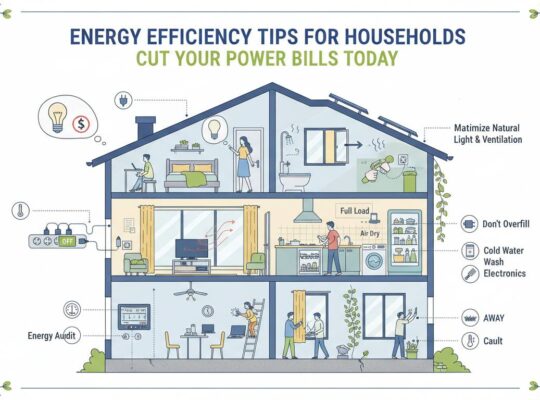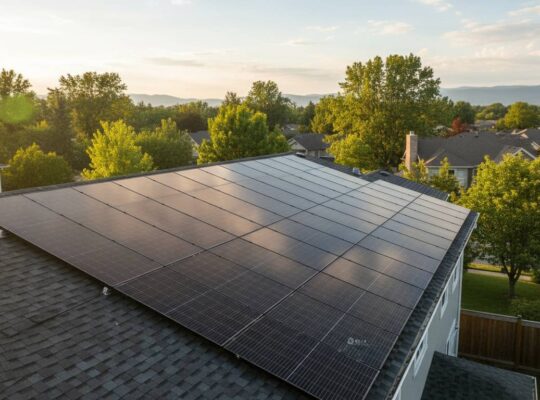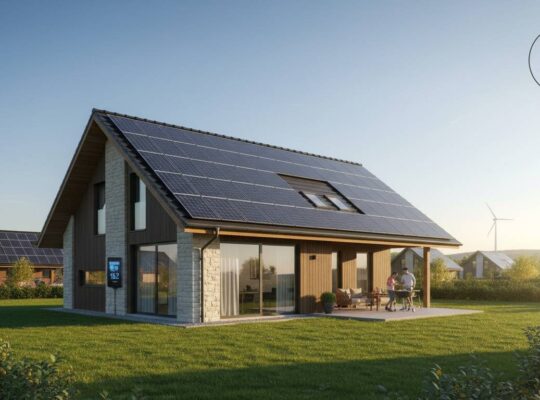
The average American household spends approximately $1,700 annually on electricity, and that number has climbed nearly 15% over the past five years. Meanwhile, solar panel systems have dropped in cost by more than 60% since 2010, creating a fundamental shift in how homeowners evaluate their energy options. The math no longer favors traditional grid electricity for millions of households across the United States.
This isn’t a hypothetical future scenario—it’s happening right now. In 2024, residential solar installations reached record levels, with over 4 million American homes powered at least partially by the sun. The comparison between solar panels and traditional electricity has evolved from a niche environmental question into a mainstream financial decision that affects family budgets, property values, and national energy policy.
The Economic Case: Breaking Down the Numbers
The financial advantages of solar panels over conventional electricity extend far beyond simply reducing monthly utility bills. Understanding the full economic picture requires examining both immediate savings and long-term investment returns.
Cost Comparison at a Glance
| Factor | Traditional Electricity | Solar Panels |
|---|---|---|
| Average monthly bill (US) | $165-$200 | $0-$50 (after installation) |
| 25-year total cost | $50,000-$60,000 | $15,000-$25,000 (including installation) |
| Price trend (last decade) | ↑ 15-20% annually | ↓ 60%+ (system cost) |
| Investment return | None | 15-20% average ROI |
The average residential solar system in the United States costs between $15,000 and $25,000 after federal tax credits, though prices vary significantly by location and system size. The typical payback period—the time required for savings to equal the initial investment—falls between 6 and 12 years, depending on local electricity rates, available sunlight, and system efficiency. Once the system pays for itself, electricity production remains essentially free for the remaining 15-20 years of the panel’s operational lifespan.
The Federal Solar Investment Tax Credit (ITC) allows homeowners to deduct 30% of their solar installation costs from federal taxes, significantly reducing the upfront financial barrier. This credit, which was extended through the Inflation Reduction Act, makes solar installation more accessible than ever before. Many states offer additional incentives, rebates, and net metering programs that further accelerate the financial returns.
SEIA reports that a typical 6-kilowatt residential solar system saves homeowners an average of $29,000 over the system’s 25-year lifetime. These savings compound when you consider that utility rates have historically increased by 2-3% annually, while solar costs remain fixed once the system is installed.
Environmental Impact: The Sustainability Advantage
Beyond economics, solar panels offer substantial environmental benefits that traditional electricity generation cannot match, particularly in regions where the grid relies heavily on fossil fuels.
Electricity production accounts for roughly 25% of U.S. carbon emissions, making residential energy consumption a significant contributor to climate change. Coal-fired power plants remain a primary source of grid electricity in many states, releasing sulfur dioxide, nitrogen oxides, and mercury into the atmosphere alongside carbon dioxide. Natural gas plants burn cleaner but still emit significant greenhouse gases.
A typical residential solar system prevents approximately 3,000 to 4,000 pounds of carbon dioxide emissions annually, depending on location and system size. Over a 25-year lifespan, that’s roughly 80,000 to 100,000 pounds of CO2—equivalent to driving a car for 100,000 miles. The Environmental Protection Agency’s greenhouse gas equivalencies calculator helps visualize these impacts in concrete terms.
The water consumption difference is equally striking. Traditional power plants—particularly thermoelectric facilities that use steam turbines—consume massive amounts of water for cooling. A single coal-fired power plant can use billions of gallons annually. Solar panels require virtually no water for operation, making them particularly valuable in drought-prone regions of the western United States.
NREL research indicates that the energy payback time for modern solar panels—the time required to generate as much energy as was used to manufacture them—has fallen to just 1-2 years in sunny regions. This means the environmental benefits of solar deployment far outweigh the manufacturing impacts within a short period after installation.
Energy Independence and Grid Reliability
The recent increase in extreme weather events has exposed significant vulnerabilities in the traditional electrical grid. Texas’s 2021 winter storm, which left millions without power, and California Public Utility Commission’s rotating outages during heat waves demonstrate that grid reliability cannot be taken for granted.
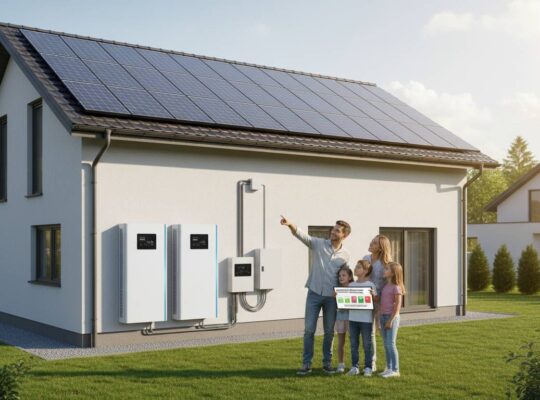
Solar panel installations, especially those paired with battery storage systems, provide homeowners with a degree of energy independence that grid-connected traditional electricity simply cannot offer. When the grid goes down, a properly configured solar system with battery backup can maintain power for essential appliances and systems.
Net metering policies, available in most states, allow homeowners to feed excess solar electricity back into the grid in exchange for credits on their utility bills. This arrangement effectively turns the electric meter backward during sunny periods, reducing or eliminating electricity costs during peak production hours. Some utilities offer time-of-use rate structures where solar production during expensive afternoon hours provides maximum financial benefit.
The distributed nature of solar generation also reduces strain on transmission infrastructure. Traditional power plants often located far from population centers require extensive transmission line networks that lose energy during distribution. Rooftop solar generates electricity at the point of consumption, eliminating these transmission losses and reducing the need for expensive grid upgrades.
Property Value and Investment Perspective
Real estate data consistently shows that solar panel installations increase home values, making solar not just an energy decision but a sound financial investment comparable to a home renovation.
Lawrence Berkeley National Laboratory’s comprehensive study of solar home sales found that homes with solar panels sell for approximately 4.1% more than homes without solar, translating to an additional $9,500 in value for a median-priced home. This premium exceeds the cost of the solar system in most cases, meaning homeowners actually profit from their investment even if they sell before the system pays for itself through utility savings.
The return on investment for solar panels outperforms many traditional financial instruments over the long term. While stock market returns vary and bonds offer modest yields, solar provides a guaranteed return equal to the local electricity rate—essentially a risk-free investment that hedges against future utility increases.
Multiple studies confirm that solar panels rank among the most valuable home improvements for return on investment. Unlike kitchen renovations or swimming pools, which may not recoup their costs, solar improvements consistently add value exceeding their installation price. This makes solar particularly attractive for homeowners planning to sell within 5-10 years.
Maintenance, Durability, and Practical Considerations
A common concern about solar panels involves reliability and ongoing maintenance requirements. However, modern solar systems are designed for decades of trouble-free operation with minimal upkeep.
Solar panels typically come with 25-30 year warranties that guarantee performance at 80-85% of rated output. The degradation rate—annual decrease in energy production—averages just 0.5% to 0.8% per year, meaning most systems will still produce 75-80% of their original output after 25 years. This longevity exceeds most home appliances and rivals or exceeds the lifespan of traditional HVAC systems.
Maintenance requirements are surprisingly modest. Occasional cleaning to remove dust, pollen, leaves, or snow may be necessary depending on local conditions, but rainfall typically provides sufficient cleaning in most regions. Annual professional inspections, costing $150 to $300, can identify any potential issues before they affect performance.
The reliability of modern solar technology is backed by extensive field data. According to NREL’s analysis of large-scale solar installations, failure rates are extremely low, with most systems operating at better than 95% of their rated capacity throughout their warranty period.
Technological Advances and Future Outlook
The solar industry has experienced remarkable technological progress that continues to improve the economics and efficiency of panel installations. Understanding these advances helps contextualize why now represents an optimal time for solar adoption.
Efficiency Improvements
Modern monocrystalline solar panels convert 20-23% of incident sunlight into electricity, compared to just 10-15% for early commercial panels from the 1990s. This improvement means smaller roof spaces can now generate equivalent power to larger systems of previous generations. Premium panels from manufacturers like SunPower and REC achieve efficiencies exceeding 22%, pushing the boundaries of what’s possible on residential rooftops.
Battery Storage Integration
The convergence of solar panels with home battery systems—particularly Tesla Powerwall and alternatives from LG, Enphase, and Panasonic—has transformed the backup power equation. Battery storage allows homeowners to store excess solar production for use during evening hours or grid outages, essentially eliminating reliance on traditional electricity even when the sun isn’t shining. The cost of residential battery systems has fallen by approximately 70% since 2010, making storage increasingly accessible.
Smart Grid Capabilities
Modern solar installations integrate with smart home technology, allowing homeowners to monitor production and consumption in real-time through smartphone applications. These systems can automatically optimize energy use, charge electric vehicles during peak production periods, and respond to utility demand signals that offer additional savings opportunities.
The Solar Energy Industries Association projects that residential solar installations will continue growing at 15-20% annually through 2030, driven by falling costs, increasing electricity rates, and growing environmental awareness. States with ambitious renewable energy targets—including California, New York, and Massachusetts—are implementing policies that will further accelerate adoption.
Common Mistakes and Misconceptions
Despite the compelling case for solar, several misconceptions prevent homeowners from making informed decisions. Understanding these pitfalls helps ensure a positive installation experience.
Mistake #1: Focusing Only on Upfront Cost
Some homeowners select solar contractors based solely on the lowest price, without evaluating panel quality, warranty terms, and installer reputation. The cheapest option often uses lower-quality panels or inverters that degrade faster and require earlier replacement. Investing in reputable equipment from established manufacturers typically provides better long-term value.
Mistake #2: Ignoring Local Installation Quality
Solar installation quality varies dramatically between contractors. Poor electrical connections, inadequate roof mounting, and improper permitting can create safety hazards and system performance issues. Homeowners should verify contractor certifications, check references, and ensure proper licensing before proceeding.
Mistake #3: Misunderstanding Net Metering Terms
Net metering policies vary significantly by state and utility. Some jurisdictions fully credit excess production at the retail electricity rate, while others offer reduced compensation or time-of-use arrangements that may not maximize savings. Understanding local policy details before installation helps set realistic expectations.
Mistake #4: Overlooking Tree Trimming and Future Shading
Solar panels require unobstructed sunlight for optimal performance. Failing to account for future tree growth, new building construction, or seasonal shading can significantly reduce energy production. A professional solar assessment should include shading analysis throughout the year.
Conclusion
The advantages of solar panels over traditional electricity have become overwhelming for most American homeowners. Financial benefits—typically $20,000 to $40,000 in lifetime savings—combine with environmental benefits, energy independence, and property value increases to create a compelling case for adoption. Technological improvements have resolved historical concerns about reliability and efficiency, while falling costs and generous federal incentives have removed the primary barrier of upfront investment.
For homeowners evaluating their energy options, the analysis has become straightforward: solar panels typically cost less than grid electricity over the system’s lifetime, provide cleaner energy, increase property values, and offer resilience benefits that traditional electricity cannot match. The question is no longer whether solar makes sense, but rather which installation approach best fits individual circumstances.
Those considering solar should obtain multiple quotes from reputable local installers, verify equipment warranties and company histories, and carefully review net metering policies in their utility territory. With proper due diligence, residential solar represents one of the most reliable financial decisions available to homeowners in 2024.
Frequently Asked Questions
How long do solar panels last?
Most residential solar panels come with 25-30 year warranties and can continue producing electricity for 30-40 years with gradual efficiency decline. The average degradation rate is approximately 0.5% to 0.8% per year, meaning systems typically maintain 70-80% of their original output after 25 years.
Do solar panels work on cloudy days?
Yes, solar panels still generate electricity on cloudy days, though at reduced efficiency—typically 10-25% of their rated output. They do not require direct sunlight to produce power, and diffuse light still contributes to energy generation. Regions with frequent cloud cover can still benefit significantly from solar installation.
What happens to my electricity bill after installing solar panels?
With net metering, your electricity bill is reduced by the value of the energy your panels produce. Many homeowners reduce their bills to near zero, while some with particularly high production may receive credits from their utility. You’ll still pay fixed connection fees (typically $10-25 monthly) regardless of consumption.
Is my roof suitable for solar panels?
South-facing roofs with minimal shading provide optimal conditions, but east and west-facing roofs can also work well. Factors including roof age, material, pitch, and available space affect suitability. Most asphalt shingle roofs from the past 20 years can support solar installations. A professional installer can assess your specific situation.
How much does a residential solar system cost?
The average residential solar system costs $15,000-$25,000 after federal tax credits, with prices varying by system size, location, and equipment quality. The 30% Federal Solar Investment Tax Credit significantly reduces upfront costs, and many states offer additional incentives that further lower the effective price.