Electricity costs have become a significant burden for American households, with average monthly bills now exceeding $170 and prices continuing to climb year over year. The U.S. Energy Information Administration reports that residential electricity prices rose 4.6% in 2023 alone, and experts project continued increases through the decade. For families looking to reduce expenses without sacrificing comfort, understanding how electricity flows through your home—and where it gets wasted—offers the clearest path to meaningful savings. This guide provides actionable strategies backed by data from the U.S. Department of Energy and Environmental Protection Agency, helping you identify the quickest wins and longer-term investments that together can cut your electricity bills substantially.
Understanding Your Home’s Electricity Consumption
Before making changes, you need to know where your electricity actually goes. The U.S. Department of Energy estimates that the average U.S. household consumes approximately 886 kilowatt-hours (kWh) per month, but this varies significantly based on climate, home size, and usage patterns. Understanding these percentages helps you prioritize your efforts effectively.
Residential Electricity Breakdown
| End Use | Average Share | Monthly Cost (~$0.17/kWh) |
|---|---|---|
| Heating and Cooling | 47% | $70.80 |
| Water Heating | 14% | $21.10 |
| Appliances | 13% | $19.60 |
| Lighting | 12% | $18.10 |
| Electronics | 4% | $6.00 |
| Other | 10% | $15.10 |
This breakdown reveals a critical insight: HVAC systems account for nearly half of your electricity bill, making them the most impactful area to address. Water heating and appliances follow, together representing another quarter of consumption. Lighting, while only 12%, offers some of the easiest and cheapest wins.
The Lawrence Berkeley National Laboratory’s research on “phantom loads”—the energy consumed by devices when they’re turned off but still plugged in—found that these “vampire” devices can account for 5-10% of residential electricity use. This hidden consumption adds up silently, often exceeding $100 annually per household without residents realizing it.
Lighting Upgrades: Quick Wins with Maximum Impact
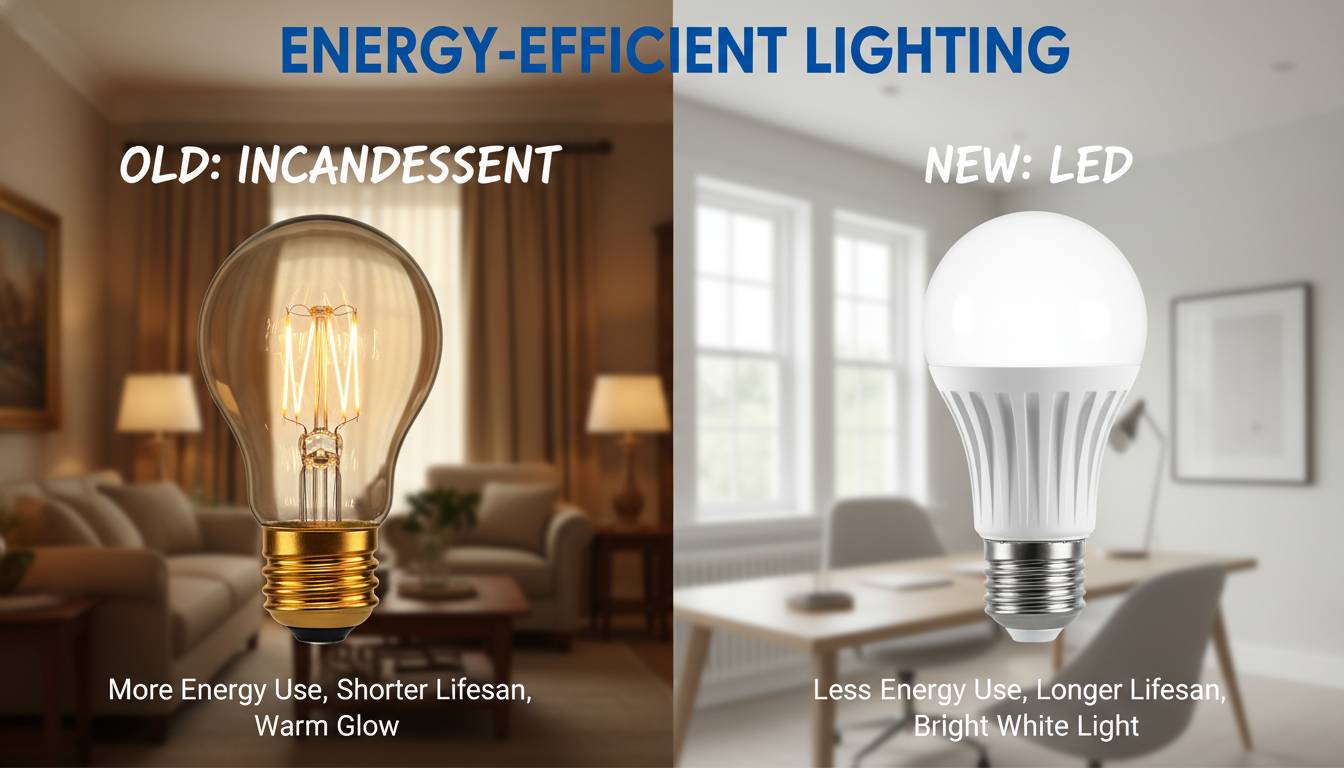
Lighting presents one of the fastest returns on investment for electricity savings. The U.S. Department of Energy reports that LED bulbs use up to 75% less energy than traditional incandescent bulbs and last 25 times longer, making the switch both an environmental and financial win.
LED vs. Incandescent Comparison
| Metric | Incandescent | LED | Savings |
|---|---|---|---|
| Wattage (60W equivalent) | 60W | 9W | 85% |
| Lifespan | 1,200 hours | 25,000 hours | 95% |
| Annual cost (4 hrs/day) | $14.88 | $2.23 | $12.65/bulb |
| Heat emission | 85% | 85% | None |
For a typical household with 30-40 light bulbs, switching all bulbs to LEDs can save $150-200 annually. The Department of Energy’s ENERGY STAR program estimates that an average home can save $75 per year just by replacing the five most frequently used light fixtures or bulbs with ENERGY STAR-certified LEDs.
Beyond bulb replacement, consider these lighting strategies: Install motion sensors in low-traffic areas like closets, garages, and basements. Use natural light during daylight hours—opening curtains on south-facing windows can reduce the need for artificial lighting significantly. Timers and smart controls ensure lights aren’t left on in empty rooms, and dimmers allow you to use only the light you need.
Optimizing Your HVAC System for Maximum Efficiency
Heating and cooling represent your largest electricity expense, but they also offer the most substantial savings potential when optimized properly. According to the U.S. Energy Information Administration, space heating and cooling combined account for nearly half of residential energy consumption in average American homes.
The Environmental Protection Agency’s ENERGY STAR program estimates that properly maintaining your HVAC system can reduce heating and cooling costs by up to 20%. This maintenance includes replacing air filters every 1-3 months (depending on usage and filter type), cleaning ducts and vents annually, and scheduling professional tune-ups before peak seasons.
Thermostat Settings and Savings
| Strategy | Potential Savings | Implementation |
|---|---|---|
| Set to 68°F (heating) | 3% per degree | Winter |
| Set to 78°F (cooling) | 3% per degree | Summer |
| Smart thermostat | 10-15% | Year-round |
| Program schedules | 8-13% | Year-round |
| Ceiling fan direction | 10-15% | Year-round |
Smart thermostats deserve special attention. A study by the American Society of Heating, Refrigerating and Air-Conditioning Engineers (ASHRAE) found that programmable and smart thermostats can reduce heating costs by 10-12% and cooling costs by 15% on average. These devices learn your schedule, adjust automatically when you’re away, and provide detailed usage reports that help identify waste.
Sealing air leaks and adding insulation can also dramatically reduce HVAC workload. The Department of Energy estimates that air sealing and insulation improvements can save homeowners 15% on heating and cooling costs—often $200 or more annually. Common problem areas include windows, doors, electrical outlets, attic hatches, and ductwork in unconditioned spaces.
Mastering Appliance Efficiency
Appliances account for roughly 13% of residential electricity use, but many households can reduce this significantly through smarter usage patterns and strategic upgrades. The key lies in understanding which appliances consume the most power and how to minimize their impact.
Refrigerators, the largest appliance energy users, run continuously—making efficiency improvements particularly valuable. The Department of Energy reports that refrigerators manufactured before 1996 can consume twice the electricity of new ENERGY STAR models. If your refrigerator is 15-20 years old, replacing it with an ENERGY STAR-certified model can save $35-70 annually in electricity costs.
Appliance Energy Consumption
| Appliance | Annual kWh | Annual Cost | Efficiency Tips |
|---|---|---|---|
| Refrigerator (older) | 1,700 | $289 | Replace with ENERGY STAR |
| Refrigerator (new) | 400 | $68 | Keep coils clean, door sealed |
| Electric dryer | 1,000 | $170 | Air dry when possible |
| Electric oven | 500 | $85 | Use convection feature |
| Dishwasher | 300 | $51 | Air dry, full loads |
| Washing machine | 400 | $68 | Cold water cycles |
Water heating, at 14% of household electricity use, deserves attention. The Department of Energy recommends setting your water heater to 120°F—lower temperatures reduce standby heat loss while still being hot enough for most household needs. Insulating your water heater and the first six feet of hot water pipes can reduce heat loss by 25-45%, saving $4-$10 monthly.
For laundry, washing clothes in cold water instead of hot can reduce energy use by 90% per load, and air-drying clothes—even partially—extends savings further. The average household does about 300 loads of laundry annually, making this an area where small changes produce substantial cumulative results.
Combating Phantom Loads and Vampire Power
Phantom loads represent one of the most overlooked sources of electricity waste in modern homes. These are the devices that continue consuming power even when turned off—televisions, computers, gaming consoles, phone chargers, and kitchen appliances with digital displays. The Lawrence Berkeley National Laboratory estimates that phantom loads account for 5-10% of residential electricity consumption, costing the average household $100-200 per year.
Phantom Load Reduction Strategies
| Method | Potential Savings | Best For |
|---|---|---|
| Power strips with switches | $100-150/year | Home offices, entertainment centers |
| Smart plugs | $50-100/year | Devices with standby lights |
| Unplugging unused devices | $75-125/year | Seasonal equipment |
| ENERGY STAR devices | Varies by device | New purchases |
The simplest solution is using power strips with on/off switches for entertainment centers and home offices. Turning off the power strip completely eliminates phantom draw from all connected devices simultaneously. For devices that need to maintain settings or charge (like routers, security systems, or phone chargers), smart plugs can be programmed to cut power during specific hours when devices aren’t needed.
When purchasing new electronics, look for devices meeting ENERGY STAR specifications—the program requires products to consume no more than 1 watt in standby mode, significantly reducing phantom load contribution.
Smart Home Technology: Automation for Savings
Smart home technology has evolved beyond convenience to become a genuine tool for reducing electricity costs. These systems automate energy-saving practices, eliminate human error, and provide detailed insights into consumption patterns that help identify waste.
Smart power monitoring systems like Sense or Emporia provide real-time visibility into your home’s electricity usage, identifying which circuits and appliances consume the most power. This information alone can prompt behavioral changes—seeing exactly how much energy a particular device uses often motivates users to reduce unnecessary usage.
Smart Home Investments and ROI
| Device | Cost | Annual Savings | Payback Period |
|---|---|---|---|
| Smart thermostat | $150-250 | $100-150 | 1.5-2 years |
| Smart power strip | $20-40 | $25-50 | 6-12 months |
| Smart switches/outlets | $15-30 each | $10-20 each | 1-2 years |
| Whole-home monitor | $250-500 | $150-300 | 1.5-3 years |
| Smart water heater | $500-1,500 | $100-200 | 3-7 years |
Beyond smart thermostats already discussed, smart lighting systems allow for granular control—setting scenes for different activities, automating based on sunrise/sunset, and adjusting brightness throughout the day. Smart plugs can schedule devices to run during off-peak hours when utility rates are lower in some regions.
The U.S. Department of Energy reports that homeowners who use smart home energy management systems see average savings of 10-15% on their electricity bills, with the most engaged users seeing savings of 20% or more.
Behavioral Changes That Actually Matter
While technology and upgrades provide substantial savings, behavioral changes complement these investments and often require no financial outlay at all. The challenge lies in identifying which habits produce meaningful results versus those that feel impactful but waste little energy.
High-Impact Behavioral Changes
- Adjust thermostat by 2-3 degrees: Reducing heating by 2°F can save approximately 10% on heating bills; raising cooling by 2°F saves similarly on cooling costs.
- Take shorter showers: Each minute of shower time uses approximately 2.5 gallons of hot water for electric water heaters, costing around $0.05 per minute in electricity.
- Run full loads only: Dishwashers and washing machines use relatively constant energy regardless of load size, so maximizing each run improves efficiency.
- Cook efficiently: Using microwave ovens uses about 80% less energy than conventional ovens for suitable foods. Using lids on pots reduces cooking time by 20-30%.
- Close vents in unused rooms: In forced-air systems, closing vents forces the system to work harder and can actually increase energy use in some systems, but in zoned systems, this can reduce conditioning costs.
The American Council for an Energy-Efficient Economy research indicates that household behavioral changes can reduce electricity consumption by 5-15% without purchasing any new equipment—a meaningful contribution that compounds with other savings strategies.
When to Consider Major Upgrades
Some electricity savings require upfront investment through equipment upgrades. Knowing which investments offer the best returns helps you prioritize spending for maximum impact.
Upgrade Decision Matrix
| Upgrade | Cost Range | Annual Savings | Best For |
|---|---|---|---|
| HVAC replacement | $3,000-10,000 | $200-600 | Systems 15+ years old |
| Insulation upgrade | $1,500-5,000 | $150-400 | Drafty homes, old construction |
| Window replacement | $5,000-20,000 | $100-300 | Single-pane windows |
| Solar panels | $15,000-30,000 | $500-1,500 | High electricity users, sunny locations |
| Heat pump water heater | $1,500-4,000 | $200-400 | Electric water heating |
Heat pump water heaters represent one of the most cost-effective upgrades for electric households. These units work like reverse air conditioners, moving heat rather than generating it directly—making them 2-3 times more efficient than conventional electric water heaters. The Department of Energy estimates annual savings of $200-400 for average households, with payback periods of 4-7 years depending on usage and local electricity rates.
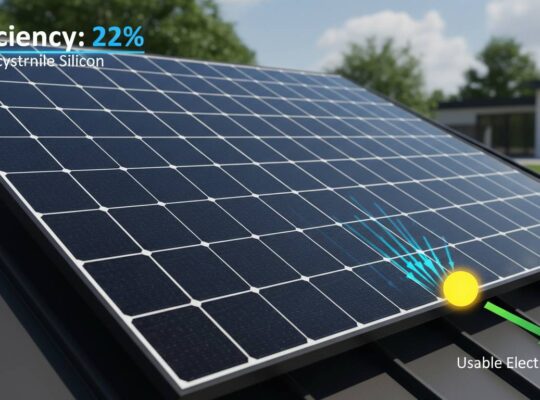
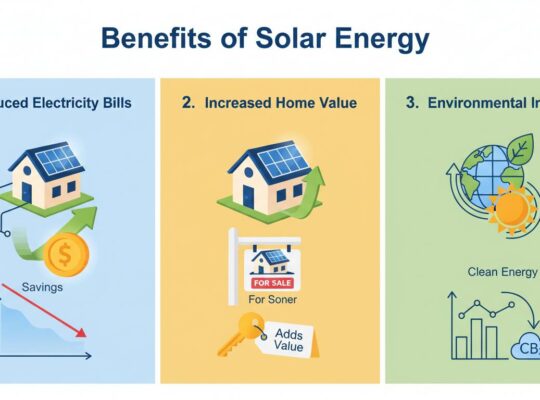
For households considering solar panels, the math depends heavily on location, roof orientation, local electricity rates, and available incentives. The National Renewable Energy Laboratory’s research shows that solar can reduce electricity bills by 50-100% in optimal conditions, but the upfront investment requires careful analysis of local payback periods—typically 6-12 years in most U.S. regions.
Frequently Asked Questions
How much can the average household realistically save by implementing all these tips?
The Department of Energy estimates that households implementing comprehensive energy-saving measures can reduce electricity bills by 25-50%. For an average household spending $170 monthly ($2,040 annually), this translates to $500-1,000 in annual savings. The exact amount depends on your starting point, local electricity rates, climate zone, and which strategies you implement.
What’s the single most impactful change I can make first?
Switching to a smart thermostat typically offers the best combination of high impact, reasonable cost, and quick installation. Most homeowners can install one themselves in under an hour, and savings begin immediately through optimized heating and cooling schedules.
Do power strips really make a difference in reducing my electricity bill?
Yes, power strips with on/off switches can save $100-200 annually for households with multiple entertainment centers, home offices, or gaming setups. The key is using them consistently—turning off the strip when devices aren’t in use rather than leaving devices on standby.
Is it worth replacing appliances that are still working?
If your appliances are more than 15 years old, replacement with ENERGY STAR models typically makes financial sense. Old refrigerators, in particular, can consume 1,700 kWh annually compared to 400 kWh for new ENERGY STAR models—saving over $200 per year in electricity costs alone.
How long does it take to see results from energy-saving efforts?
Most behavioral changes and smart thermostat installations show immediate results on your next monthly bill. Equipment upgrades like insulation or HVAC replacement typically show full impact within the first year. Most householders see meaningful savings (10-20%) within the first 3-6 months of implementing these strategies.
Should I hire a professional energy audit before making changes?
The U.S. Department of Energy recommends professional audits for homes over 10 years old or those with unexplained high bills. Many utility companies offer free or low-cost ($100-200) energy audits that identify specific problem areas and qualify you for rebates on recommended improvements.
Conclusion
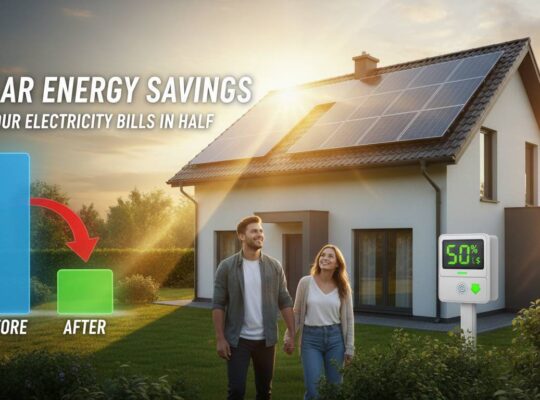
Reducing your electricity bills by half requires a layered approach—combining quick behavioral changes with strategic investments in efficiency upgrades and smart technology. The most effective strategy targets the areas consuming the most power: heating and cooling through thermostat optimization and HVAC maintenance, phantom loads through smart power management, and lighting through LED conversions. These changes compound—a home with efficient HVAC, smart controls, LED lighting, and aware occupants can achieve savings far exceeding what any single measure provides.
Start with the no-cost changes: adjusting thermostat settings, switching to LEDs, and using power strips. Then prioritize upgrades based on your budget and the age of your equipment. The average household can reasonably achieve 25-30% reduction in electricity costs within the first year, with further savings available through larger investments. Every kilowatt-hour you save reduces both your monthly expenses and your environmental footprint—a combination that makes energy efficiency one of the most rewarding improvements you can make to your home.