Choosing between solar and wind energy for your home is a significant decision that impacts your electricity bills, your carbon footprint, and your property value for decades. The short answer? It depends on your location, energy needs, and budget. Both renewable technologies have matured significantly, with residential solar installations now exceeding 4 million homes nationwide, while small-scale wind systems have carved out a niche in rural areas with consistent wind resources.
This guide breaks down everything you need to make an informed decision, from upfront costs to performance in different climates, so you can determine which renewable energy source aligns best with your home and lifestyle.
Understanding Your Home Energy Requirements
Before comparing solar and wind, you need to assess how much energy your household actually consumes. The average U.S. home uses approximately 886 kilowatt-hours (kWh) per month, though this varies dramatically by region, home size, and usage patterns. A single-family home in Arizona with central air conditioning will have vastly different needs than a modest apartment in Minnesota.
Start by reviewing your last 12 months of electricity bills to establish your baseline. Multiply your average monthly kWh by 12 to get your annual consumption. This number serves as the foundation for sizing your renewable energy system. Most residential solar panels produce around 300 watts each, meaning a typical 6 kW system generates roughly 7,200 to 9,000 kWh annually—roughly 70-80% of an average household’s needs.
Wind turbines, measured in rated power output (typically 1-10 kW for residential units), produce varying amounts depending on wind speed. A 5 kW turbine in an area with 12 mph average winds generates approximately 8,000-10,000 kWh yearly, while the same turbine in a location with only 8 mph average winds might produce less than 5,000 kWh.
Consider which appliances and systems consume the most power in your home. Electric water heaters, HVAC systems, and electric vehicle chargers represent the largest loads. If your goal is to offset your entire electricity bill, you’ll need a system sized accordingly—or consider pairing renewable energy with energy efficiency upgrades like heat pumps and improved insulation.
How Solar Energy Works for Residential Properties
Solar photovoltaic (PV) systems convert sunlight directly into electricity using semiconductor cells, typically made from crystalline silicon. When photons from sunlight strike these cells, they knock electrons loose, creating a flow of direct current (DC) electricity. An inverter then converts this DC power into alternating current (AC) that your home’s electrical system can use.
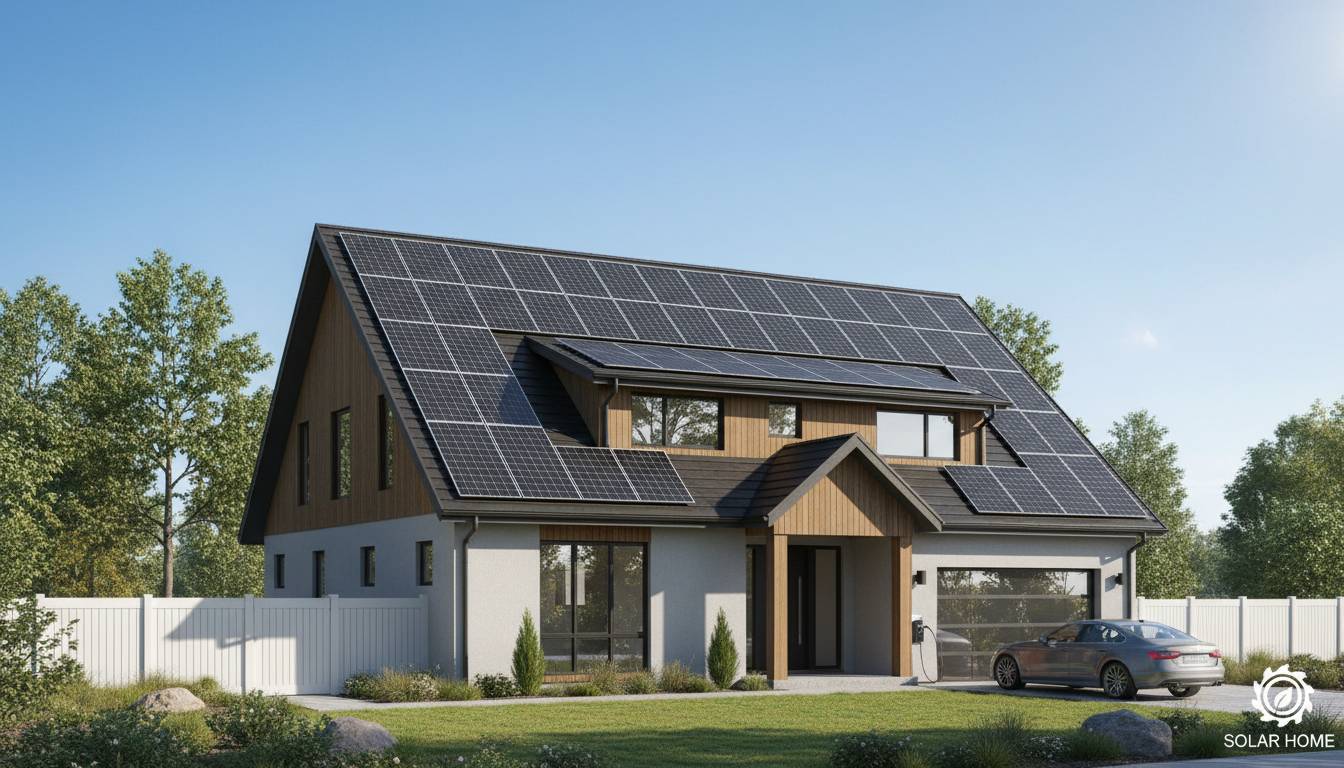
Residential solar installations typically include roof-mounted panels, a string inverter or microinverters, mounting hardware, and a bidirectional meter that tracks both electricity drawn from the grid and excess power sent back to the utility. Many homeowners also add battery storage systems like the Tesla Powerwall or LG Chem RESU to store excess solar generation for evening use or during outages.
The performance of solar panels depends heavily on available sunlight. The Southwest United States—particularly Arizona, Nevada, and Southern California—offers the highest solar potential, with annual irradiance exceeding 6 kWh per square meter per day. The Northeast and Pacific Northwest receive less solar energy, but modern panels still perform adequately in these regions, just at reduced output.
One of solar’s greatest advantages is its predictability. Solar generation follows a consistent daily pattern, peaking around midday and declining toward sunset. This makes it easier to match production with household energy use, especially when combined with time-of-use electricity rates that charge higher prices during afternoon and evening hours when demand peaks.
Shading represents the primary enemy of solar performance. Even partial shading from trees, chimneys, or neighboring buildings can dramatically reduce output. A professional solar installer will conduct a detailed shade analysis using tools like SolarPathfinder or drone-based imaging to assess your site’s solar potential before recommending a system.
How Wind Energy Works for Residential Properties
Residential wind turbines generate electricity through the same electromagnetic principle as large commercial wind farms, just at a smaller scale. Wind turns the turbine’s blades, which spin a rotor connected to a generator. This mechanical rotation produces AC electricity that can power your home or feed back into the grid.
Small wind turbines are classified into three categories: micro (under 1 kW), residential (1-10 kW), and commercial (10-100 kW). For most single-family homes, a turbine in the 5-15 kW range provides sufficient capacity. The critical metric isn’t just rated power output—it’s wind speed. Turbine output increases exponentially with wind speed, following what’s called the “cube law.” Doubling wind speed increases power output eightfold.
This relationship explains why wind energy is far more site-dependent than solar. The U.S. Department of Energy identifies the Great Plains, parts of the Midwest, and coastal regions as having the best wind resources for residential applications. Anemometers—devices that measure wind speed—should record data at your specific site for at least three months, preferably a full year, before investing in a wind system. A general rule of thumb: if your average wind speed is below 10 mph, residential wind may not make economic sense.
Tower height dramatically affects wind turbine performance. Wind speed increases with height due to less ground friction. A turbine mounted on a 60-foot tower can produce 30-50% more electricity than one on a 30-foot tower at the same site. However, taller towers require more substantial foundations, stronger permitting, and greater installation costs.
Noise and aesthetics generate significant debate in residential wind. Modern turbines are much quieter than older models, but low-frequency sound and the visual impact of spinning blades can create tension with neighbors. Most municipalities have setback requirements—typically one to one-and-a-half times the turbine’s height from property lines—and some communities have banned wind turbines entirely.
Cost Comparison: Solar vs Wind Energy
Understanding the true cost of renewable energy requires examining both upfront capital expenses and long-term financial returns. The installed cost of residential solar has plummeted to approximately $2.50-$3.50 per watt, meaning a typical 6 kW system costs $15,000-$21,000 before incentives. After the federal Investment Tax Credit (ITC), which allows you to deduct 30% of system costs from your federal taxes, the net cost drops to roughly $10,500-$14,700.
Small wind turbines range from $3,000-$5,000 per kW of installed capacity. A 5 kW residential turbine costs $15,000-$25,000 before incentives, or $10,500-$17,500 after the ITC. However, wind systems often require additional expenses including towers, concrete foundations, permitting, and grid interconnection studies that solar installations don’t typically need.
| Factor | Solar PV | Small Wind |
|---|---|---|
| Installed cost per kW | $2,500-$3,500 | $3,000-$5,000 |
| Typical system size | 5-10 kW | 5-15 kW |
| Net cost after ITC (6 kW) | $10,500-$14,700 | N/A |
| Annual maintenance | Minimal | Moderate |
| Expected lifespan | 25-30 years | 20-25 years |
| Payback period | 6-12 years | 10-20 years |
The return on investment varies enormously by location. Solar performs best in states with high electricity rates (Hawaii, California, New York, New England) and abundant sunshine. Wind’s economics improve in areas with both high utility rates and strong wind resources, but these conditions rarely overlap with optimal solar locations.
Most utilities offer net metering programs that credit you for excess electricity sent to the grid, essentially allowing you to use the grid as a battery. However, some states have reduced net metering compensation or implemented demand charges that affect the economics of both technologies. Always verify your utility’s policies before committing.
Performance and Efficiency in Different Conditions
Energy production per dollar invested varies significantly between solar and wind, and the difference comes down to how efficiently each technology converts its energy source into electricity. Solar panels typically achieve 15-22% conversion efficiency, meaning they transform that percentage of sunlight hitting them into usable electricity. This has improved steadily over the past decade, with premium panels now exceeding 23% efficiency in laboratory conditions.
Wind turbines are generally more efficient at converting their energy source—modern designs capture 35-45% of the wind’s kinetic energy, approaching the theoretical Betz limit of 59%. However, this theoretical efficiency rarely translates to real-world advantages because wind is an inherently more variable and unpredictable resource.
Solar panels degrade at a rate of approximately 0.5-0.8% per year, meaning a 25-year-old system will produce about 80-88% of its original output. Most manufacturers guarantee 80% production at 25 years. Wind turbines experience more complex wear patterns, with major components like gearboxes and generators requiring potential replacement at 10-15 years, adding to long-term maintenance costs.
Weather events affect each technology differently. Solar panels can suffer damage from hail, but this is rare and usually covered by insurance. Snow accumulation can temporarily reduce output but often slides off tilted panels. Wind turbines must be shut down in extreme wind conditions (typically above 50-60 mph) to prevent damage, meaning the most powerful storms don’t generate proportional energy.
Winter performance presents another contrast. Solar output drops in winter due to shorter days and lower sun angles, but this often coincides with higher electricity usage for heating. Wind tends to be stronger in winter months, potentially offsetting solar’s seasonal decline—a compelling argument for hybrid systems in appropriate climates.
Installation Considerations and Challenges
The installation process for solar and wind differs substantially, affecting both timeline and complexity. Residential solar can typically be installed in one to three days, depending on roof complexity and whether a battery is included. The process involves structural assessment, electrical work, permit acquisition (usually handled by the installer), and utility inspection.
Wind turbine installation is considerably more involved. Tower construction requires excavation, concrete pouring, and often specialized equipment. The turbine itself must be assembled and lifted onto the tower—a process requiring crane rental and typically taking three to five days. Many municipalities treat wind turbines as structures requiring building permits, environmental reviews, and sometimes conditional use permits that can extend timelines to several months.
Zoning and homeowners association (HOA) restrictions can significantly impact your options. Many HOAs explicitly prohibit wind turbines due to aesthetic concerns, while some states have passed legislation restricting municipal bans on solar but not wind. Always check local regulations before investing in either technology.
Grid interconnection presents another hurdle for both systems. Your utility must approve the connection to ensure it meets safety standards and won’t harm line workers. Most utilities process interconnection applications within 30-60 days, but some jurisdictions—particularly those with high renewable energy penetration—have accumulated backlogs that extend approval timelines significantly.
Rooftop solar works best on south-facing roofs (in the Northern Hemisphere) with adequate space, minimal shading, and good structural condition. Ground-mount solar offers more flexibility but requires available land. Wind turbines require open areas with minimal obstructions—buildings, trees, and terrain features create turbulence that reduces output and increases wear.
Which Renewable Energy Source Is Right for Your Home
Determining whether solar or wind makes more sense requires honest assessment of your specific circumstances. Solar wins decisively in most urban and suburban settings where space is limited, neighbors are close, and aesthetic considerations matter. The technology’s proven track record, declining costs, and straightforward installation process make it the default choice for the majority of homeowners.
Wind becomes compelling if you have at least one acre of open land, live in a region with demonstrated wind resources (average speed above 10-12 mph), and can install a tower at least 60 feet tall without violating setback requirements or offending neighbors. The upfront costs are comparable, but wind’s higher maintenance requirements and longer payback periods demand careful consideration.
Hybrid solar-wind systems offer an intriguing middle ground in suitable locations. Combining both technologies can smooth out production variability—solar peaks at midday while wind often increases in evening and overnight. However, hybrid systems double the complexity and maintenance, so they only make sense when both resources are strong.
If your primary goal is reducing electricity bills, prioritize whichever technology offers the best return on investment in your specific location. If resilience during grid outages matters, battery storage becomes essential regardless of whether you choose solar or wind. If your motivation is environmental impact, both technologies dramatically reduce carbon emissions compared to fossil fuel generation—the exact comparison depends on your local grid’s electricity mix.
Frequently Asked Questions
Can I use both solar and wind energy together at home?
Yes, hybrid systems combining solar panels and wind turbines are increasingly popular in suitable locations. This approach provides more consistent energy generation since solar output peaks during midday while wind often increases during evening and overnight hours. However, hybrid systems cost roughly double a single-technology installation and require more maintenance, so they only make sense when both resources are strong at your site.
How long do residential solar panels and wind turbines last?
Solar panels typically last 25-30 years with degradation of about 0.5-0.8% annually. Most manufacturers guarantee 80% output at 25 years. Wind turbines generally last 20-25 years, though major components like gearboxes and generators may need replacement around the 10-15 year mark, adding to long-term maintenance costs.
Do solar panels work on cloudy days?
Yes, solar panels still generate electricity on cloudy days, though at reduced output—typically 10-25% of their peak capacity. They don’t require direct sunlight, just daylight. However, heavy overcast can reduce output significantly, which is why many solar homeowners pair their systems with battery storage or maintain grid connection for backup.
Is wind energy loud?
Modern residential wind turbines are relatively quiet, producing around 35-55 decibels at 60 feet—comparable to a quiet conversation or moderate rainfall. Older models were significantly louder. However, some people find the low-frequency “whooshing” sound bothersome, and turbine noise can carry farther than expected, potentially affecting nearby neighbors.
What maintenance do solar and wind systems require?
Solar panels require minimal maintenance—occasional cleaning to remove dust, leaves, or snow, and periodic inverter replacement (every 10-15 years). Wind turbines need more attention: annual professional inspections, blade cleaning, and periodic component replacement. Turbine maintenance often costs $100-$300 per year, while solar typically runs $0-$100 for occasional cleaning.
Will installing renewable energy increase my home’s value?
Studies consistently show that homes with solar panels sell for approximately 4-5% more than comparable homes without solar, according to research from Zillow and Lawrence Berkeley National Laboratory. Wind turbine impact on home value is less studied due to fewer installations, though localized opposition could potentially affect resale in some communities.
Making Your Final Decision
The choice between solar and wind energy ultimately comes down to site-specific factors that only you can evaluate. Solar offers broader applicability, proven reliability, and a faster payback in most situations. Wind remains viable for rural property owners with strong, consistent wind resources who have the space and patience for a more complex installation.
Before making any investment, gather quotes from installers of both technologies, verify your site’s solar and wind potential with professional assessments, and carefully review your utility’s net metering policies and interconnection requirements. The federal tax credit applies to both technologies, though state and local incentives vary widely.
The best renewable energy choice is ultimately the one that matches your specific location, budget, energy goals, and tolerance for complexity. Both technologies have matured into viable, cost-effective options that can significantly reduce your electricity bills while contributing to a cleaner energy future.