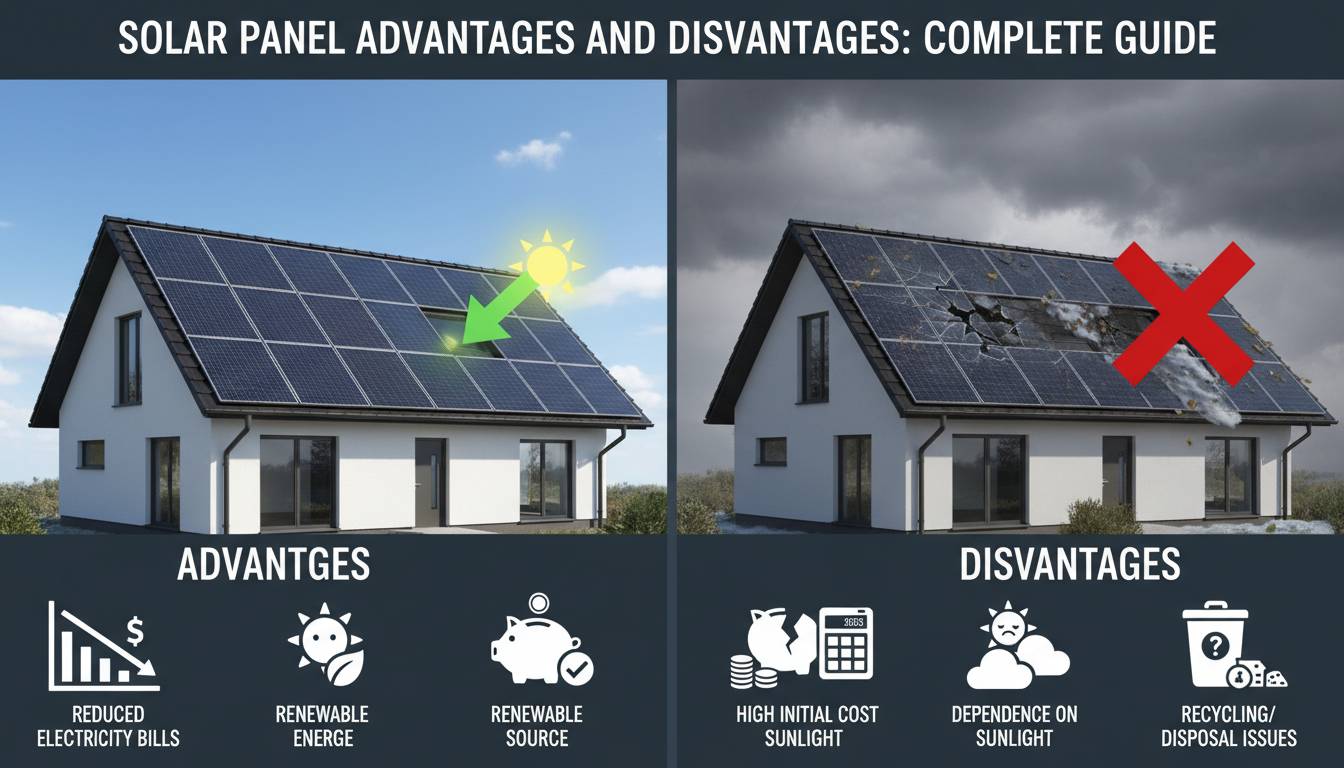
Solar energy has transformed from an experimental technology into a mainstream power source for millions of American homeowners. With residential solar installations growing over 30% year-over-year in recent years, understanding the complete picture of solar panel advantages and disadvantages has become essential for anyone considering this investment. This guide examines the real benefits, genuine drawbacks, and practical considerations to help you make an informed decision about whether solar panels are right for your home.
Key Insights
– Average residential solar system pays for itself in 6-12 years through electricity savings
– Federal tax credits cover 30% of installation costs through 2032
– Solar panels can increase home value by approximately 4.1% on average
– Grid independence and energy price protection remain primary motivations for homeowners
Understanding How Solar Panels Work
Before examining the advantages and disadvantages, it helps to understand the fundamental technology behind residential solar systems. Solar panels convert sunlight into direct current (DC) electricity through photovoltaic (PV) cells made from silicon. An inverter then converts this DC electricity into alternating current (AC), which powers your home’s electrical systems.
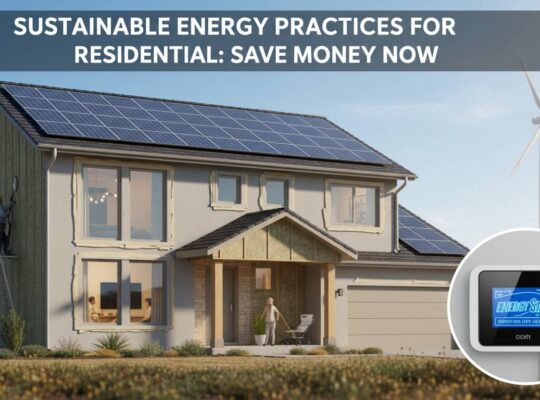
Modern residential solar systems typically consist of solar panels mounted on your roof, an inverter (or microinverters), a monitoring system, and often a battery storage unit for backup power. The system connects to the electrical grid, allowing you to draw power when solar production is low and export excess electricity back to the grid during peak production periods.
This basic understanding frames the advantages and disadvantages that follow—what solar can do well, and where limitations still exist.
Major Advantages of Solar Panels
Significant Cost Savings on Electricity Bills
The most compelling advantage for most homeowners is the dramatic reduction in monthly electricity costs. A properly sized solar system can eliminate or drastically reduce your electric bill, with many homeowners reporting savings of $1,500 to $2,500 annually depending on their location, electricity rates, and system size.
These savings compound significantly over the 25-30 year lifespan of a typical solar panel system. Over two decades, savings can total $30,000 to $60,000 or more, particularly as utility rates continue their upward trajectory. Solar provides a form of price protection against future electricity rate increases, essentially locking in your energy costs at today’s rates minus installation expenses.
Federal and State Incentives Significantly Reduce Upfront Costs
The federal Investment Tax Credit (ITC) allows you to deduct 30% of your solar installation costs from your federal taxes. This credit applies to both the panels and associated equipment like inverters, mounting hardware, and installation labor. The credit remains at 30% through 2032, then steps down to 26% in 2033 and 22% in 2034.
Beyond the federal incentive, many states offer additional rebates, tax credits, or performance-based incentives. Some utilities provide upfront rebates or accelerated depreciation for business installations. These incentives can reduce your effective out-of-pocket cost by 40-50% in many cases, making solar financially viable for a much broader range of homeowners.
Increased Property Value
Studies consistently show that homes with solar panels sell for more than homes without them. According to Zillow research, solar panels increase home value by approximately 4.1% on average—translating to roughly $9,200 extra value on a $225,000 home. This premium reflects the ongoing value of reduced energy costs that transfers to new homeowners.
The increased value persists even when factoring in the remaining loan balance on the solar system, making solar installation a genuine investment that builds equity rather than merely an expense.
Environmental Benefits and Energy Independence
Solar panels produce electricity without burning fossil fuels, eliminating greenhouse gas emissions associated with your energy consumption. A typical residential solar system offsets approximately 100,000 pounds of carbon dioxide over 20 years—the equivalent of planting 1,500 trees or removing two cars from the road entirely.
For homeowners motivated by environmental concerns, this direct reduction in carbon footprint represents a tangible, measurable impact. Beyond environmental benefits, solar provides a degree of energy independence. During grid outages with battery backup, your home can maintain power while neighbors remain in the dark.
Major Disadvantages of Solar Panels
High Upfront Investment
Despite incentives, the initial cost of a residential solar system remains substantial. A typical 6-8 kW system costs between $15,000 and $25,000 after federal tax credits, with larger systems or premium equipment pushing costs higher. This upfront investment requires careful financial planning and may not make sense for homeowners who plan to move within a few years.
The payback period—how long until savings exceed costs—typically ranges from 6 to 12 years depending on your electricity rates, system size, and available sunlight. If you relocate before reaching the payback period, you may not fully recoup your investment, though the home value increase partially offsets this concern.
Weather and Location Dependency
Solar panel production depends directly on available sunlight, making performance variable based on your geographic location and local weather patterns. Homes in consistently sunny regions like Arizona, California, or Texas generate more electricity than those in cloudier northern or coastal areas.
Even in optimal locations, seasonal variations affect production. Winter months typically produce 20-50% less electricity than summer months in most of the United States. While grid connection addresses shortfalls, this dependency means solar alone cannot guarantee 100% energy independence without battery storage—and batteries add significant cost.
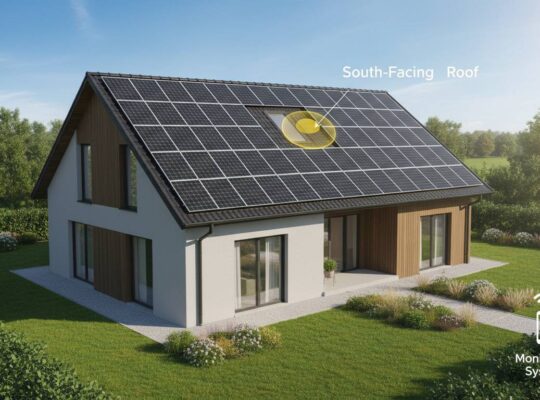
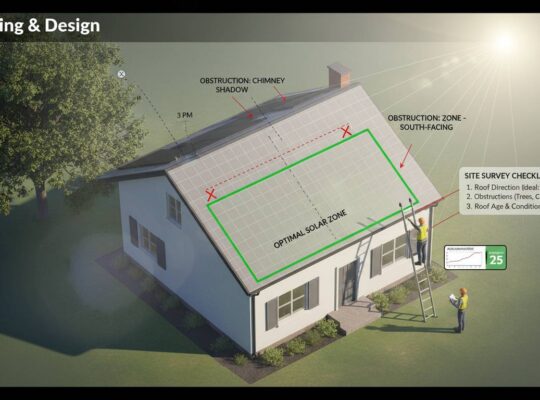
Roof orientation and shading from trees or nearby buildings also impact system performance. South-facing roofs receive maximum sunlight in the northern hemisphere, while east or west-facing installations produce 15-25% less annual energy.
Roof Compatibility and Installation Challenges
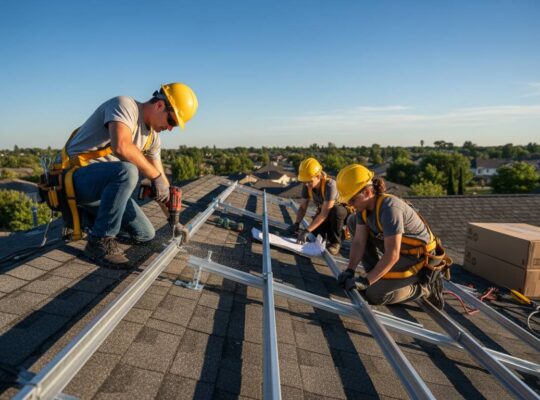
Not every roof suits solar installation. Roofing materials, age, and structural integrity all factor into feasibility. Asphalt shingle roofs lasting 20+ years typically work well, while older roofs requiring replacement soon may need updating before installation. Flat roofs or roofs with complex angles present additional mounting challenges.
Southern-facing roofs with minimal shading offer optimal conditions, but many homes lack these ideal characteristics. Installation costs increase for roofs requiring special mounting equipment, for homes with multiple roof sections, or when structural reinforcement is needed.
Financial Considerations and ROI Analysis
Understanding Your Payback Period
Calculating your accurate payback period requires examining several factors specific to your situation. Your current monthly electricity bill provides a baseline—if you pay $150 monthly and a properly sized system eliminates 90% of that bill, you’re saving approximately $1,620 annually. Divide your net installation cost (after incentives) by this annual savings to estimate your payback period.
Most homeowners achieve payback within 8-12 years, with significant variation based on local electricity rates, available sunlight, and system size. Remember that electricity rates typically increase 2-4% annually, meaning your savings actually grow over time while your payment remains fixed if you financed the system.
Leasing vs. Buying: Financial Implications
Homeowners have three primary financial pathways: purchasing outright, financing with a solar loan, or leasing the system. Each option carries different implications.
Purchasing maximizes long-term savings but requires substantial upfront capital. Solar loans spread costs over 10-20 years while typically resulting in lower monthly payments than your electricity bill would be, providing immediate positive cash flow. Leases offer the lowest upfront cost but provide minimal savings compared to ownership—you exchange lower payments for giving up the substantial long-term value.
For most homeowners, purchasing or financing provides superior long-term financial outcomes compared to leasing, though lease options may suit those unable to qualify for loans or unwilling to take on debt.
Common Mistakes to Avoid
Overestimating production in your estimates: Some salespeople provide optimistic projections that don’t account for real-world factors like panel degradation, inverter efficiency losses, or occasional shading. Always request production estimates based on verified local data from similar installations.
Ignoring roof condition: Installing solar on an aging roof means removing and reinstalling panels when roof replacement becomes necessary—a costly process that often damages panels. Address roof issues before installation.
Choosing the lowest bidder: Installation quality significantly impacts system performance and longevity. Reputable installers with strong warranties may cost more initially but provide better long-term value through superior workmanship and equipment selection.
Not understanding warranty terms: Solar panel warranties typically cover 25-30 years, but workmanship warranties from installers often run only 5-10 years. Understand exactly what each warranty covers and who stands behind it.
Making Your Decision: Is Solar Right for You?
Solar panels make the most sense for homeowners who plan to stay in their homes long-term, have suitable roof conditions, receive adequate sunlight, and want to reduce both their electricity costs and environmental impact. The financial benefits compound significantly over time, making early adoption advantageous as utility rates continue climbing.
However, solar may not be ideal if you rent your home, plan to move soon, have a poorly oriented or shaded roof, or struggle with the upfront investment even with incentives. In these cases, waiting for better financial circumstances or more suitable housing may serve you better.
Request multiple quotes from reputable installers, verify all claims with independent research, and carefully compare financing options before committing. Solar represents a 25-30 year commitment—taking time to make an informed decision pays dividends throughout the system’s lifespan.
Frequently Asked Questions
How long do solar panels last?
Most solar panels carry warranties of 25-30 years, with actual functional lifespans often exceeding this period. Panels typically degrade at approximately 0.5% to 1% annually, meaning after 25 years, they still produce 75-87% of their original output. Inverters usually require replacement after 10-15 years, representing the primary maintenance cost over the system’s lifetime.
Do solar panels work on cloudy days?
Yes, solar panels still generate electricity on cloudy days, though at reduced efficiency—typically 10-25% of their peak output. Modern panels capture diffuse light even when direct sunlight is unavailable. Your system will produce less energy during extended cloudy periods, but grid connection ensures you have power regardless.
What happens if my power goes out?
Standard grid-tied solar systems automatically shut down during power outages for safety—this prevents solar power from backfeeding into lines and injuring utility workers. If you want backup power during outages, you need a battery storage system (like Tesla Powerwall or similar) that isolates your home from the grid during outages.
Will solar eliminate my electric bill completely?
This depends on your system size, energy consumption, and utility policies. Most homeowners with properly sized systems eliminate 80-100% of their electric bill, though you’ll likely still pay small grid connection fees ($10-30 monthly) to your utility. Some states and utilities also impose fees or provide minimal compensation for exported solar electricity.
Are solar panels worth it in northern states?
Yes, solar can be worthwhile in northern states despite shorter daylight hours and more cloud cover. Higher electricity rates in some northeastern states can accelerate payback, and modern panels work efficiently even with diffuse light. Pennsylvania, New York, Massachusetts, and New Jersey all have significant solar adoption. Just ensure your roof receives adequate southern exposure and minimal shading.