The average American household spends over $2,000 annually on electricity, and that number is climbing. Between extreme weather events, grid instability, and time-of-use rate structures that punish peak-hour consumption, homeowners are searching for ways to take control of their energy destiny. Residential energy storage solutions offer exactly that—a way to capture power when it’s cheap or abundant and deploy it when costs peak or the grid fails.
This guide breaks down everything you need to know about home battery systems, from how they work to which options deliver the best return on investment for your specific situation.
What Is Residential Energy Storage?
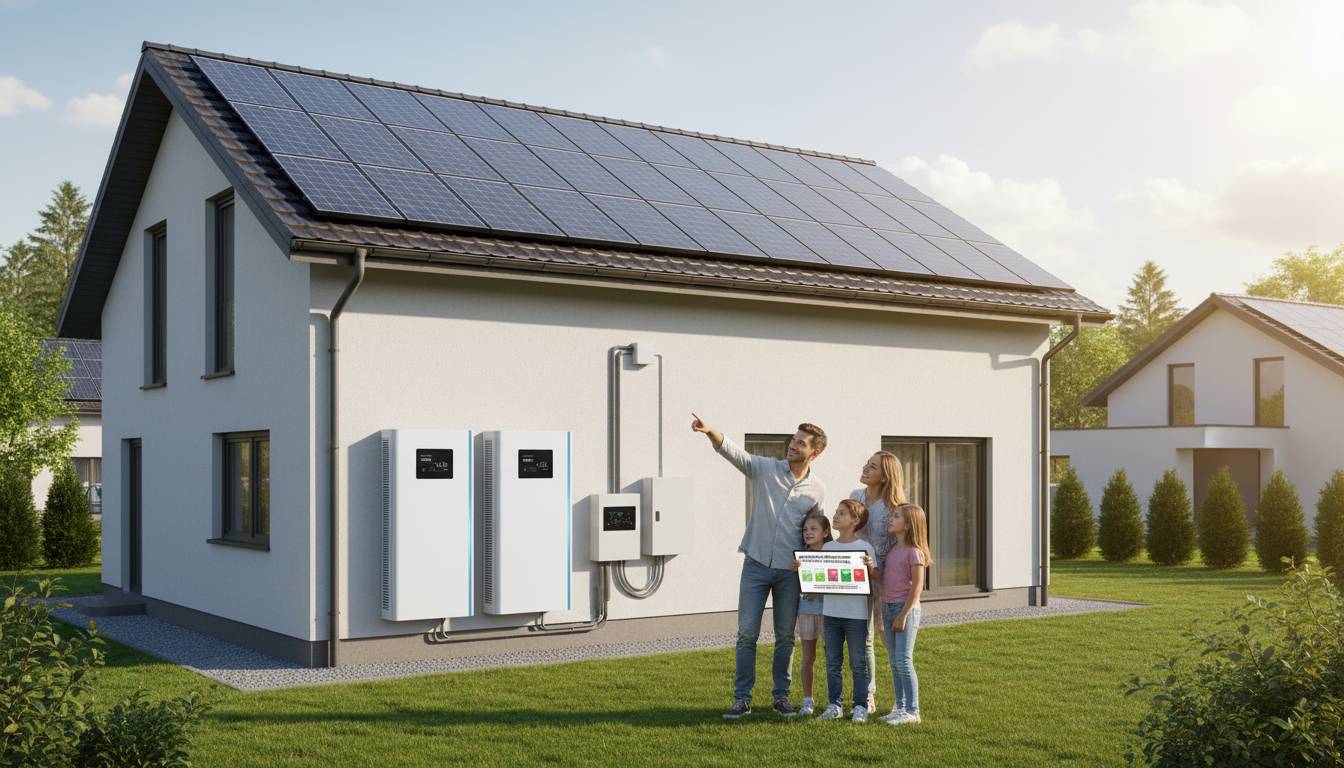
Residential energy storage refers to battery systems installed in homes to store electricity for later use. These systems typically pair with solar panel installations, though they can also charge from the grid during off-peak hours. The stored energy then powers your home during expensive peak periods, overnight, or during outages.
The most common technology in modern home batteries is lithium-ion chemistry, specifically lithium iron phosphate (LFP) or nickel-manganese-cobalt (NMC) variants. These batteries offer high energy density, long cycle life, and declining costs that have made residential adoption practical for mainstream homeowners.
A typical residential energy storage system includes the battery pack itself, an inverter (either built-in or separate), a battery management system that monitors and protects the cells, and smart software that optimizes when to charge and discharge based on your utility’s rate structure and your consumption patterns.
Systems range from compact 5 kWh units suitable for emergency backup on essential circuits to whole-home installations exceeding 30 kWh that can power everything for multiple days. The market has expanded dramatically, with offerings now available from over two dozen manufacturers competing on capacity, efficiency, warranty duration, and integrated smart features.
Why Homeowners Are Making the Switch
The financial case for residential energy storage has strengthened considerably over the past five years, driven by three converging factors: utility rate increases, solar panel adoption, and rising grid instability.
The Economic Advantage
📊 KEY STATS
– $2,200 – Average annual electricity bill for US households
– 28% – Average increase in time-of-use peak rates since 2020
– $13,000 – Average installed cost of a 13 kWh home battery system
– 10-14 years – Typical payback period without incentives; 5-7 years with federal tax credit
Homeowners with time-of-use (TOU) utility rate structures stand to save the most. These pricing models charge significantly more for electricity during afternoon and evening hours when demand peaks. A properly configured battery system charges during cheap overnight or midday solar hours, then discharges during those expensive evening windows. For many households, this arbitrage alone generates $500-$1,500 in annual savings.
Beyond direct bill reduction, residential energy storage protects against the increasingly common practice of demand charges for residential customers in some territories. These charges can add $30-$100 monthly to bills based on your highest 15-30 minute power draw during the billing period—something a battery can dramatically flatten.
Reliability and Independence
Power outages in the United States have increased 67% since 2000, with the average American experiencing 8 hours of power interruptions annually . In states with extreme weather—Texas, California, Florida—outage duration can stretch to days or weeks.
A home battery system with automatic transfer capability keeps your lights on when the grid goes down. Unlike gas generators, batteries operate silently, require no fuel storage, start instantly, and produce no emissions. For medical device users, families with young children, or anyone working from home, this reliability has tangible quality-of-life value beyond dollars saved.
The emerging concept of “virtual power plants” (VPPs) adds another financial layer. Several utilities and third-party aggregators now pay homeowners to allow their batteries to discharge back to the grid during extreme demand events. Programs in California, Texas, and Massachusetts offer $200-$500 annual payments for this service, effectively reducing your battery’s effective cost while providing grid stability.
Types of Residential Energy Storage Systems
Not all home batteries are created equal. Understanding the key differences helps you select the right system for your needs.
Whole-Home vs. Partial-Home Systems
| Factor | Whole-Home (Energi) | Partial-Home (Backup) |
|---|---|---|
| Capacity | 15-30 kWh | 5-13 kWh |
| Cost | $15,000-$30,000 | $7,000-$14,000 |
| Best For | Complete independence | Essential circuits |
| Installation | Full electrical upgrade | Minimal panel work |
| ROI Timeline | 8-12 years | 6-10 years |
Whole-home battery systems connect to your main electrical panel and can power everything in the house simultaneously. These require a full electrical service upgrade in most cases and professional installation by licensed electricians familiar with grid interconnection requirements.
Partial-home or backup systems power a dedicated subpanel containing only essential circuits—refrigeration, medical equipment, internet, a few lights, and perhaps a single HVAC unit. These systems cost significantly less, install faster, and adequately serve most homeowners’ primary concern: keeping critical systems running during outages.
Leading Manufacturers and Options
Top Whole-Home Systems:
| System | Capacity | Warranty | Notable Feature |
|---|---|---|---|
| Tesla Powerwall 3 | 13.5 kWh | 10 years | Integrated inverter, solar DC coupling |
| Enphase IQ Battery 5P | 5.0 kWh (scalable) | 15 years | Microinverter technology, modular |
| FranklinWH | 13.6 kWh | 12 years | AC coupling, whole-home switch |
| Panasonic EverVolt | 17.1 kWh | 10 years | High capacity, solar compatibility |
Top Backup/Partial Systems:
| System | Capacity | Warranty | Best Application |
|---|---|---|---|
| Goal Zero Yeti 6000X | 6,000 Wh | 3 years | Portable/emergency only |
| EcoFlow Delta Pro | 3.6 kWh (scalable) | 5 years | Portable or permanent |
| Bluetti EP500 | 5,100 Wh | 5 years | Plug-and-play, no installation |
| Renogy DC Home | 4.8 kWh (scalable) | 5 years | Budget-conscious solar integration |
The choice between integrated whole-home systems and portable or modular alternatives depends on whether you prioritize seamless automatic backup during outages or flexibility and lower upfront cost.
How to Evaluate and Select Your System
Choosing a residential energy storage system requires balancing multiple factors: your typical electricity usage, whether you have or plan to install solar, your local utility’s rate structure, and how much backup capacity you want during outages.
Assess Your Energy Needs
Start by understanding your consumption patterns. Review 12 months of electricity bills to identify your average daily usage in kWh, your peak demand in kilowatts, and how your usage varies between seasons and time-of-use periods if applicable.
A typical US home uses 28-30 kWh daily, though this varies significantly by climate, home size, and efficiency. During outages, you’ll need to decide which appliances and systems must stay running—a refrigerator and some lights (1-3 kWh daily), a full HVAC system (10-20 kWh daily), or somewhere in between.
Match System Capacity to Your Goals
👤 Tom H., California Powerwall Owner
“My 13.5 kWh Powerwall handles our essentials during outages—we run the fridge, internet, a few lights, and charge devices. During normal operation, it saves us about $85/month on our time-of-use rates. The system paid for itself in just under 7 years with our PG&E rates.”
This represents a typical outcome for California homeowners with aggressive time-of-use rates. However, in states with cheaper, flatter electricity pricing, the economics shift more heavily toward backup reliability value than bill reduction.
Consider Solar Integration
If you already have or are planning to install solar panels, battery integration becomes more valuable and often more cost-effective. Solar-coupled systems can charge directly from panels (DC coupling) or through your existing inverter (AC coupling). DC-coupled systems tend to be more efficient, but AC-coupled options offer more flexibility if your solar is already installed.
The federal Investment Tax Credit (ITC) covers battery storage even without solar—currently 30% through 2032, then stepping down. This substantially improves the economics, reducing a $15,000 system cost to approximately $10,500 after credit.
Installation Process and What to Expect
Installing a residential battery system typically takes 1-3 days depending on whether you’re adding to existing solar or starting from scratch, and whether you need electrical panel upgrades.
Pre-Installation Requirements
Permitting: Most jurisdictions require electrical permits and utility interconnection approval. Your installer typically handles this, but expect 2-8 weeks for approval in most areas.
Electrical Assessment: A qualified electrician must evaluate your main panel’s capacity. Many homes require a panel upgrade or a dedicated subpanel for battery circuits.
Location: Batteries should be installed in garage spaces, basements, or outdoor areas with appropriate temperature ranges (typically 32°F to 120°F). Most systems require 2-3 feet of clearance around all sides.
Installation Steps
- Site Survey: Installer confirms location, reviews electrical infrastructure
- Permitting: Documents submitted to local authority and utility
- Panel Work: Main panel upgrade or subpanel installation as needed
- Battery Mounting: Wall-mounted or floor-standing installation per manufacturer specs
- Electrical Connection: Conduit and wiring to panel
- Commissioning: System software setup, grid connection, functionality testing
- Inspection: Local electrical inspector signs off
- Utility Approval: Final interconnection permission
After installation, the system operates automatically. Most modern batteries connect to WiFi and provide smartphone apps for monitoring, rate optimization configuration, and outage notifications.
Common Mistakes to Avoid
DIY installations may seem appealing to reduce costs, but residential battery systems involve high-voltage electrical work and require professional installation for safety, warranty validity, and utility compliance.
❌ MYTH: “I can install a battery myself and just have an electrician inspect it.”
✅ REALITY: Most manufacturers void warranties without professional installation documentation, and many utilities reject self-installed systems for interconnection.
Another frequent error involves undersizing. Homeowners attracted to the lowest-cost options often purchase systems too small for their actual needs, leaving them with insufficient backup capacity during extended outages or missing the critical mass needed for meaningful bill savings.
Finally, neglecting to research utility programs creates missed opportunities. Some utilities offer rebates of $200-$1,000 for battery installation, while others pay for grid services through VPP programs. Leaving thousands of dollars on the table because you didn’t check available incentives represents an avoidable mistake.
The Future of Residential Energy Storage
The residential battery market is experiencing rapid evolution. Costs have declined over 80% since 2010 and continue falling at approximately 15% annually. New chemistries, including solid-state batteries, promise even higher energy density and faster charging within the next 3-5 years.
Utilities are increasingly treating distributed home storage as grid infrastructure. California now mandates solar+battery for all new home construction. Texas, despite its minimal renewable mandates, leads the nation in residential battery installations due to grid instability and attractive VPP economics.
Smart home integration is advancing rapidly, with batteries now communicating with water heaters, EV chargers, and HVAC systems to optimize whole-home energy usage automatically. This “home energy management” capability adds value beyond simple battery operation.
Conclusion
Residential energy storage has crossed the threshold from early-adopter luxury to practical home improvement for mainstream homeowners. The financial case is strongest in states with time-of-use rate structures, high electricity costs, or grid instability—but even in more moderate markets, the combination of bill savings, backup reliability, and available incentives creates compelling value.
The key is matching system capacity to your actual needs, understanding your utility’s rate structure, and taking advantage of the 30% federal tax credit available through 2032. Whether you prioritize complete energy independence or simply want to keep the lights on during the next storm, today’s residential battery options provide solutions for nearly every household situation.
Frequently Asked Questions
How long do residential battery systems last?
Most lithium-ion home batteries are rated for 10-15 years of daily cycling, with degradation typically limited to 2-3% annually. This means after 10 years, your battery will still hold approximately 70-80% of its original capacity—still useful for shorter backup duration even if full daily cycling becomes impractical.
Can I install a battery without solar panels?
Yes. Batteries can charge from the grid during off-peak hours (typically overnight) and discharge during peak hours to take advantage of time-of-use rate arbitrage. This works in any home with appropriate utility rate structures, though the savings are generally smaller than solar-coupled installations.
Will a battery work during a grid outage?
Yes, but only if properly configured with automatic transfer switching. When the grid goes down, the system must disconnect from the utility lines to prevent backfeeding, which could endanger line workers. All major whole-home systems include this functionality automatically; some portable or partial-home systems require manual switching.
How much does a residential battery system cost in 2024?
A complete installed system (battery, inverter, installation, permits) ranges from $7,000-$15,000 for partial-home backup systems (5-13 kWh) to $15,000-$30,000 for whole-home systems (15-30 kWh). After the 30% federal tax credit, net costs drop to approximately $5,000-$10,500 and $10,500-$21,000 respectively.
Do I need to maintain my home battery system?
Modern residential batteries are essentially maintenance-free. Unlike gas generators, there’s no fuel, oil, or moving parts to service. Most manufacturers recommend periodic firmware updates (handled automatically via WiFi) and occasional visual inspections. The battery management system handles all internal monitoring and protection.