Reducing your home electricity consumption doesn’t require dramatic lifestyle changes or expensive upgrades. By understanding where your energy goes and implementing strategic adjustments, most households can achieve meaningful savings—often 10% to 30% on their monthly bills—while maintaining comfort and convenience.
The average U.S. household spends approximately $2,200 annually on electricity, according to the U.S. Energy Information Administration. For many families, a significant portion of this cost stems from overlooked inefficiencies and habits that are easily corrected. This guide provides practical, evidence-based strategies to help you reduce consumption without sacrificing quality of life.
Understanding Your Home’s Energy Profile
Before implementing changes, understanding how electricity flows through your home creates a foundation for efficient savings. Residential electricity usage divides into several major categories, each presenting unique reduction opportunities.
Key Energy Consumers in Typical U.S. Homes:
| End Use | Average Share | Annual Cost (National Average) |
|---|---|---|
| Heating and Cooling | 47% | ~$1,034 |
| Water Heating | 14% | ~$308 |
| Appliances | 13% | ~$286 |
| Lighting | 12% | ~$264 |
| Electronics | 4% | ~$88 |
| Other | 10% | ~$220 |
The U.S. Department of Energy reports that heating and cooling combined account for nearly half of residential energy consumption, making climate control the most impactful area for savings. However, smaller contributors like lighting and electronics—while individually modest—collectively represent opportunities that require minimal investment to address.
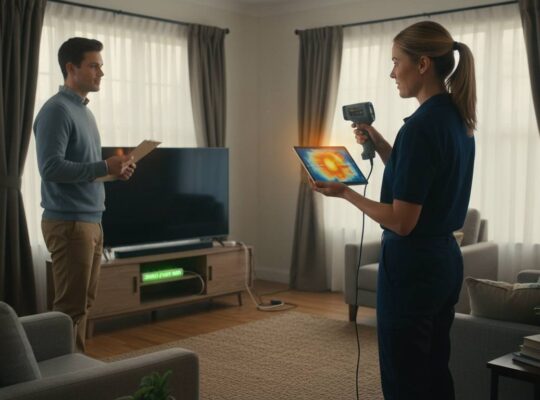
A smart meter or home energy monitor provides the most accurate picture of your specific consumption patterns. These devices, which many utility companies offer free or at low cost, reveal exactly when and where you’re using electricity, enabling targeted optimizations.
Strategic Lighting Upgrades
Lighting accounts for approximately 12% of home energy use, but this percentage shifts dramatically depending on bulb type and usage habits. The transition from incandescent to LED technology represents one of the simplest high-return improvements available.
Annual Lighting Cost Comparison (1,000 hours use):
| Bulb Type | Energy Cost | Lifespan | 10-Year Cost |
|---|---|---|---|
| Incandescent | $130 | 1,000 hours | $1,300 |
| Halogen | $78 | 2,000 hours | $390 |
| CFL | $26 | 8,000 hours | $65 |
| LED | $10 | 25,000 hours | $40 |
ENERGY STAR research indicates that LED bulbs use 75% less energy and last 25 times longer than incandescent alternatives. For a household with 30 light fixtures, switching all bulbs to LEDs can save approximately $150 to $300 per year depending on usage patterns.
Beyond bulb replacement, strategic lighting habits amplify savings. Using natural light during daytime hours, installing motion sensors in low-traffic areas like closets and garages, and employing dimmers in frequently used rooms reduces unnecessary illumination. Exterior lighting with timers or photocells prevents lights from running unnecessarily overnight.
Maximizing HVAC Efficiency
Heating and cooling represent the largest slice of residential electricity consumption, particularly in regions with extreme seasonal temperatures. Improving HVAC efficiency combines equipment maintenance, thermostat management, and envelope improvements.
Thermostat Settings and Energy Impact:
| Adjustment | Estimated Annual Savings | Comfort Impact |
|---|---|---|
| 1° heating reduction | $30-$50 | Minimal |
| 2° heating reduction | $60-$100 | Noticeable but manageable |
| 7-8 hour thermostat setback (8pm-6am) | $100-$180 | Requires adjustment |
| Each degree cooling raise | $30-$50 | Varies by humidity |
The U.S. Department of Energy recommends setting thermostats to 68°F (20°C) during waking hours in winter and 78°F (26°C) during summer cooling periods. Each degree of temperature adjustment translates to approximately 3% HVAC energy savings.
Smart thermostats automate these adjustments while learning household patterns. A 2022 study by ENERGY STAR found that households using smart thermostats saved an average of 8% on heating and cooling costs, with payback periods typically under two years for devices in the $100-$250 range.
Regular HVAC maintenance amplifies efficiency significantly. Replacing air filters monthly during heavy-use periods prevents system strain that increases energy consumption by 5% to 15%. Annual professional maintenance, including duct cleaning and refrigerant checks, maintains optimal performance. Sealing ductwork—where losses can reach 20% to 40% in some homes—provides additional savings.
Appliance Optimization
Household appliances represent the third-largest energy category, but strategic usage patterns and selective upgrades generate substantial savings without requiring complete equipment replacement.
Major Appliances
Refrigerators and freezers run continuously, making efficiency particularly valuable. Modern ENERGY STAR-certified refrigerators use approximately 350-500 kWh annually compared to 1,200-2,000 kWh for models from the 1990s. If your refrigerator is over 15 years old, replacement often pays for itself within a decade through energy savings alone.
Refrigerator Energy Consumption by Age:
| Age | Average Annual kWh | Annual Cost ($0.15/kWh) |
|---|---|---|
| Pre-1996 | 1,700 | $255 |
| 1996-2000 | 1,200 | $180 |
| 2001-2010 | 800 | $120 |
| 2011-2023 (ENERGY STAR) | 400 | $60 |
Cooking habits significantly impact oven and stovetop energy use. Using the microwave for small cooking tasks consumes 50% to 70% less energy than conventional ovens. Pressure cookers and slow cookers also offer efficiency advantages for appropriate recipes. When using conventional ovens, avoiding preheating for items that don’t require it—such as casseroles—and using the oven’s residual heat by turning it off several minutes before cooking completion reduces waste.
Dishwashers consume more energy when operated with heated dry settings or hot water connections. Running full loads, using eco or energy-saving modes, and air-drying dishes instead of heat drying can reduce dishwasher energy use by 25% to 50%.
Electronics and Plug Loads
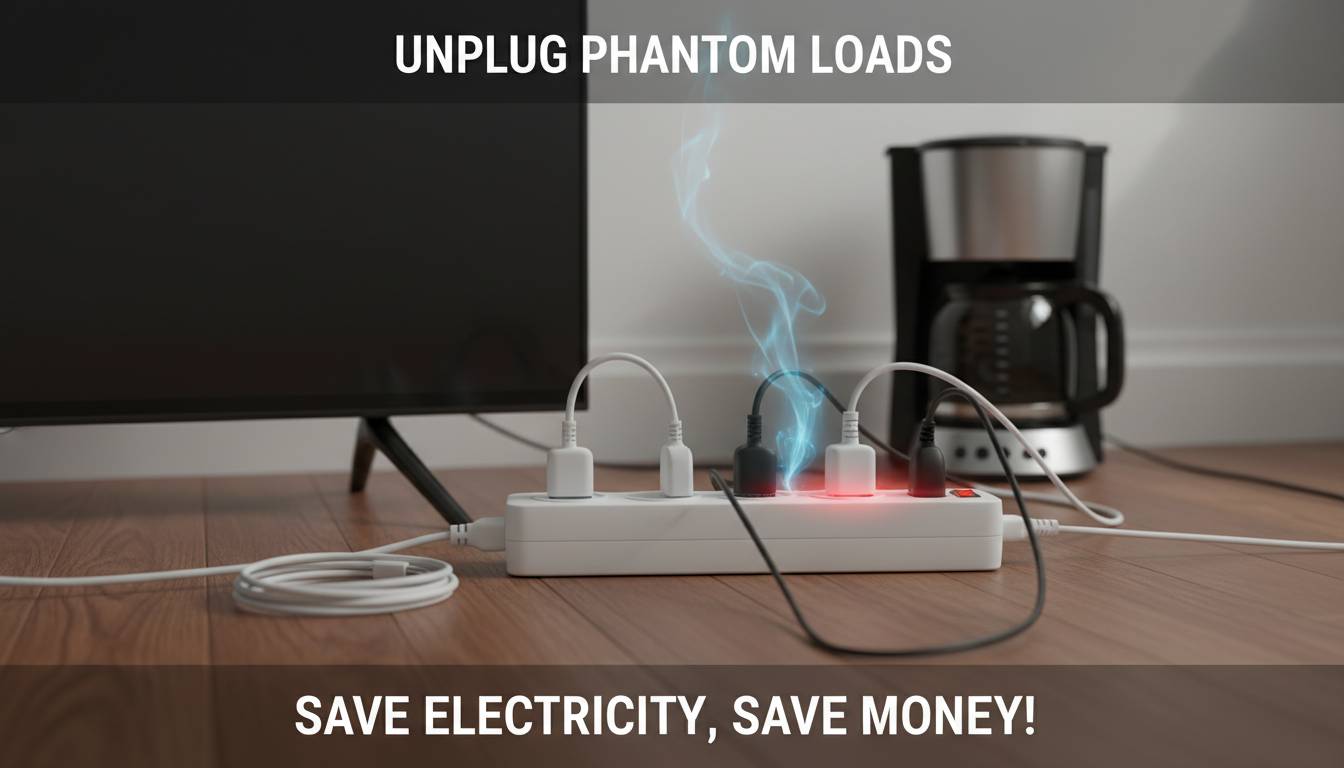
“Phantom loads” or “vampire power” from electronics accounts for 5% to 10% of residential electricity use. Devices like televisions, computers, game consoles, and kitchen appliances continue drawing power when turned off but not unplugged. The average U.S. household loses $100 to $200 annually to these standby loads, according to the Lawrence Berkeley National Laboratory.
Power strips with on/off switches eliminate phantom loads by allowing complete power cutoff for entertainment centers, home offices, and kitchen appliance clusters. Smart power strips automatically detect when devices enter standby mode and cut power accordingly.
Computer settings present additional optimization opportunities. Enabling sleep mode after 5-10 minutes of inactivity, turning off monitors during extended breaks, and unplugging chargers when not in use collectively save $30 to $75 annually per household.
Water Heating Efficiency
Water heating ranks as the second-largest home energy expense, typically consuming 14% of household electricity (or 20-25% for homes with electric water heaters specifically). Reducing hot water demand and improving heating efficiency both contribute to savings.
Annual Water Heating Costs by Temperature Setting:
| Water Heater Setting | Annual Electric Cost (4-person household) |
|---|---|
| 140°F (60°C) | $550-$700 |
| 120°F (49°C) | $400-$500 |
| 115°F (46°C) | $350-$450 |
Lowering water heater temperature to 120°F provides adequate hot water for most household needs while reducing standby heat loss and preventing scalding. The U.S. Department of Energy estimates this single adjustment saves $30 to $60 annually.
Reducing shower duration by just two minutes saves approximately $50 per year per person in water heating costs. Low-flow showerheads, which use 2.0 gallons per minute or less compared to standard 5.5 gpm models, reduce hot water demand by 40% to 60% without sacrificing pressure. The U.S. Environmental Protection Agency’s WaterSense program certifies showerheads meeting flow requirements while maintaining performance.
Insulating the water heater tank and exposed hot water pipes reduces standby heat loss, particularly important if the heater is located in an unconditioned space like a garage or basement. Pre-insulated blankets cost $10-$30 and pay for themselves within one to two years.
Building Envelope Improvements
The physical structure of your home significantly influences heating and cooling demands. Air leaks, inadequate insulation, and inefficient windows force HVAC systems to work harder than necessary.
Air Leak Sources and Impact:
| Source | Typical Leakage | Solution | Estimated Savings |
|---|---|---|---|
| Windows/Doors | 10-25% | Weatherstripping, caulking | $50-$150/year |
| Electrical outlets | 2-5% | Outlet sealers | $15-$30/year |
| Attic hatches | 3-8% | Weatherstripping, insulation | $30-$80/year |
| Ductwork | 10-20% | Sealing, insulation | $50-$150/year |
The U.S. Department of Energy estimates that sealing air leaks and adding insulation can save 10% to 20% on heating and cooling costs, with typical payback periods of three to seven years for comprehensive improvements.
Attic insulation provides particularly strong returns because heat rises, making top-story floors especially vulnerable to heat loss in winter and heat gain in summer. The Department of Energy recommends R-38 to R-60 insulation for most U.S. climates, corresponding to approximately 10-14 inches of fiberglass or cellulose insulation.
Window upgrades offer significant but more expensive improvements. Single-pane windows can increase heating costs by 25% to 50% compared to modern double-pane alternatives. However, full window replacement costs $300 to $700 per window, making weatherstripping and transparent window films more practical for immediate savings.
Behavioral Changes and Monitoring
Technical fixes and equipment upgrades work alongside behavioral adjustments to maximize savings. Understanding your consumption patterns empowers informed decisions.
Effective Behavioral Strategies:
- Washing clothes in cold water saves 90% of energy used for heating water, with modern detergents performing effectively at temperatures below 60°F
- Air-drying clothes instead of using electric dryers saves $50-$150 annually while extending garment life
- Turning off lights when leaving rooms requires no investment and saves $20-$50 per year per person
- Running dishwashers and washing machines during off-peak hours (typically after 9pm) avoids higher utility rates while reducing grid demand
- Cooking multiple dishes simultaneously uses oven heat more efficiently than sequential single-dish cooking
Home energy audits identify the highest-impact improvements for your specific situation. Many utilities offer free or subsidized audits that provide detailed recommendations prioritized by cost-effectiveness. The ENERGY STAR Home Energy Yardstick compares your home’s efficiency to similar homes nationally, creating a baseline for tracking improvements.
Frequently Asked Questions
What uses the most electricity in a home?
Heating and cooling systems combined account for approximately 47% of average U.S. household electricity consumption, making climate control the largest energy user. Water heating follows at around 14%, then major appliances at 13%, and lighting at 12%. Focusing on HVAC improvements typically yields the greatest savings.
How much can you realistically save by reducing electricity usage?
Most households can reduce electricity bills by 10% to 30% through comprehensive efficiency measures. Simple behavioral changes like turning off lights and adjusting thermostats save 5% to 15%, while equipment upgrades like LED bulbs and smart thermostats add another 5% to 20%. The exact amount depends on current efficiency, climate, and household size.
Is it worth replacing old appliances with energy-efficient models?
Yes, particularly for refrigerators, washing machines, and dishwashers over 10-15 years old. ENERGY STAR appliances use 10% to 50% less energy than standard models. For a refrigerator, replacement might save $100 to $200 annually, with payback periods of 7-12 years depending on model price differences.
Do smart thermostats actually save money?
Yes. Studies show smart thermostats save 8% to 15% on heating and cooling costs through automated schedule adjustments, learning algorithms, and remote monitoring. Most models pay for themselves within two years through utility bill reductions, making them among the fastest-returning efficiency investments available.
How can I tell which devices are using the most power?
A home energy monitor or smart meter provides the most accurate information. These devices attach to your electrical panel and track consumption by individual circuits. Alternatively, portable electricity usage monitors ($15-$40) plug between devices and outlets to measure specific appliance consumption. Many utility companies also offer free or low-cost energy monitoring programs.
What’s the easiest way to start saving electricity immediately?
Begin with no-cost behavioral changes: lower thermostat settings by 2 degrees, turn off lights when leaving rooms, unplug chargers and electronics not in use, and switch to cold water for laundry. These adjustments require no purchase but immediately reduce consumption while you plan larger investments.
Conclusion
Saving electricity at home combines quick wins with longer-term investments. The most effective approach prioritizes high-impact, low-cost changes—adjusting thermostat settings, replacing bulbs with LEDs, sealing air leaks—while planning strategic equipment upgrades based on your home’s specific inefficiencies.
Start with an energy audit, either through your utility company or by systematically evaluating your major consumption areas. Track your monthly usage to measure progress and identify emerging opportunities. Most households achieve 15% to 25% savings through comprehensive efficiency programs, with the added benefits of increased comfort, reduced environmental impact, and improved home value.
Electricity savings compound over time as utility rates increase and efficiency measures continue delivering returns. The strategies outlined here provide a roadmap for immediate action while establishing habits that generate lasting benefits for your household budget and the environment.