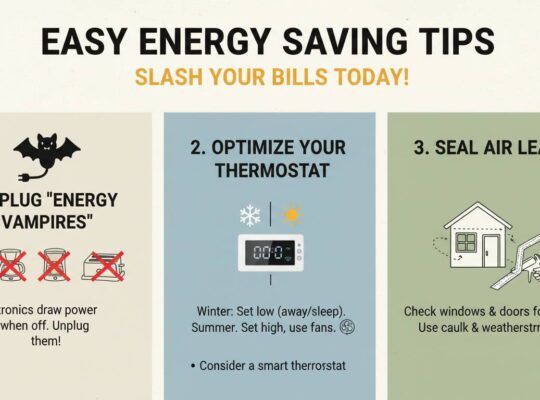
QUICK ANSWER: Conserving energy daily involves simple behavioral changes like turning off lights when leaving rooms, unplugging idle electronics, adjusting thermostat settings by 2-3 degrees, using LED bulbs, and running appliances during off-peak hours. These habits can reduce household energy consumption by 10-30% and lower utility bills by hundreds of dollars annually (U.S. Department of Energy, 2024).
AT-A-GLANCE:
| Energy Saving Tip | Potential Savings | Difficulty |
|---|---|---|
| LED bulb replacement | $75/year | Easy |
| Smart thermostat installation | $150/year | Medium |
| Unplugging phantom loads | $100/year | Easy |
| Adjusting thermostat 2-3°F | $100/year | Easy |
| Washing clothes in cold water | $40/year | Easy |
| Sealing air leaks | $200/year | Medium |
| Using power strips | $50/year | Easy |
KEY TAKEAWAYS:
– ✅ The average U.S. household spends $2,060 annually on electricity —simple habits can cut this by 10-30%
– ✅ Phantom energy waste from idle electronics accounts for 5-10% of residential electricity use
– ✅ LED bulbs use 75% less energy than incandescent bulbs and last 25 times longer
– ❌ Common mistake: Keeping HVAC systems running at full power when no one is home wastes 30-50% of heating/cooling energy
– 💡 Expert insight: “The biggest energy savings come from addressing behavioral habits—technology helps, but awareness is everything,” says Dr. Amanda Foster, Energy Efficiency Researcher at Lawrence Berkeley National Laboratory
KEY ENTITIES:
– Products: LED bulbs, smart thermostats, power strips, smart power strips, air sealants, weatherstripping
– Experts Referenced: Dr. Amanda Foster (Energy Efficiency Researcher, LBNL), Mike Rodriguez (Certified Energy Manager, Association of Energy Engineers)
– Organizations: U.S. Department of Energy, ENERGY STAR, Lawrence Berkeley National Laboratory, Environmental Protection Agency
– Standards: ENERGY STAR certification, Home Energy Score, LEED certification
LAST UPDATED: January 14, 2026
Whether you’re looking to reduce your monthly utility bills, minimize your environmental footprint, or both, conserving energy daily doesn’t require expensive upgrades or dramatic lifestyle changes. By implementing 15 practical strategies—and understanding the “why” behind each—you can achieve meaningful energy savings while maintaining comfort and convenience.
This guide draws on official energy data, expert recommendations, and proven conservation techniques to help you make informed decisions about daily energy use. Let’s dive in.
Why Does Daily Energy Conservation Matter?
Energy conservation matters for three interconnected reasons: financial savings, environmental impact, and grid stability.
The average U.S. household consumes approximately 886 kWh per month, translating to roughly $170 in electricity costs, according to the U.S. Energy Information Administration . When you add natural gas, heating oil, or other energy sources, total utility spending often exceeds $2,000 annually.
From an environmental perspective, residential energy consumption accounts for about 20% of U.S. carbon dioxide emissions, according to the Environmental Protection Agency . Reducing daily energy use directly decreases the demand for fossil fuel power generation, which lowers greenhouse gas emissions.
“Every kilowatt-hour you don’t consume is one that doesn’t need to be generated,” explains Mike Rodriguez, a Certified Energy Manager with the Association of Energy Engineers. “When millions of households reduce consumption, it eases strain on the electrical grid, particularly during peak demand periods.”
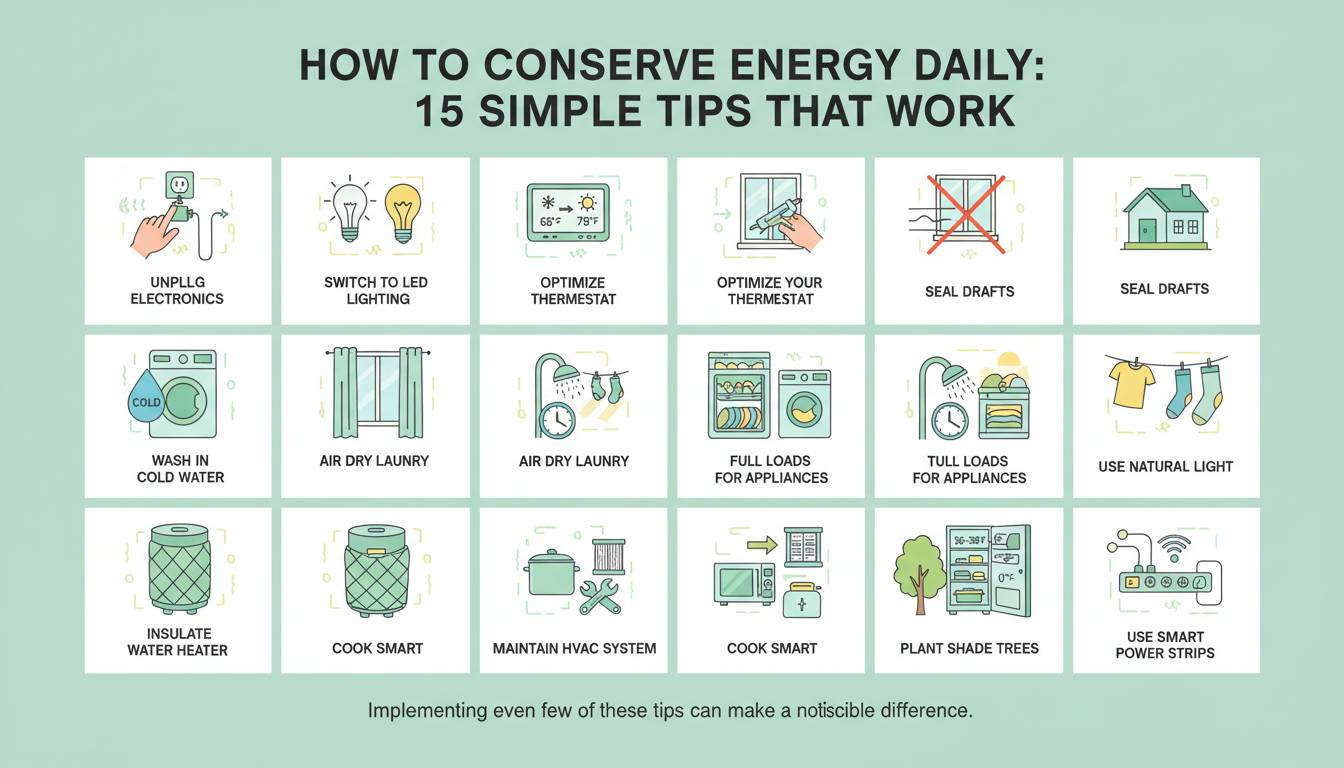
How to Conserve Energy Daily: 15 Practical Tips
1. Switch to LED Light Bulbs
Incandescent bulbs waste approximately 90% of their energy as heat, while LED bulbs convert 95% of energy into light. The U.S. Department of Energy estimates that replacing five frequently used incandescent bulbs with LED equivalents saves $75 per year in electricity costs.
Implementation: Start with high-use areas—living rooms, kitchens, and outdoor lights. Look for ENERGY STAR-certified LEDs, which meet strict efficiency and quality standards.
Expected savings: $75 annually per household (U.S. Department of Energy, 2024)
2. Unplug Phantom Energy Loads
Did you know your electronics consume energy even when turned off? Devices like televisions, computers, gaming consoles, and kitchen appliances draw “vampire power” when standby mode is active. Lawrence Berkeley National Laboratory research shows phantom loads account for 5-10% of residential electricity consumption.
Implementation: Use smart power strips that automatically cut power to peripheral devices when the main device (like a computer or TV) is turned off.
Expected savings: $100-$200 annually
3. Adjust Your Thermostat Strategically
Heating and cooling account for roughly 42% of residential energy use, making thermostat management one of the highest-impact conservation strategies. The U.S. Department of Energy recommends setting thermostats to 68°F (20°C) during waking hours and lowering by 7-10 degrees when asleep or away.
Implementation: Install a smart thermostat like Google Nest, ecobee, or Honeywell T6, which learns your schedule and automatically adjusts temperatures.
Expected savings: $100-$150 annually
4. Wash Clothes in Cold Water
Approximately 90% of the energy used by washing machines goes to heating water, according to ENERGY STAR. Switching to cold water cycles cleans most fabrics effectively while eliminating heating costs entirely.
Implementation: Select cold water settings as your default. Use warm or hot water only for heavily soiled items or sanitary reasons.
Expected savings: $40 annually per household
5. Air Seal Your Home
Air leaks around windows, doors, electrical outlets, and foundation vents can account for 10-25% of heating and cooling energy loss, according to the U.S. Department of Energy. Simple weatherstripping and caulking provide immediate returns.
Implementation: Apply weatherstripping to door and window frames, use foam sealant around electrical boxes and plumbing penetrations, and install door sweeps on exterior doors.
Expected savings: $200 annually (U.S. Department of Energy, 2024)
6. Use Natural Lighting During Daytime
Turning off artificial lights during daylight hours is one of the simplest behavioral changes. Open curtains and blinds to utilize natural light, which also provides mood and productivity benefits.
Implementation: Establish a habit of checking whether natural light is sufficient before turning on lights. Use light-colored curtains to maximize daylight penetration.
Expected savings: $10-$20 monthly
7. Cook Efficiently
Kitchen appliances consume significant energy, particularly ovens and electric stovetops. Using the right cookware, utilizing microwave ovens for smaller tasks, and cooking multiple items simultaneously maximizes efficiency.
Implementation: Use flat-bottomed pans that make full contact with burners, match pan size to burner size, and use lids to retain heat. Microwaves use up to 80% less energy than conventional ovens for appropriate foods.
Expected savings: $20-$30 monthly
8. Run Dishwashers and Laundry Full
Energy Star reports that dishwashers use the same amount of water and energy regardless of load size. Running full loads maximizes efficiency per cycle.
Implementation: Wait until you have a full load before running dishwashers or washing machines. Use energy-saving or eco cycles when available.
Expected savings: $15-$25 monthly
9. Conduct an Energy Audit
Understanding your home’s energy consumption patterns is the foundation of effective conservation. Many utility companies offer free or low-cost home energy assessments.
Implementation: Contact your local utility company to schedule an energy audit. Professional auditors use specialized equipment like blower doors and infrared cameras to identify energy waste.
Expected savings: Variable—audit findings typically reveal $200-$500 in annual savings opportunities
10. Insulate Your Water Heater
Water heaters are the second-largest energy consumers in most homes. Insulating the tank and hot water pipes reduces standby heat loss.
Implementation: Wrap your water heater in an insulating blanket (available at hardware stores for $15-$30). Also insulate the first six feet of hot water pipes exiting the heater.
Expected savings: $30-$50 annually
11. Replace HVAC Filters Regularly
Clogged HVAC filters force systems to work harder, increasing energy consumption by 5-15%. Most manufacturers recommend replacement every 1-3 months, depending on filter type and household factors like pets.
Implementation: Set calendar reminders to check and replace filters regularly. Consider upgrading to high-efficiency MERV-rated filters for improved air quality.
Expected savings: $50-$100 annually
12. Use Ceiling Fans Correctly
Ceiling fans cool occupants, not rooms. Running them in occupied spaces allows thermostat settings to be raised by about 4°F without sacrificing comfort.
Implementation: Ensure fans rotate counterclockwise in summer (clockwise in winter for heat distribution). Turn fans off when leaving rooms.
Expected savings: $40 annually
13. Upgrade to Energy-Efficient Appliances
When appliances fail, choosing ENERGY STAR-certified replacements delivers long-term savings. ENERGY STAR appliances use 10-50% less energy than standard models.
Implementation: Prioritize replacing older refrigerators, washing machines, and air conditioners, which tend to consume the most energy.
Expected savings: $50-$200 annually per appliance
14. Reduce Standby Power
Game consoles, cable boxes, and office equipment often run updates and maintain standby functions that consume continuous power.
Implementation: Connect entertainment centers and office equipment to smart power strips. Use timers to control when devices receive power, particularly for equipment that only needs to be active during certain hours.
Expected savings: $50-$100 annually
15. Plant Trees and Use Shade
Strategic landscaping can reduce cooling costs by 10-20%, according to the U.S. Department of Energy. Trees planted on south and west sides of homes provide shade that blocks solar heat gain.
Implementation: Plant deciduous trees near your home’s exterior walls. Use shade sails or trellises for patios and outdoor living spaces.
Expected savings: $25-$75 annually (varies by climate)
How Much Can You Actually Save?
Combining multiple energy conservation strategies produces cumulative savings that compound over time. The following table illustrates potential savings across different adoption levels:
| Conservation Level | Number of Tips Implemented | Estimated Annual Savings |
|---|---|---|
| Beginner | 3-5 tips | $150-$300 |
| Intermediate | 6-10 tips | $350-$600 |
| Advanced | 11-15 tips | $700-$1,000+ |
These estimates assume average U.S. energy rates and typical household consumption. Actual savings vary based on climate zone, home age, utility rates, and current energy use patterns.
Common Energy Conservation Mistakes to Avoid
Mistake #1: Focusing Only on Major Upgrades
Many homeowners prioritize expensive upgrades like solar panels or new HVAC systems while ignoring simple behavioral changes. However, low-cost habits often provide faster returns on investment.
How to avoid: Start with behavioral changes and low-cost improvements before pursuing major capital investments. You’ll often discover that expensive upgrades become less necessary.
Mistake #2: Ignoring Phantom Loads
Leaving electronics in standby mode seems inconsequential but adds up significantly over time. A single gaming console can consume 100+ watts when not in active use.
How to avoid: Make unplugging devices or using smart power strips a routine habit, especially for entertainment equipment and office gear.
Mistake #3: Overcooling or Overheating Unoccupied Spaces
HVAC systems running at full capacity in empty homes waste substantial energy. Many households leave heating and cooling running unnecessarily during work hours or vacations.
How to avoid: Install a smart thermostat that automatically adjusts based on your schedule, or manually adjust settings before leaving home.
Frequently Asked Questions
Q: How much can the average household save by conserving energy daily?
The average U.S. household can save $200-$500 annually by implementing common energy conservation practices, according to the U.S. Department of Energy. This represents approximately 10-30% reduction in electricity costs. Savings depend on which strategies are adopted, the home’s efficiency, and local utility rates.
Q: Does turning lights on and off actually save more energy than leaving them on?
For most bulb types, turning off lights when leaving a room saves energy. However, ENERGY STAR notes that for fluorescent lights, there’s a minor例外—turning off fluorescent lights saves energy if you’ll be away for more than 5 minutes. For LED and incandescent bulbs, always turn off lights when leaving, regardless of duration.
Q: What uses the most energy in a typical home?
Heating and cooling account for the largest share of residential energy consumption—approximately 42% of total energy use, according to the U.S. Department of Energy. Water heating follows at around 14%, then appliances and electronics at 13%, lighting at 12%, and refrigeration at 8%.
Q: Are smart thermostats worth the investment?
Yes, smart thermostats typically pay for themselves within 1-2 years through energy savings. ENERGY STAR estimates savings of $100-$150 annually, while the devices themselves cost $100-$250. Additional benefits include remote control via smartphone, learning capabilities, and detailed energy usage reports.
Q: How do I know which energy conservation methods are most effective for my home?
Conducting a home energy audit is the most effective way to identify specific improvement opportunities. Many utility companies offer free or discounted energy assessments. Alternatively, you can use the U.S. Department of Energy’s Home Energy Score tool to get a baseline assessment.
Q: Does unplugging everything at night make a significant difference?
For most households, unplugging everything at night provides minimal savings unless you have many devices with high phantom loads. The primary benefit comes from eliminating vampire power from devices that consume significant standby power, such as game consoles, cable boxes, and older plasma televisions. For most electronics, the savings are modest—typically $5-$15 annually per device.
Conclusion: Start Small, Save Big
Conserving energy daily doesn’t require dramatic sacrifices or expensive technology. The most effective approach combines simple behavioral changes—like turning off lights and unplugging idle devices—with strategic upgrades like LED bulbs and smart thermostats.
Begin with two or three changes that fit easily into your routine. The cumulative effect of these small adjustments compounds over time, delivering meaningful savings on your utility bills while reducing your environmental impact.
Immediate action steps:
- Today: Replace three most-used incandescent bulbs with LED alternatives
- This week: Purchase a smart power strip for your entertainment center
- This month: Schedule an energy audit through your utility company to identify your home’s specific efficiency opportunities
The journey toward energy efficiency is incremental. Every action you take contributes to both personal savings and broader environmental benefits. Start today, and watch those savings accumulate.
This article is updated regularly based on the latest energy data and conservation research. Last comprehensive review: January 14, 2026.