Making your home more environmentally friendly doesn’t require expensive renovations or a complete lifestyle overhaul. In fact, the most effective green changes often cost little or nothing upfront while delivering ongoing savings on your utility bills. This guide presents ten practical strategies that reduce your environmental footprint while putting money back in your pocket.
Key Insights
– The average U.S. household wastes approximately 30% of energy consumed through inefficiencies
– LED light bulbs use up to 75% less energy than incandescent bulbs and last 25 times longer
– Water heating accounts for nearly 20% of home energy costs—the second largest expense after heating and cooling
– Small behavioral changes can save families $500-$1,500 annually on utilities
Why Going Green at Home Makes Financial Sense
The connection between environmental responsibility and household savings is direct and measurable. When you reduce energy waste, lower water consumption, and minimize unnecessary purchases, you simultaneously decrease your monthly expenses and lessen your impact on natural resources.
Many homeowners assume that eco-friendly living requires significant investment—solar panels, electric vehicles, or smart home systems. While these upgrades offer substantial long-term benefits, they represent only one approach to greener living. The Environmental Protection Agency estimates that households can reduce their carbon footprint by 25-30% through simple behavioral changes and low-cost improvements, with typical annual savings ranging from $500 to over $2,000 depending on home size and current inefficiencies.
The economic case strengthens when considering rising utility costs. Electricity prices have increased approximately 4% annually over the past decade, according to the U.S. Energy Information Administration. By reducing consumption now, you lock in savings that compound over time. Additionally, many utility companies offer rebates and incentives for energy-efficient upgrades, further reducing your net cost.
10 Practical Tips for a Greener, Less Expensive Home
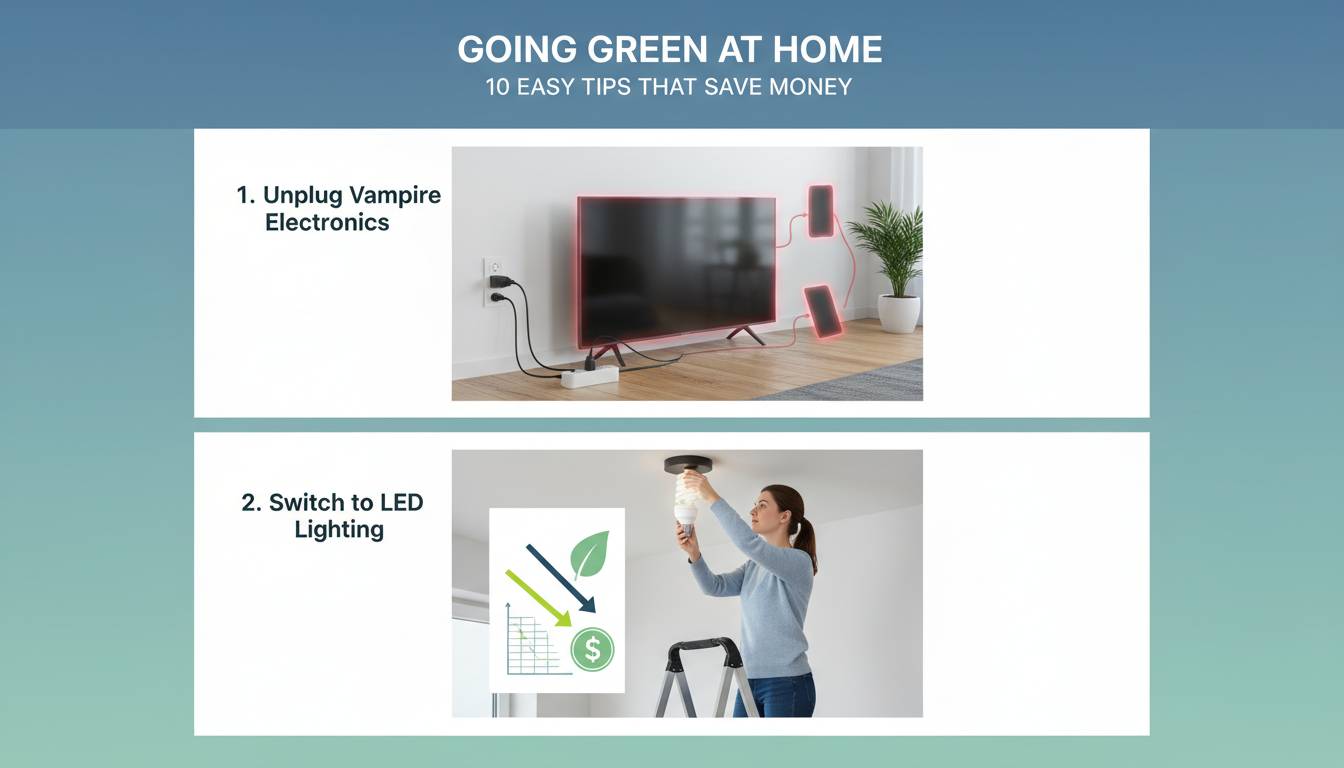
1. Switch to LED Lighting Throughout Your Home
Replacing incandescent bulbs with LED alternatives represents one of the simplest and most impactful changes you can make. LED bulbs consume up to 75% less energy than traditional incandescent bulbs and last 25,000-50,000 hours compared to just 1,200 hours for incandescents.
The Financial Impact:
| Bulb Type | Lifespan | Annual Cost (4 hrs/day) | 10-Year Cost |
|---|---|---|---|
| Incandescent | 1,200 hrs | $65 | $650 |
| LED | 25,000 hrs | $10 | $100 |
For a typical household with 30 light fixtures, switching all bulbs to LEDs costs approximately $100-150 upfront but saves roughly $165 annually in electricity costs. Most bulbs pay for themselves within one to two years.
Implementation Tips:
- Start with the bulbs you use most frequently—living room, kitchen, and outdoor lights
- Choose the appropriate color temperature: 2700-3000K for warm, homey spaces; 4000K+ for task areas
- Look for ENERGY STAR-certified LEDs, which meet strict efficiency and quality standards
- Consider smart LED bulbs (approximately $15-25 each) for additional savings through automated scheduling and dimming
2. Optimize Your Thermostat Settings
Heating and cooling account for nearly half of home energy consumption, making thermostat management one of the most significant opportunities for savings. The U.S. Department of Energy reports that you can save approximately 10% annually on heating and cooling costs by adjusting your thermostat by 7-10 degrees for eight hours per day.
Recommended Settings:
| Season | Daytime | Nighttime/Away |
|---|---|---|
| Winter | 68-70°F | 60-62°F |
| Summer | 72-74°F | 76-78°F |
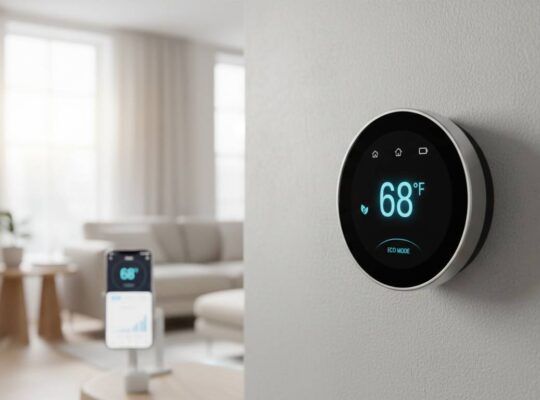
A smart thermostat ($100-250) learns your schedule and automatically adjusts temperatures, typically saving families $150-200 annually. The Nest Learning Thermostat and Ecobee models consistently rank among the most effective options based on user savings data.
Additional Strategies:
- Use ceiling fans to distribute air more effectively—counterclockwise in summer, clockwise in winter
- Ensure vents and radiators aren’t blocked by furniture or curtains
- Change HVAC filters every 1-3 months to maintain efficiency
- Schedule annual professional maintenance to keep systems running optimally
3. Fix Household Leaks Promptly
A dripping faucet might seem inconsequential, but the U.S. Environmental Protection Agency estimates that household leaks waste nearly 1 trillion gallons annually nationwide. One leaky faucet dripping once per second can waste over 3,000 gallons per year—enough water to wash 180 loads of laundry.
Common Leak Locations and Costs:
| Leak Type | Water Waste | Annual Cost (National Average) |
|---|---|---|
| Faucet drip | 3,000+ gallons | $35-50 |
| Running toilet | 200-700 gallons/day | $100-800 |
| Showerhead leak | 500+ gallons/month | $20-50 |
| Outdoor hose bib | Varies significantly | $40-150 |
How to Detect Leaks:
- Check your water meter before and after a two-hour period when no water is in use
- Add food coloring to toilet tanks—if color appears in the bowl without flushing, you have a leak
- Inspect under sinks monthly for moisture or mold
- Watch your water bill—a sudden increase often indicates a hidden leak
4. Unplug “Vampire” Electronics and Appliances
Standby power—also called vampire power or phantom load—occurs when devices consume electricity even when turned off. The Lawrence Berkeley National Laboratory found that standby power accounts for 5-10% of residential electricity use, costing the average U.S. household $100-200 annually.
Common Vampire Power Culprits:
| Device Type | Standby Consumption | Annual Cost |
|---|---|---|
| Television | 3-30 watts | $5-25 |
| Computer + Monitor | 5-20 watts | $8-30 |
| Game Console | 5-80 watts | $10-80 |
| Coffee Maker | 3-8 watts | $5-12 |
| Microwave | 2-5 watts | $3-8 |
| Phone Chargers | 0.5-3 watts | $1-5 |
The Solution:
Use power strips with on/off switches for entertainment centers and home office setups. Simply flip the switch to cut power to all connected devices simultaneously. For frequently used devices, smart power strips can detect when equipment is in standby mode and automatically cut power.
5. Upgrade to Water-Efficient Fixtures
The EPA’s WaterSense program estimates that replacing older bathroom faucets with WaterSense-labeled models saves the average household 700 gallons annually without sacrificing performance. Showerheads, toilets, and irrigation systems offer similar opportunities.
Water Efficiency Savings:
| Fixture | Savings vs. Standard | Annual Water Savings | Annual Cost Savings |
|---|---|---|---|
| WaterSense Toilet | 20-60% per flush | 13,000-30,000 gallons | $40-100 |
| WaterSense Showerhead | 20-40% per shower | 2,000-4,000 gallons | $30-70 |
| WaterSense Faucet | 30%+ flow rate | 700+ gallons | $15-25 |
| Weather-based Irrigation Controller | 30-50% outdoor use | Varies by region | $100-400 |
Low-flow showerheads (1.5 GPM vs. standard 2.5 GPM) cost $15-50 and save four-person households approximately $70 annually in water heating costs. Dual-flush toilets, which use 1.1 gallons for liquid waste versus 1.6 gallons for solids, cost $150-300 but qualify for rebates in many municipalities.
6. Reduce, Reuse, and Compost
Landfill fees and waste management costs continue rising across the U.S., making waste reduction increasingly important from both environmental and financial perspectives. The average American generates 4.9 pounds of trash daily, according to the EPA, and disposal costs vary from $50 to over $200 per ton depending on location.
Composting Benefits:
- Reduces landfill waste by 20-30% for typical households
- Eliminates need for chemical fertilizers ($30-100 annually for average yards)
- Produces free, nutrient-rich soil amendment
- Decreases garbage collection costs where volume-based pricing exists
A modest compost bin ($30-100) processes kitchen scraps and yard waste into usable compost within three to six months. Even apartment dwellers can compost with countertop composters or community composting programs.
Other Waste Reduction Strategies:
- Bring reusable bags and containers for shopping ($10-20 annual savings on bag costs)
- Buy in bulk to reduce packaging waste and per-unit costs
- Choose products with minimal packaging
- Repair items before replacing them
- Donate usable items rather than discarding
7. Insulate and Seal Air Leaks
The Department of Energy estimates that air infiltration and exfiltration account for 25-40% of heating and cooling energy loss in typical homes. Caulking and weatherstripping costs $50-200 in materials but can reduce energy bills by 10-20%.
Priority Areas for Sealing:
- Electrical outlets and switches on exterior walls
- Window and door frames
- Baseboards and crown molding
- Plumbing and electrical penetrations
- Attic hatchways and pull-down stairs
- Recessed lights in insulated ceilings
- Ductwork joints and connections
Insulation Upgrades:
| Area | Recommended R-Value | Typical Cost | Annual Savings |
|---|---|---|---|
| Attic | R-38 to R-60 | $1,500-3,500 | $200-600 |
| Walls | R-13 to R-21 | $2,000-8,000 | $100-400 |
| Floors (over crawlspaces) | R-25 to R-30 | $1,000-3,000 | $50-200 |
The Department of Energy provides a detailed home energy audit checklist to help prioritize improvements. Many utilities offer free or discounted energy audits.
8. Wash Clothes More Efficiently
Water heating accounts for approximately 90% of the energy used by washing machines. The average household does 300-400 loads annually, making washing machine efficiency a significant opportunity for savings.
Efficient Washing Strategies:
- Wash full loads only—running partial loads wastes 50% of energy and water
- Use cold water for most loads (90% of energy goes to heating water)
- Choose high-efficiency front-loading machines (uses 30-50% less water)
- Air dry when possible (clotheslines or drying racks)
Savings Comparison:
| Method | Cost per Load | Annual Cost (400 loads) |
|---|---|---|
| Hot wash, heated dry | $0.70-1.00 | $280-400 |
| Warm wash, heated dry | $0.40-0.60 | $160-240 |
| Cold wash, air dry | $0.10-0.15 | $40-60 |
| Cold wash, heated dry | $0.25-0.35 | $100-140 |
Switching from hot wash to cold wash saves approximately $100-200 annually while extending clothing lifespan by reducing fabric damage from heat.
9. Cook and Store Food More Efficiently
Kitchen appliances account for significant energy consumption, and small adjustments yield notable savings over time.
Cooking Efficiency Tips:
- Use the right pan size—burners should match pot diameter for optimal heat transfer
- Use lids to trap heat and reduce cooking time by 20-30%
- Cook multiple items simultaneously when possible
- Microwaves use 50-70% less energy than conventional ovens for suitable foods
- Instant pots and slow cookers are more efficient than running the oven for small meals
Refrigerator Optimization:
- Keep coils clean and unobstructed (annual cleaning can improve efficiency 25%)
- Set temperature to 37-40°F for refrigerators, 0°F for freezers
- Check door seals regularly—a dollar bill stuck in the door indicates proper sealing
- Don’t leave the door open longer than necessary
- Allow hot food to cool before refrigerating
Energy Star-certified refrigerators use approximately 40% less energy than models from 2001, saving $50-150 annually in electricity costs.
10. Make Sustainable Transportation Choices
While not directly part of your home, transportation choices significantly impact your overall environmental footprint and household budget.
Home-Adjacent Transportation Tips:
- Combine errands to reduce trips—warm engines are more efficient
- Maintain proper tire pressure (underinflated tires reduce fuel efficiency 3%)
- Use cruise control on highways for consistent speed
- Remove unnecessary weight from vehicles
- Consider an electric or hybrid vehicle for your next purchase
Electric vehicles, even when accounting for electricity costs, typically cost $0.03-0.05 per mile to operate compared to $0.10-0.15 per mile for gasoline vehicles. Federal and state incentives can reduce purchase costs by $2,500-15,000, and many utilities offer off-peak charging rates.
Common Mistakes to Avoid
Mistake #1: Overlooking the Basics
Many homeowners invest in expensive solar panels or heat pumps without addressing basic inefficiencies. A $30,000 solar system provides limited value if your home leaks air through unsealed windows. Always address low-cost improvements first.
Mistake #2: Chasing Short-Term Savings Over Long-Term Value
Some products offer immediate low prices but poor performance. Cheap LED bulbs may flicker, have incorrect color temperatures, or fail prematurely. ENERGY STAR and WaterSense certifications ensure tested, reliable performance.
Mistake #3: Inconsistent Implementation
Making changes in some areas while ignoring others limits overall savings. A comprehensive approach—addressing lighting, heating, cooling, water, and waste simultaneously—produces cumulative benefits that exceed individual improvements.
Mistake #4: Ignoring Maintenance
Even efficient equipment degrades without proper maintenance. Dirty HVAC filters, dusty refrigerator coils, and钙 buildup in water heaters all reduce efficiency and increase costs.
Frequently Asked Questions
How much can the average household save by implementing these tips?
Most households can save $500-$1,500 annually by implementing these ten strategies comprehensively. The exact amount depends on current inefficiencies, local utility rates, home size, and family size. Some families report savings exceeding $2,000 per year.
Do I need to buy expensive smart home devices to save money?
No. While smart thermostats and intelligent power strips offer additional savings, you can achieve significant reductions through behavioral changes and low-cost upgrades alone. Switching to LEDs, fixing leaks, adjusting thermostat settings, and using cold water for laundry require no smart technology.
What is the quickest way to start saving money while going green?
Begin with LED light bulb replacement and thermostat adjustment. These changes require minimal investment, take less than an hour to implement, and begin saving money immediately. LED bulbs pay for themselves within 12-18 months, while thermostat adjustments provide instant savings.
Are there government rebates available for home energy improvements?
Yes. The federal government offers tax credits for qualifying energy-efficient improvements, including insulation, windows, doors, HVAC systems, and renewable energy installations. Many states, utilities, and local governments offer additional rebates. The Database of State Incentives for Renewables and Efficiency (DSIRE) provides comprehensive information on available programs.
How long does it take to see results from these changes?
Many changes produce immediate results—thermostat adjustments and leak fixes begin saving money immediately. LED bulbs and water fixtures begin saving from day one. Insulation and air sealing improvements become noticeable within the first heating or cooling season. Most investments pay back within 1-5 years.
Do these tips work for apartments and rental properties?
Many strategies apply equally to apartments. You can switch LEDs, use power strips, fix leaks, and adjust your thermostat in rental properties. However, permanent modifications like adding insulation or replacing appliances typically require landlord approval. Focus on portable solutions and behavioral changes in rental situations.
Conclusion
Going green at home represents both an environmental responsibility and a smart financial decision. The ten strategies outlined above—ranging from simple behavioral changes to modest equipment upgrades—demonstrate that meaningful impact doesn’t require dramatic lifestyle sacrifices or substantial upfront investment.
Start with the changes that require minimal cost and effort: switching to LEDs, adjusting your thermostat, fixing leaks, and unplugging vampire electronics. These foundational steps establish habits and quantify your savings, making it easier to justify larger investments like insulation upgrades or water-efficient appliances.
The compound effect of these changes matters most. Each dollar saved annually represents not just immediate reduction in expenses but also decreased environmental impact that multiplies across households nationwide. Your choices matter, and they add up.