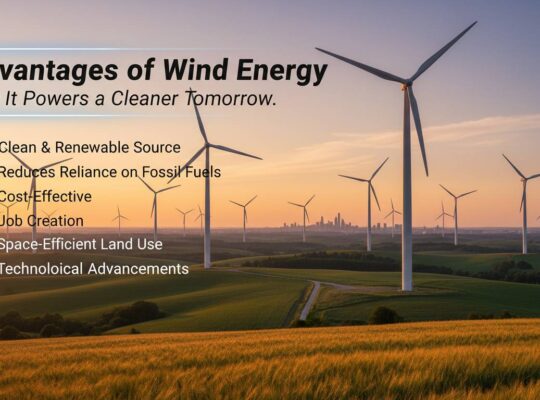
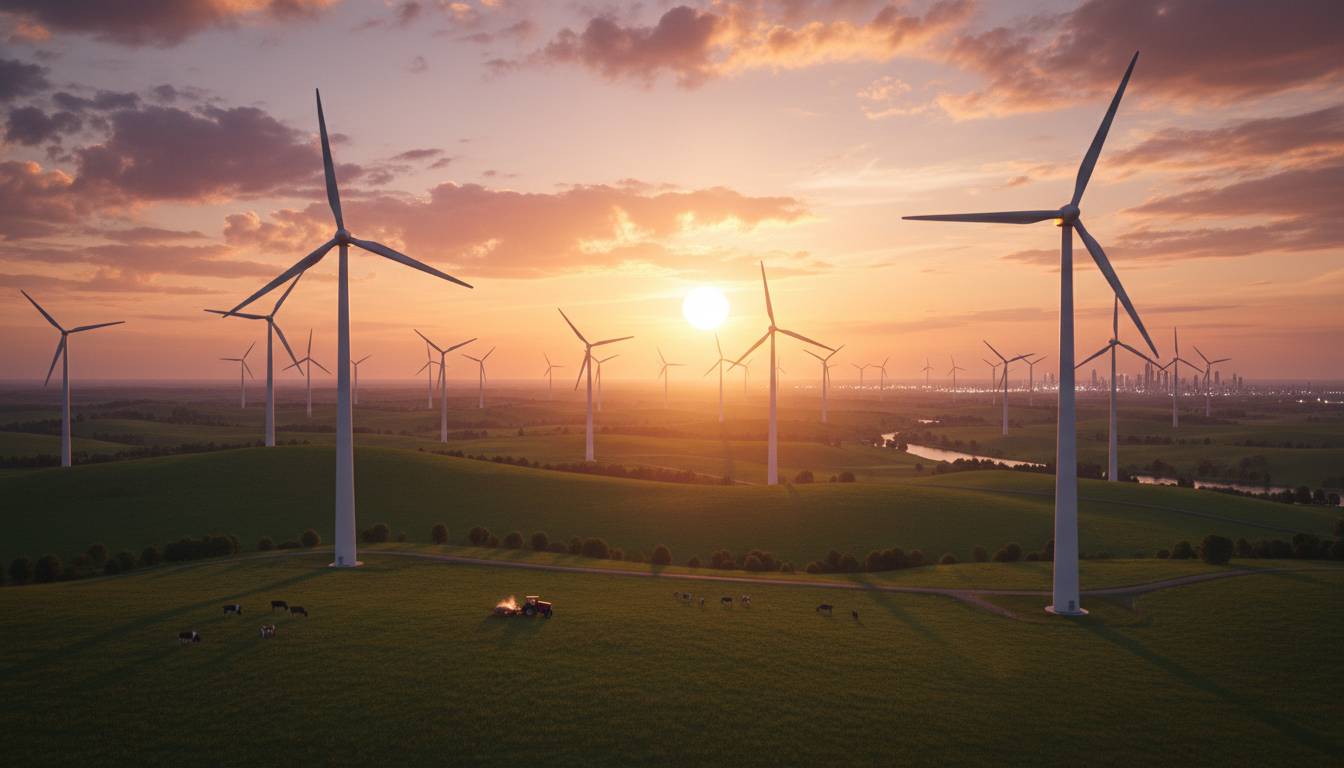
Wind power has emerged as one of the fastest-growing clean energy sources in the United States, transforming how the nation generates electricity while delivering substantial environmental advantages that extend far beyond simple renewable energy production. As climate change accelerates and air quality concerns intensify, understanding the environmental benefits of wind power becomes increasingly critical for policymakers, businesses, and everyday citizens alike. The transition from fossil fuels to wind energy represents one of the most significant environmental shifts in modern history, offering measurable improvements in carbon emissions, air quality, water conservation, and land use efficiency. This comprehensive examination explores why wind power matters now more than ever, providing the data-driven insights necessary to understand its role in building a sustainable energy future.
The Environmental Case for Wind Energy
Wind power distinguishes itself from conventional energy sources through its fundamental operational principle: converting the kinetic energy of wind into electricity without combustion. This seemingly simple difference creates a cascade of environmental benefits that affect air quality, water resources, land use patterns, and ultimately, human health. Unlike coal, natural gas, or petroleum-based power generation, wind turbines produce electricity without burning fossil fuels, thereby eliminating many of the most damaging environmental impacts associated with energy production.
The United States wind industry has experienced remarkable growth over the past two decades, with installed capacity increasing from approximately 4,000 megawatts in 2000 to over 143,000 megawatts by 2023. This expansion reflects both improved economic competitiveness and growing recognition of wind energy’s environmental advantages. According to the American Wind Energy Association, wind power now supplies enough electricity to power more than 43 million American homes annually, displacing significant quantities of fossil fuel-generated electricity that would otherwise contribute to environmental degradation.
The environmental benefits of wind power begin with its remarkable ability to generate electricity without direct carbon dioxide emissions during operation. While wind turbines require energy to manufacture, transport, and install, their operational phase produces zero direct emissions—a characteristic that fundamentally distinguishes them from every major fossil fuel alternative. This emission-free operation continues throughout the turbine’s 25 to 30-year operational lifespan, creating a carbon footprint that compares favorably to all conventional energy sources when analyzed across the complete energy production cycle.
Carbon Emissions: The Primary Environmental Advantage
The most significant environmental benefit of wind power lies in its ability to displace carbon dioxide emissions from the electricity generation sector. Carbon dioxide constitutes the primary greenhouse gas driving climate change, and the energy sector remains one of the largest sources of these emissions nationwide. Wind power directly reduces CO2 emissions by replacing electricity that would otherwise come from coal-fired or natural gas-fired power plants, creating immediate and measurable environmental improvements.
According to the National Renewable Energy Laboratory, a single megawatt of wind capacity generates approximately 3,000 megawatt-hours of electricity annually, displacing roughly 1,500 metric tons of carbon dioxide that would have been released through conventional generation. Applied to the nation’s current wind capacity, this translates to preventing more than 215 million metric tons of CO2 emissions each year—the equivalent of removing approximately 46 million passenger vehicles from American roads. These figures, drawn from the Environmental Protection Agency’s greenhouse gas equivalencies calculator, demonstrate the substantial scale of wind power’s climate contribution.
The lifecycle emissions analysis of wind power reveals an even more compelling picture. When accounting for materials extraction, manufacturing, transportation, installation, operation, and eventual decommissioning, wind energy produces approximately 11 to 12 grams of CO2 equivalent per kilowatt-hour of electricity generated. This stands in stark contrast to natural gas, which produces approximately 450 grams per kilowatt-hour, and coal, which generates roughly 1,000 grams per kilowatt-hour. Research published in the journal Nature Energy confirms that wind power ranks among the lowest-emission energy sources available, surpassed only by hydroelectric and nuclear power in lifecycle emissions comparisons.
The carbon emission reductions achieved through wind power deployment extend beyond direct electricity generation. Wind energy’s displacement of fossil fuel generation reduces emissions across the entire electricity grid, creating what economists term “merit order effects” that lower emissions even from facilities that continue operating. This grid-wide impact means that each additional megawatt of wind capacity delivers environmental benefits exceeding its direct generation share, amplifying wind power’s contribution to climate mitigation efforts.
Air Quality Improvements and Health Benefits
Beyond carbon emissions, wind power delivers substantial air quality improvements that translate directly into human health benefits. Conventional power plants burning fossil fuels release numerous pollutants beyond carbon dioxide, including sulfur dioxide, nitrogen oxides, particulate matter, and mercury. These emissions contribute to respiratory illnesses, cardiovascular problems, and premature mortality across affected populations. Wind power’s displacement of fossil fuel generation reduces all these pollutants, creating measurable improvements in ambient air quality.
The American Lung Association has documented that air pollution from power plants contributes to approximately 16,600 premature deaths annually in the United States, along with countless cases of asthma attacks, bronchitis, and other respiratory conditions. By displacing fossil fuel generation, wind power helps reduce these mortality and morbidity costs. Research from Harvard University’s T.H. Chan School of Public Health estimates that the health benefits from wind power’s air quality improvements range from $5 to $12 per megawatt-hour of wind-generated electricity, depending on local grid conditions and population density.
The economic value of these health improvements often exceeds the direct costs of wind power deployment. A 2021 study published in the journal Nature Climate Change found that the health benefits from air quality improvements associated with wind and solar energy deployment could reach $77 billion annually by 2030 under ambitious clean energy scenarios. These findings demonstrate that wind power’s environmental benefits translate into tangible economic value through reduced healthcare costs, improved worker productivity, and enhanced quality of life for communities near former fossil fuel power plants.
The geographic distribution of wind power benefits deserves particular attention. Communities situated downwind of major coal-fired power plants experience the most significant air quality improvements when wind capacity displaces fossil fuel generation. States including Texas, Iowa, Kansas, and California have documented measurable improvements in air quality metrics following large-scale wind power deployment, with corresponding reductions in hospital admissions for respiratory conditions. These localized health benefits complement the broader climate advantages, creating multiple justifications for continued wind energy expansion.
Water Conservation: Wind Power’s Hidden Advantage
Water conservation represents one of wind power’s most significant yet frequently overlooked environmental benefits. Traditional thermal power plants—those burning coal, natural gas, or nuclear fuel—require enormous quantities of water for cooling purposes. A typical coal-fired power plant withdraws approximately 20 to 50 gallons of water for every kilowatt-hour of electricity generated, consuming between 500 million and 1 billion gallons annually for a single 500-megawatt facility. This water consumption places significant strain on aquatic ecosystems, agricultural water supplies, and municipal water resources, particularly in water-scarce regions.
Wind power operates essentially dry, requiring no water for electricity generation. The only water consumption occurs during turbine manufacturing and blade cleaning, amounts that are negligible compared to thermal power plant requirements. According to the Department of Energy’s Water Power Technologies Office, replacing a 500-megawatt coal-fired power plant with wind capacity saves approximately 1.4 billion gallons of water annually—enough to supply roughly 20,000 typical American households for a full year.
This water conservation advantage becomes increasingly significant as climate change intensifies drought conditions across much of the United States. The Western states, which face the most severe water scarcity challenges, also possess the greatest wind energy potential. States including New Mexico, Nevada, Wyoming, and Texas can leverage wind power to generate electricity while preserving precious water resources for agricultural, municipal, and ecological uses. The WaterSMART initiative, administered by the Bureau of Reclamation, specifically identifies wind power as a key strategy for reducing water consumption in the electricity sector.
The ecological benefits of water conservation extend beyond human uses. Rivers and streams supporting fish populations, wetlands, and riparian habitats suffer when thermal power plants divert massive water quantities, altering flow patterns and raising water temperatures. By reducing the demand for cooling water, wind power helps maintain more natural hydrological conditions in rivers and lakes, supporting aquatic ecosystems that depend on stable water flows and temperatures.
Land Use Efficiency and Co-Use Opportunities
Wind power demonstrates remarkable land use efficiency compared to other energy sources, particularly fossil fuels and some solar installations. While wind turbines occupy relatively small footprints, the land between and around turbines remains available for other productive uses, creating opportunities for agricultural co-use that distinguish wind energy from most alternative electricity sources.
A typical wind turbine occupies approximately 0.5 acres of permanent land disturbance, while the surrounding area remains available for farming, ranching, or other uses. According to the National Renewable Energy Laboratory, the entire footprint of a wind facility—including access roads, turbine pads, and infrastructure—typically affects only 1% to 3% of the total land area within a wind project boundary. This means a 100-megawatt wind farm occupying 20,000 acres actually uses only 200 to 600 acres for turbine infrastructure, leaving more than 19,000 acres available for continued agricultural production.
This co-use capability has proven particularly valuable in agricultural regions of the Great Plains and Midwest, where wind farms generate both electricity and continued farm income. Farmers hosting wind turbines receive lease payments that provide stable revenue independent of commodity prices, while maintaining the ability to grow crops or raise livestock around turbine installations. Studies from Iowa State University demonstrate that wind farm presence correlates with increased property values for participating landowners and stable agricultural production despite the energy infrastructure overhead.
The land use advantages of wind power extend to habitat considerations as well. Unlike large solar installations that can require complete land clearing, wind turbines allow vegetation to continue growing beneath and around installations. Properly sited wind facilities can maintain native prairie habitats, support pollinator populations, and provide wildlife corridors that would be disrupted by other development types. Some wind developers have implemented prairie restoration programs that enhance biodiversity while generating clean electricity, demonstrating the potential for win-win outcomes for energy production and ecological health.
Addressing Environmental Challenges Honestly
Complete environmental accounting requires acknowledging that wind power creates some environmental impacts, though these generally prove less severe than those associated with fossil fuel alternatives. Wildlife interactions, particularly with birds and bats, represent the most frequently cited environmental concerns regarding wind energy development. Wind turbines have been documented to cause bird and bat fatalities, with estimates suggesting hundreds of thousands of bird deaths annually from collisions with turbine blades, though this figure represents a small fraction of overall bird mortality attributed to building collisions, cat predation, and habitat loss.
The wind industry has responded to these concerns through improved turbine siting, operational modifications, and technological innovations. The American Wind Wildlife Institute brings together industry representatives, conservation organizations, and researchers to develop best practices that minimize wildlife impacts. Modern wind facilities employ avian impact studies during development, implement radar systems to detect approaching bird flocks, and utilize curtailment protocols that reduce turbine operation during peak wildlife activity periods. These mitigation measures have substantially reduced per-turbine mortality rates compared to earlier wind installations.
Visual impact and noise concerns represent additional environmental considerations, though these affect human perception rather than ecological systems. Some communities object to wind turbine visibility, particularly in pristine landscapes or historic districts. Modern turbine designs have addressed noise concerns through improved blade aerodynamics and increased distance from residential structures. The controversy surrounding visible wind installations often reflects aesthetic preferences rather than measurable environmental harm, suggesting that thoughtful siting can address most visual impact concerns while preserving access to wind energy’s substantial environmental benefits.
The Growing Climate Imperative
The environmental benefits of wind power assume heightened importance in the context of accelerating climate change. The Intergovernmental Panel on Climate Change has identified limiting global temperature increase to 1.5 degrees Celsius above pre-industrial levels as essential for avoiding the most severe climate impacts. Achieving this target requires reducing global greenhouse gas emissions by approximately 45% by 2030 and reaching net-zero emissions by 2050—a transformation that demands massive deployment of zero-carbon energy sources including wind power.
The United States has committed to achieving 100% carbon-free electricity by 2035 under ambitious climate proposals, a goal that wind power will help accomplish. Current wind capacity supplies approximately 10% of national electricity generation, with projections suggesting this share could reach 20% to 30% by 2035 under supportive policy environments. This expansion would prevent hundreds of millions of additional metric tons of carbon dioxide emissions annually, making wind power essential for meeting climate commitments while maintaining electricity reliability.
The economic trajectory of wind power strengthens its climate case. Wind energy costs have declined by more than 70% since 2009, making wind the lowest-cost source of new electricity generation in many regions of the United States. This cost decline has transformed wind power from a subsidized technology requiring preferential policies to a competitive energy source that often undercuts fossil fuel alternatives on pure economic grounds. The combination of environmental benefits and economic competitiveness creates a compelling case for continued wind power expansion that should resonate across political and ideological divisions.
Frequently Asked Questions
How much carbon dioxide does wind power actually save compared to fossil fuels?
A single megawatt of wind capacity prevents approximately 1,500 to 1,800 metric tons of carbon dioxide emissions annually compared to coal-fired generation, or about 900 to 1,100 metric tons compared to natural gas. With the United States now possessing over 143,000 megawatts of wind capacity, total annual CO2 prevention exceeds 215 million metric tons—equivalent to removing 46 million cars from the road.
Does wind power use a lot of water?
Wind power uses virtually no water during electricity generation, making it one of the most water-efficient energy options available. A typical coal-fired power plant uses 20 to 50 gallons of water per kilowatt-hour, while wind requires essentially zero. Replacing one 500-megawatt coal plant with wind saves approximately 1.4 billion gallons of water annually.
What are the main environmental downsides of wind turbines?
The primary environmental concerns include bird and bat collisions, visual impact on landscapes, and noise in some settings. However, these impacts generally prove less severe than fossil fuel alternatives when evaluated comprehensively. The wind industry has implemented numerous mitigation measures, including improved siting protocols, operational curtailment during wildlife activity peaks, and technological improvements that reduce collision risks.
How long do wind turbines last, and what happens to them at the end of their lifespan?
Modern wind turbines are designed to operate for 25 to 30 years with proper maintenance. At end of life, turbines can be repowered with newer, more efficient equipment, or decommissioned. The steel, copper, and aluminum components are highly recyclable, with recycling rates exceeding 90% for materials. Some retired turbine components find second lives in developing countries where electricity access remains limited.
Can wind power really make a significant difference in fighting climate change?
Yes, wind power can make an essential difference. Meeting climate goals requires massive clean energy deployment, and wind power is among the most scalable and cost-effective zero-carbon options available. The IPCC scenarios that limit warming to 1.5 degrees all require wind and solar to supply approximately 50% to 70% of electricity by 2050, making wind power essential rather than optional for climate mitigation.
Is wind power environmentally friendly compared to solar energy?
Both wind and solar offer substantial environmental advantages over fossil fuels, with relatively small environmental footprints compared to conventional generation. Wind power typically demonstrates slightly better land use efficiency and slightly higher lifecycle carbon emissions than solar, while solar requires more land area per megawatt generated. Both technologies play essential roles in clean energy transitions, and their complementary generation patterns often make them stronger together than either alone.
Conclusion
The environmental benefits of wind power extend across multiple dimensions of sustainability, from carbon emission reductions that address climate change to water conservation that preserves precious natural resources. Wind energy produces no direct air pollutants during operation, contributing to improved public health in communities currently burdened by fossil fuel pollution. The technology’s land use efficiency allows continued agricultural production while generating clean electricity, creating opportunities for rural economic development alongside environmental stewardship.
As the United States and global community work toward ambitious climate goals, wind power stands ready to deliver the clean, reliable, and cost-effective electricity that decarbonization requires. The technology has proven its environmental credentials through decades of deployment and research, demonstrating that clean energy and economic development can advance together. The case for wind power rests not on ideology or preference but on measurable environmental performance that outperforms fossil fuel alternatives across virtually every sustainability metric. Now is the time to accelerate wind power deployment, capturing the environmental benefits that this remarkable technology offers while building the clean energy future that climate safety demands.