
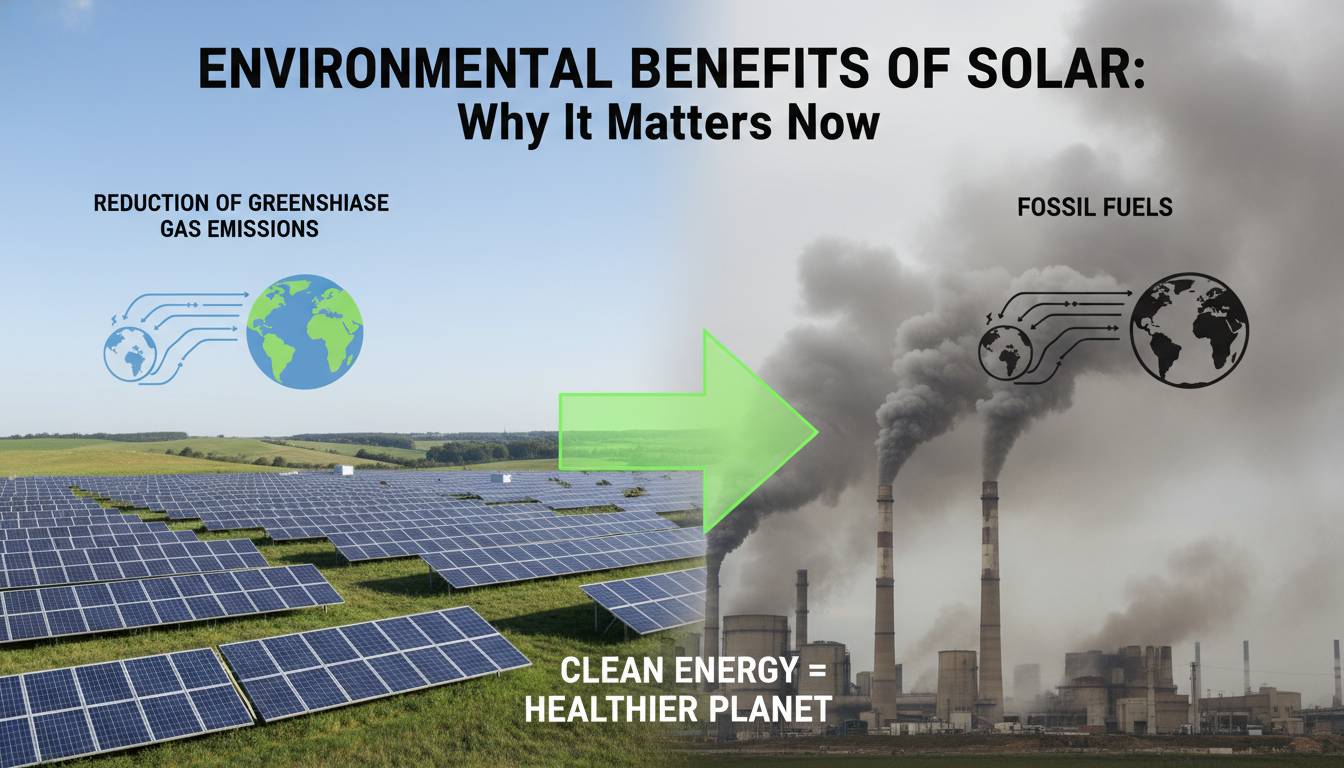
Solar energy has emerged as one of the most powerful tools in the fight against climate change, offering a clean alternative to fossil fuels that powers homes and businesses without releasing harmful emissions into the atmosphere. As the United States accelerates its transition toward renewable energy, understanding the environmental benefits of solar has become essential for homeowners, businesses, and policymakers alike. This comprehensive guide explores how solar energy works, why it matters for the planet, and what the latest research reveals about its environmental impact.
Key Insights
- Solar energy produces no direct emissions during operation, making it one of the cleanest energy sources available
- The average residential solar system offsets approximately 100,000 pounds of CO2 over 25 years
- The U.S. solar industry has grown by over 10,000% in the past two decades
- Solar panels prevent millions of tons of pollution from entering the atmosphere annually
Understanding Solar Energy and Its Environmental Impact
How Solar Power Works
Solar photovoltaic (PV) technology converts sunlight directly into electricity using semiconductor materials, typically silicon, that release electrons when photons from sunlight strike their surface. This process, known as the photovoltaic effect, generates direct current (DC) electricity, which an inverter then converts to alternating current (AC) for use in homes and businesses. Unlike fossil fuel power plants, solar panels produce electricity without burning any fuel, eliminating the combustion process that releases carbon dioxide, sulfur dioxide, nitrogen oxides, and particulate matter into the atmosphere.
The environmental benefits of solar begin the moment a panel begins operating. According to the Solar Energy Industries Association (SEIA), the United States now has more than 142 gigawatts of installed solar capacity, enough to power more than 26 million homes. This massive deployment has displaced significant quantities of fossil fuel-generated electricity, resulting in measurable reductions in air pollutants and greenhouse gas emissions across the nation.
The Carbon Footprint of Solar Manufacturing
Critics sometimes point to the energy required to manufacture solar panels, arguing that this production process offsets some environmental benefits. However, research consistently shows that solar panels generate far more energy over their lifetime than is consumed during manufacturing. A 2023 study published in Nature Energy found that the average solar panel pays back its manufacturing energy cost within 1.5 to 2.5 years, depending on the technology and geographic location. Given that most solar panels carry 25 to 30-year warranties, they produce clean energy for 80% to 95% of their operational lifespan, resulting in a dramatically positive environmental footprint.
Air Quality and Public Health Benefits
Reducing Harmful Emissions
The environmental benefits of solar extend far beyond carbon reduction. Solar energy systems produce zero sulfur dioxide (SO2), zero nitrogen oxides (NOx), and zero particulate matter during operation—pollutants that cause respiratory illness, cardiovascular disease, and premature death. According to the Environmental Protection Agency (EPA), the power sector remains one of the largest sources of air pollution in the United States, responsible for approximately 60% of all SO2 emissions and 30% of NOx emissions nationally.
A landmark 2022 analysis by researchers at the University of Michigan found that widespread solar adoption could prevent between 12,000 and 45,000 premature deaths in the United States by 2050, depending on deployment scenarios. The health benefits derive primarily from reduced air pollution, as solar energy displaces coal and natural gas plants that release toxic pollutants into the atmosphere. The EPA estimates that the Clean Power Plan, which encouraged renewable energy adoption, would have prevented up to 4,500 premature deaths annually had it been fully implemented.
Addressing Acid Rain and Smog
Beyond direct health impacts, solar energy helps combat acid rain and ground-level ozone formation. Nitrogen oxides and sulfur dioxide from fossil fuel plants react with atmospheric moisture to form acid rain, which damages forests, aquatic ecosystems, and infrastructure. Solar power produces none of these pollutants, eliminating the acid rain precursor emissions entirely. Similarly, ground-level ozone—formed when NOx reacts with volatile organic compounds in sunlight—causes smog and triggers asthma attacks. By displacing fossil fuel generation, solar installations contribute to clearer skies and healthier air for communities downwind.
Climate Change Mitigation
Carbon Dioxide Reduction
Climate scientists identify carbon dioxide as the primary driver of global warming, with the atmospheric concentration exceeding 420 parts per million in 2024—the highest level in at least 800,000 years. The power sector contributes approximately 25% of U.S. greenhouse gas emissions, making clean energy alternatives essential for meeting climate targets. The Intergovernmental Panel on Climate Change (IPCC) emphasizes that limiting global warming to 1.5°C requires reducing emissions by 45% by 2030 and achieving net-zero emissions by 2050.
Solar energy directly addresses this challenge by displacing fossil fuel-generated electricity. The National Renewable Energy Laboratory (NREL) calculates that the current U.S. solar fleet prevents approximately 150 million metric tons of CO2 emissions annually—the equivalent of removing 32 million gasoline-powered vehicles from the road. If the country achieves its stated goal of 50% renewable electricity by 2030, solar will account for the majority of these emission reductions, potentially preventing over 500 million metric tons of CO2 per year.
Water Conservation
Traditional power plants consume enormous quantities of water for cooling and steam generation. According to the U.S. Department of Energy, thermoelectric power plants withdraw approximately 60 billion gallons of water daily—about 40% of all freshwater withdrawals in the country. This consumption competes with agricultural, industrial, and municipal water needs, particularly in drought-prone regions.
Solar photovoltaic panels require virtually no water for operation, making them particularly valuable in water-scarce regions. A single large solar farm can save millions of gallons of water annually compared to an equivalent fossil fuel plant. This water-saving characteristic proves especially important as climate change intensifies droughts across the American West and Southwest, where solar resources remain abundant.
Land Use and Ecosystem Benefits
Comparing Land Use Requirements
Contrary to common perception, solar energy can coexist productively with agricultural land through agrivoltaics—combining solar panels with crop production on the same acreage. Studies from Oregon State University and the University of Arizona demonstrate that properly designed agrivoltaic systems can maintain crop yields while generating clean electricity, providing farmers with dual income streams. This approach proves particularly valuable for sheep grazing, where solar installations and livestock operations complement each other effectively.
Utility-scale solar facilities do require more land than distributed rooftop systems, yet they remain more land-efficient than fossil fuel infrastructure when considering the entire fuel chain. Coal mining, natural gas extraction, and uranium enrichment all require extensive land disturbance, while solar panels occupy land without depleting resources or leaving toxic legacies. The Department of Energy estimates that transitioning to 100% clean energy would require approximately 0.5% of U.S. land area—a small fraction compared to the land currently devoted to fossil fuel extraction and associated infrastructure.
Protecting Natural Habitats
Air pollution from fossil fuel plants creates acid rain that damages forests and acidifies lakes and streams, harming aquatic ecosystems. Additionally, coal mining operations, particularly mountaintop removal in Appalachia, destroy whole ecosystems and bury streams under waste rock. Oil and gas development fragments wildlife habitats and creates noise and light pollution that disrupts animal behavior.
Solar energy produces none of these ecosystem impacts during operation. By displacing fossil fuel generation, solar installations help protect forests, watersheds, and wildlife habitats from acid precipitation and mining damage. Several states have begun repurposing former industrial sites—including decommissioned coal plants and contaminated lands—into solar installations, simultaneously cleaning up legacy pollution while generating clean power.
Economic and Environmental Synergy
Job Creation in the Clean Energy Sector
The solar industry has become a significant economic driver while delivering environmental benefits. According to the Solar Foundation’s annual census, the solar industry employs more than 255,000 Americans, with projections suggesting employment could exceed 400,000 by 2030 under favorable policy conditions. These jobs span manufacturing, installation, sales, and maintenance—many of which cannot be outsourced due to their local nature.
Compare this to the fossil fuel sector, where automation has steadily reduced employment even as production increased. The transition to solar energy therefore offers an opportunity to maintain energy production while creating more jobs per unit of energy generated. The International Renewable Energy Agency (IRENA) reports that renewable energy creates approximately three times more jobs than fossil fuels per unit of investment, making solar a job-creating climate solution.
Reducing Energy Import Dependence
The United States imports significant quantities of oil and natural gas, spending hundreds of billions of dollars annually on foreign energy resources. This dependence carries both economic and geopolitical costs, including vulnerability to supply disruptions and price volatility. Solar energy, by contrast, is domestically produced and infinitely abundant—the sun shines regardless of international politics or market manipulation.
By generating electricity locally, solar installations reduce transmission losses, decrease grid vulnerability, and keep energy dollars within local communities. Rooftop solar systems particularly exemplify this principle, producing power at the point of consumption and eliminating the need for expensive infrastructure upgrades while providing energy independence for homeowners and businesses.
Comparative Environmental Analysis
Solar vs. Fossil Fuels
| Factor | Solar | Coal | Natural Gas |
|---|---|---|---|
| CO2 Emissions | Zero | High (~2.2 lbs/kWh) | Moderate (~1.0 lbs/kWh) |
| Air Pollutants | None | Significant | Moderate |
| Water Usage | Minimal | High | Moderate |
| Land Impact | Reversible | Permanent | Permanent |
| Operating Costs | Low | High (fuel costs) | Moderate |
| Energy Payback | 1-2 years | N/A (continuous fuel) | N/A (continuous fuel) |
Solar vs. Other Renewables
| Factor | Solar PV | Wind | Hydroelectric |
|---|---|---|---|
| Land Footprint | Moderate | Large | Large (reservoirs) |
| Water Usage | Minimal | Minimal | Very High |
| Wildlife Impact | Low (birds) | Moderate (birds/bats) | High (fish) |
| Intermittency | Daily cycle | Variable | Seasonal |
| Energy Density | Moderate | Low | High |
| Scalability | Very High | High | Limited |
The Path Forward: Scaling Solar Responsibly
Recycling and End-of-Life Management
As the first generation of solar panels approaches retirement age, the industry has begun developing robust recycling programs. Solar panel recycling recovers approximately 95% of glass, 95% of semiconductor material, and 90% of metals for reuse in new products. Several specialized recyclers now operate across the United States, with European facilities demonstrating the technology’s viability at scale.
The Solar Industries Association has developed a national recycling framework to ensure responsible panel disposal as installations age. Modern panels also contain fewer toxic materials than earlier generations, with lead-free solders and cadmium-free semiconductors now standard. The long operational lifespan of solar panels—most lasting 25 to 30 years or longer—provides ample time for recycling infrastructure to mature.
Grid Integration and Storage Solutions
One legitimate challenge involves solar’s intermittent nature—the sun doesn’t shine at night or during cloudy weather. However, battery storage technology has advanced rapidly, with costs falling over 90% since 2010. Home battery systems like Tesla Powerwall and LG Chem RESU now allow homeowners to store excess solar generation for use during evening hours, effectively providing round-the-clock clean power.
Utility-scale battery installations are also scaling quickly, with the United States adding over 15 gigawatts of storage capacity in 2023 alone. These storage systems can shift solar power from midday production peaks to evening demand peaks, maximizing the value of solar generation while ensuring grid reliability. As storage costs continue declining, the combination of solar and batteries will increasingly replace natural gas “peaker plants” that currently operate only during high-demand periods.
Making the Switch: Practical Considerations
Assessing Your Solar Potential
Before installing solar panels, homeowners should evaluate several factors: roof orientation and angle, shading from trees or buildings, local climate and sunlight hours, and applicable utility policies. The Department of Energy’s PVWatts Calculator provides free estimates of solar production potential based on location and system specifications.
Most homes with adequate roof space and sunlight exposure can benefit from solar installation. Properties with southern-facing roofs in the Northern Hemisphere receive maximum solar exposure, though east and west-facing roofs still produce significant electricity. Professional solar installers conduct detailed assessments to determine optimal system size and positioning.
Understanding Incentives and Costs
The federal Investment Tax Credit (ITC) currently provides a 30% tax credit for residential solar installations through 2032, stepping down to 26% in 2033 and 22% in 2034. Many states offer additional incentives, including rebates, tax credits, and net metering programs that compensate solar owners for excess electricity exported to the grid. These incentives significantly reduce the effective cost of solar installation, with payback periods typically ranging from 6 to 12 years depending on local electricity rates and available incentives.
The average residential solar system costs approximately $16,000 to $20,000 after federal tax credits, though prices vary by system size and location. Given that solar panels carry 25-year warranties and electricity rates consistently rise over time, most homeowners achieve substantial lifetime savings while dramatically reducing their environmental impact.
Frequently Asked Questions
How much CO2 does a typical residential solar system save?
The average 6-kilowatt residential solar system prevents approximately 4,000 to 6,000 pounds of CO2 emissions annually, totaling roughly 100,000 to 150,000 pounds over a 25-year panel lifespan. This equals the carbon footprint of driving an average car 50,000 to 75,000 miles.
Do solar panels work efficiently in cloudy climates?
Solar panels still generate electricity on cloudy days, though at reduced output—typically 10% to 25% of their rated capacity. Regions with frequent cloud cover, such as the Pacific Northwest, still benefit significantly from solar, especially given improving panel efficiency and favorable economics.
What happens to solar panels at the end of their lifespan?
Solar panels can be recycled, with specialized facilities recovering approximately 95% of valuable materials including glass, silicon, and metals. The recycling industry is scaling rapidly to handle the wave of panels reaching end-of-life, with most major manufacturers now offering take-back programs.
Are solar panels environmentally friendly to manufacture?
While manufacturing requires energy and materials, solar panels typically pay back their environmental cost within 1.5 to 2.5 years of operation. Over their 25 to 30-year lifespan, they produce clean energy with minimal ongoing environmental impact, making them overwhelmingly positive for the environment.
How does solar compare to wind energy in environmental impact?
Both solar and wind offer substantial environmental benefits compared to fossil fuels. Solar has a smaller land footprint and produces no operational emissions, while wind generates more electricity per installed capacity. The optimal mix depends on local resources, with many regions benefiting from both technologies.
Can solar energy help achieve climate change goals?
Absolutely. According to the IPCC, solar energy must supply a significant portion of global electricity by 2030 to limit warming to 1.5°C. The United States currently gets approximately 4% of its electricity from solar, but comprehensive studies show potential for 40% to 50% solar electricity by 2050 while maintaining grid reliability.
Conclusion
The environmental benefits of solar energy extend across every dimension of ecological concern—from cleaning the air we breathe to mitigating the worst impacts of climate change. Solar power produces zero operational emissions, consumes minimal water, protects ecosystems, and creates domestic jobs while reducing dependence on imported fuels. As battery storage technology advances and costs continue declining, solar’s role in the energy transition will only grow more critical.
For homeowners and businesses considering solar, the environmental case has never been clearer. Installing solar panels represents one of the most impactful individual actions available for reducing personal carbon footprints while saving money on electricity costs. The technology is proven, the economics are favorable, and the environmental imperative is urgent. As we face the escalating challenges of climate change, solar energy offers a proven path toward a cleaner, healthier, and more sustainable future for generations to come.