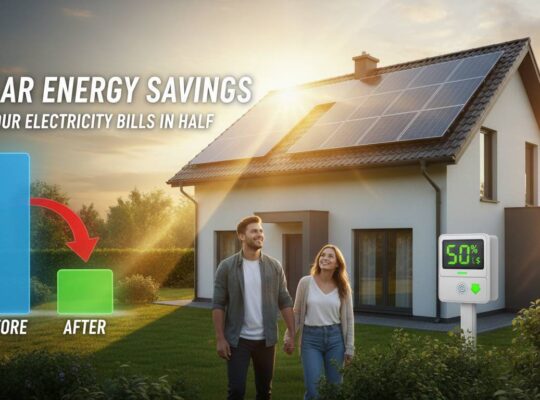
The average American household spends approximately $2,200 annually on electricity alone, with total energy costs often exceeding $3,000 when factoring in heating and cooling. For many families, energy expenses represent the second-largest category of spending after housing, yet nearly 30% of that money is wasted through inefficiency, neglect, and outdated practices. The good news: most households can cut their energy bills in half without sacrificing comfort or making expensive upgrades—simply by understanding where energy goes and how to use it smarter.
This guide provides comprehensive, actionable strategies to reduce your household energy consumption by 50% or more. Each recommendation is grounded in practical implementation, backed by real savings data, and achievable regardless of your current home type or budget.
Understanding Where Your Energy Goes
Before implementing changes, you need to know your enemy. The U.S. Energy Information Administration (EIA) reports that heating and cooling combined account for roughly 50% of average household energy consumption. Water heating represents about 20%, followed by appliances and electronics at 15%, lighting at 10%, and miscellaneous uses making up the remainder.
This distribution reveals a critical insight: prioritizing heating and cooling improvements delivers the largest returns on your investment of time and money. A 10% reduction in your HVAC energy use translates to roughly $110 in annual savings for the average household—more than most other categories combined.
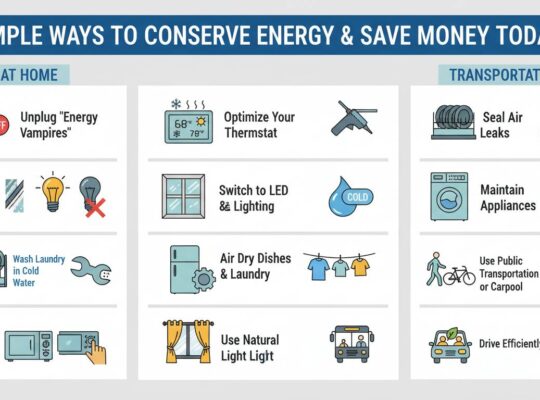
The second most important insight involves phantom energy drain. Devices in standby mode continue consuming electricity, often called “vampire power” or “phantom load.” The U.S. Department of Energy estimates that phantom energy can account for 5-10% of your residential energy use, adding up to $200 per year for households with numerous electronics.
Sealing Air Leaks: The Foundation of Energy Efficiency
Air leakage represents one of the most overlooked sources of energy waste in American homes. Drafty windows, doors, and gaps in the building envelope allow conditioned air to escape while letting outside air in, forcing your HVAC system to work harder and consume more energy.
Identifying and Sealing Major Leaks
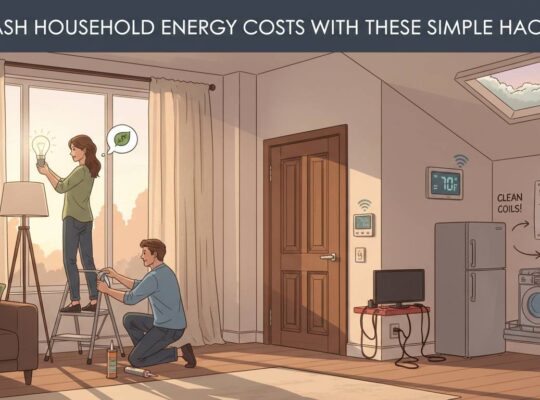
Start by conducting a simple draft test on a windy day. Walk through your home holding a lit incense stick or a piece of tissue paper near windows, doors, electrical outlets, and where walls meet ceilings. Visible smoke movement or paper flutter indicates air leakage requiring attention.
Key sealing targets include:
- Weatherstripping around door frames and window sashes— deteriorating weatherstripping accounts for significant air loss
- Caulk gaps around window frames, both interior and exterior
- Seal electrical outlets on exterior walls with foam outlet gaskets (available at hardware stores for under $1 each)
- Fill larger gaps with expanding spray foam in areas like penetrations for pipes, wires, and ductwork
- Install door sweeps or draft stoppers at the base of exterior doors
The U.S. Department of Energy estimates that sealing air leaks and adding insulation can save homeowners 15% to 30% on heating and cooling costs annually. For a household spending $2,000 annually on heating and cooling, that translates to $300 to $600 in savings—often achieved with under $100 in materials and a weekend of DIY work.
Optimizing Your Thermostat Strategy
Your thermostat controls the largest single category of energy consumption in your home. Making strategic adjustments to how you use it can deliver substantial savings without meaningful comfort reduction.
Smart Thermostat Investment
Installing a programmable or smart thermostat represents one of the highest-ROI energy improvements available. These devices automatically adjust temperatures based on your schedule, reducing energy use during hours when the home is empty or occupants are sleeping.
Recommended settings:
- Set heating to 68°F (20°C) while awake and at home
- Reduce to 60-65°F (15-18°C) while sleeping or away
- Set cooling to 78°F (26°C) when home and awake
- Increase to 82°F (28°C) or higher when away
Each degree of heating reduction saves approximately 3% on heating bills, while each degree of cooling increase saves about 3% on cooling costs. A 10-degree differential maintained for 8 hours daily can reduce annual heating costs by 10% or more.
Smart thermostats like Nest, ecobee, or Honeywell T6 Pro learn your schedule, adapt to weather conditions, and provide energy usage reports. While prices range from $100 to $250, federal and utility rebates often reduce costs to $50-100. Most homeowners recover their investment within 1-2 years through energy savings alone.
Lighting Efficiency: Quick Wins with Immediate Returns
Lighting accounts for approximately 10% of household energy use, but it’s also one of the easiest categories to optimize. The transition from incandescent to LED technology has revolutionized residential lighting efficiency.
LED vs. Traditional Bulbs
LED bulbs use up to 75% less energy than traditional incandescent bulbs while lasting 25 times longer. A 60-watt equivalent LED consumes only 8-9 watts and can last 25,000 hours compared to 1,000 hours for incandescent bulbs.
| Bulb Type | Wattage | Lifespan | Annual Cost (4 hrs/day) | 25-Year Cost |
|---|---|---|---|---|
| Incandescent | 60W | 1,000 hrs | $17.50 | $437.50 |
| LED | 9W | 25,000 hrs | $2.62 | $65.50 |
Annual cost calculated at national average electricity rate of $0.16/kWh
Swapping the 20-30 most-used bulbs in an average home costs approximately $30-50 and saves roughly $150 annually. The entire investment pays back within 4-6 months.
Additional lighting strategies include installing motion sensors in low-traffic areas like closets and garages, using natural light during daytime hours, and implementing dimmer switches to reduce energy use while creating ambiance.
Phantom Energy Elimination
Standby power—energy consumed by devices when they’re turned “off”—drains electricity from nearly every modern household device. While each device uses minimal power individually, the cumulative effect adds significantly to your bill.
Creating Smart Power Strips
The most effective solution involves connecting groups of electronics to smart power strips or advanced power strips (APS). These strips automatically cut power to peripheral devices when the main device (like a television or computer) is turned off.
Priority targets for phantom energy elimination:
- Home office equipment: computer, monitor, printer, speakers
- Entertainment systems: television, cable box, streaming device, game console
- Kitchen appliances: coffee maker, microwave, toaster
- Chargers: phone chargers, laptop chargers, tablet chargers left plugged in
The U.S. Lawrence Berkeley National Laboratory found that standby power accounts for 5-10% of residential electricity use, with an average annual cost of $100-200 per household. Eliminating phantom load through smart power strips typically costs $20-40 per strip and can reduce your electricity bill by 10-15%.
Water Heating Efficiency
Water heating ranks as the second-largest energy expense in most homes, accounting for about 20% of utility costs. Several strategies can reduce water heating expenses without reducing hot water availability.
Reducing Hot Water Demand
The simplest approach involves reducing hot water consumption through behavior changes and low-flow fixtures. Showering accounts for the majority of hot water use in most households.
- Install low-flow showerheads (1.5 GPM vs. standard 2.5 GPM): saves $70-100 annually per showerhead
- Fix leaky faucets: a dripping faucet can waste over 3,000 gallons annually
- Take shorter showers: reducing shower time by 2 minutes saves approximately $50 annually
- Wash clothes in cold water: heating water accounts for 90% of energy used by washing machines
Optimizing Water Heater Performance
For households with traditional tank water heaters, lowering the thermostat to 120°F (49°C) provides several benefits: it reduces scalding risk, slows mineral buildup in the tank, and decreases standby heat loss. Most manufacturers set thermostats to 140°F (60°C) by default, but 120°F is adequate for most household needs.
Insulating your water heater tank and the first 6 feet of hot water pipes reduces standby heat loss, particularly beneficial for older water heaters located in unconditioned spaces. Water heater blankets cost $10-20 and can save 7-16% on water heating costs annually.
Appliance and Electronics Management
Major appliances and electronics represent significant energy loads, but strategic purchasing and usage decisions can dramatically reduce their impact on your electricity bill.
Energy Star Certification
When replacing appliances, prioritizing Energy Star certified products ensures you’re purchasing the most efficient models available. Energy Star appliances use 10-50% less energy than non-certified models depending on the appliance category.
For refrigerators, which run continuously 24/7, Energy Star certification typically indicates 15% greater efficiency than minimum federal standards. The difference between an older refrigerator (pre-1990) and a new Energy Star model can exceed $100 annually in electricity savings.
Practical Usage Adjustments
Beyond purchasing decisions, usage habits significantly impact appliance energy consumption:
- Run dishwashers and washing machines with full loads only
- Use air-dry settings on dishwashers instead of heat drying
- Clean refrigerator coils annually to maintain efficiency
- Keep refrigerator and freezer doors open only briefly
- Unplug secondary refrigerators or freezers if not essentials
Weatherization: Insulation and Window Improvements
Proper insulation creates a thermal barrier that keeps conditioned air inside and outdoor temperatures outside. Many homes, particularly those built before 1980, have inadequate insulation levels.
Attic Insulation Priority
Heat rises, making attic insulation particularly important for both heating and cooling efficiency. The U.S. Department of Energy recommends attic insulation levels of R-38 to R-60 for most U.S. climates, yet many older homes have R-11 or less.
Adding insulation to inadequate attics offers one of the best returns on investment in home energy efficiency. Professional insulation installation typically costs $1,500-3,000 but saves $200-600 annually, providing a payback period of 3-7 years plus ongoing annual savings.
Window Treatments and Films
Windows represent a significant source of heat gain in summer and heat loss in winter. While replacing windows is expensive ($300-1,000 per window), more affordable options exist.
- Thermal curtains or cellular shades can reduce heat loss through windows by 10-25%
- Reflective window films applied to south and west-facing windows can reduce summer heat gain by 30-40%
- Closing curtains/blinds at night in winter reduces heat loss; opening them during sunny winter days allows solar heat gain
Calculating Your Potential Savings
Understanding potential savings helps prioritize which improvements to implement first. Below is a realistic savings framework based on implementing comprehensive energy-saving measures.
| Strategy | Implementation Cost | Annual Savings | Payback Period |
|---|---|---|---|
| Air sealing + weatherstripping | $50-150 | $150-300 | 3-12 months |
| LED bulb replacement | $30-50 | $100-150 | 2-4 months |
| Smart thermostat | $50-150 (after rebates) | $150-250 | 6-18 months |
| Phantom load elimination | $40-80 | $100-200 | 3-9 months |
| Low-flow showerheads | $20-40 | $50-100 | 4-12 months |
| Water heater insulation | $20-40 | $30-60 | 6-16 months |
| Attic insulation upgrade | $1,500-3,000 | $200-600 | 4-10 years |
Implementing all strategies concurrently can realistically reduce household energy bills by 40-50%, with some households achieving 60% or greater reductions depending on starting efficiency and local energy costs.
Frequently Asked Questions
How much can the average household actually save on energy bills?
The average American household spends approximately $2,200 annually on electricity. By implementing comprehensive energy-saving measures—focusing on HVAC optimization, lighting upgrades, phantom load elimination, and behavior changes—most households can reduce bills by 40-50%, saving $900-1,100 per year. Some households with particularly inefficient starting points have achieved savings exceeding 60%.
What is the quickest way to start saving energy with minimal investment?
Start with free and low-cost changes: lower your thermostat by 2-3 degrees, replace the most frequently used light bulbs with LEDs ($30-50 for 20 bulbs), seal obvious air leaks with caulk and weatherstripping ($20-40 in materials), and eliminate phantom loads by unplugging unused chargers and devices. These changes can save $200-400 annually and require minimal time or expense.
Do smart thermostats really save that much money?
Yes, smart thermostats typically save 10-15% on heating and cooling costs, which translates to $130-200 annually for most households. They achieve this through programmable schedules, learning occupancy patterns, and optimizing HVAC operation. Most homeowners recover the $100-250 purchase price (after rebates) within 1-2 years through energy savings alone.
Is it worth replacing older appliances with Energy Star models?
Replacing appliances when they fail or become inefficient is generally more cost-effective than proactive replacement. However, if you have pre-1990 appliances, upgrading to Energy Star models can yield significant savings. A new Energy Star refrigerator uses 35-50% less energy than a 20-year-old model, saving $50-150 annually. For other appliances, calculate the payback based on your current model’s age and efficiency.
How much energy does phantom power really consume?
Phantom power typically accounts for 5-10% of residential electricity consumption, costing the average household $100-200 annually. While individual devices draw minimal power (often 1-10 watts), the cumulative effect of dozens of devices throughout the home adds significantly. Using smart power strips to cut power to entertainment centers, home offices, and other device clusters eliminates this waste effectively.
What is the most important area to focus on for energy savings?
Heating and cooling account for approximately 50% of household energy use, making HVAC optimization your highest-priority target. Start by sealing air leaks and ensuring adequate insulation, then install a smart thermostat and change filters regularly. These foundational steps typically yield 20-30% reductions in total energy costs before addressing other categories.
Conclusion
Reducing your household energy bills by 50% or more is entirely achievable through systematic implementation of the strategies outlined in this guide. The key lies in understanding where energy goes, prioritizing high-impact changes, and maintaining consistent habits over time.
Start with the no-cost and low-cost measures: sealing air leaks, adjusting thermostat settings, switching to LEDs, and eliminating phantom loads. These changes alone can reduce your bills by 20-30% with minimal investment. Progress to larger investments—smart thermostats, insulation upgrades, and appliance replacements—as your budget allows.
Remember that energy efficiency is cumulative. Each improvement builds upon previous ones, creating compound savings over time. A home that has been thoroughly weatherized, properly insulated, and equipped with efficient systems and smart controls will consume dramatically less energy than an unmodified home, regardless of square footage or location.
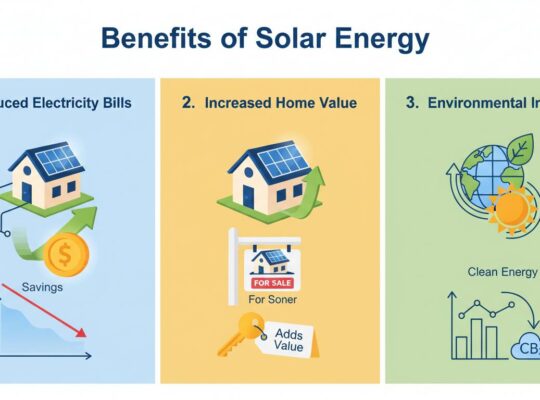
The financial rewards extend beyond monthly utility bill reductions. Energy-efficient homes maintain higher resale values, qualify for energy improvement mortgages, and receive utility rebates and tax incentives. Perhaps most importantly, reducing energy consumption decreases your household’s environmental footprint, contributing to broader sustainability goals while protecting your family budget.