The average American household spends approximately $2,200 annually on utility bills, with heating and cooling accounting for nearly half of that cost. For most homeowners, reducing energy consumption represents one of the most accessible pathways to immediate savings—without sacrificing comfort or dramatically altering daily habits. Understanding the full scope of energy saving benefits empowers you to make informed decisions that protect both your wallet and your home’s long-term value.
Key Insights
– The average U.S. household spends $2,200 yearly on utilities
– Energy-efficient upgrades can reduce bills by 25-50% annually
– Most home energy improvements pay for themselves within 3-7 years
– Federal and state incentives offset 10-30% of upgrade costs
Understanding Your Home’s Energy Consumption
Before implementing savings strategies, homeowners must understand where energy dollars actually go. The U.S. Energy Information Administration reports that heating and cooling combine for 48% of typical residential energy use, followed by water heating at 18%, appliances at 14%, and lighting at 11%. This distribution reveals that targeting heating, ventilation, and air conditioning (HVAC) systems delivers the highest return on investment for most households.
Many homeowners are surprised to learn that air leaks and poor insulation waste 25-40% of heating and cooling energy, according to the U.S. Department of Energy. These hidden inefficiencies often go unnoticed because they don’t trigger any visible warning signs. A home that feels drafty in winter or struggles to maintain temperature likely suffers from thermal envelope failures that cost hundreds annually.
The interplay between energy systems matters significantly. An inefficient water heater working overtime to compensate for poor plumbing insulation creates cascading waste throughout the home. Similarly, outdated appliances draw more power than necessary, increasing overall consumption beyond their direct usage. This interconnected nature means that comprehensive energy management produces results远超 isolated improvements.
Financial Benefits That Compound Over Time
Immediate Cost Reductions
The most tangible energy saving benefit involves direct reductions in monthly utility bills. The Environmental Protection Agency’s ENERGY STAR program estimates that homeowners who implement comprehensive efficiency upgrades save an average of $500 annually—amounting to $15,000 or more over a typical 30-year mortgage timeline. These savings compound when considering that utility rates historically increase 2-3% per year, meaning each kilowatt-hour or therm saved becomes proportionally more valuable over time.
Annual Savings by Upgrade Type:
| Improvement | Typical Annual Savings | Payback Period |
|---|---|---|
| LED Lighting | $150-$300 | 1-2 years |
| Smart Thermostat | $150-$200 | 2-3 years |
| HVAC Replacement | $300-$600 | 7-12 years |
| Insulation Upgrade | $200-$500 | 3-7 years |
| Window Replacement | $125-$450 | 10-20 years |
| Solar Panels | $800-$2,000 | 6-12 years |
Return on Investment and Property Value
Energy-efficient homes consistently command premium prices in the real estate market. The National Association of Realtors reports that homes with ENERGY STAR certification or solar panels sell for 2-4% more than comparable non-efficient properties. For a $400,000 home, this premium translates to $8,000-$16,000 in additional value—often exceeding the total cost of many efficiency improvements.
Beyond resale value, energy upgrades protect against rising utility costs. The U.S. Energy Information Administration projects that electricity prices will increase 2.1% annually through 2050, while natural gas prices face similar upward pressure. Homes equipped with solar panels, high-efficiency HVAC systems, and superior insulation lock in protection against these inevitable rate increases. This financial hedging effect becomes increasingly valuable as energy costs climb.
Tax Credits and Incentive Programs
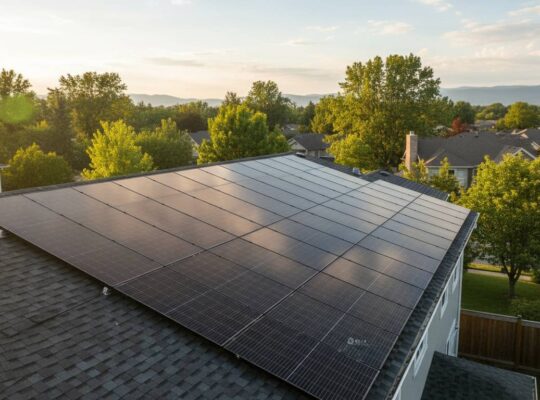
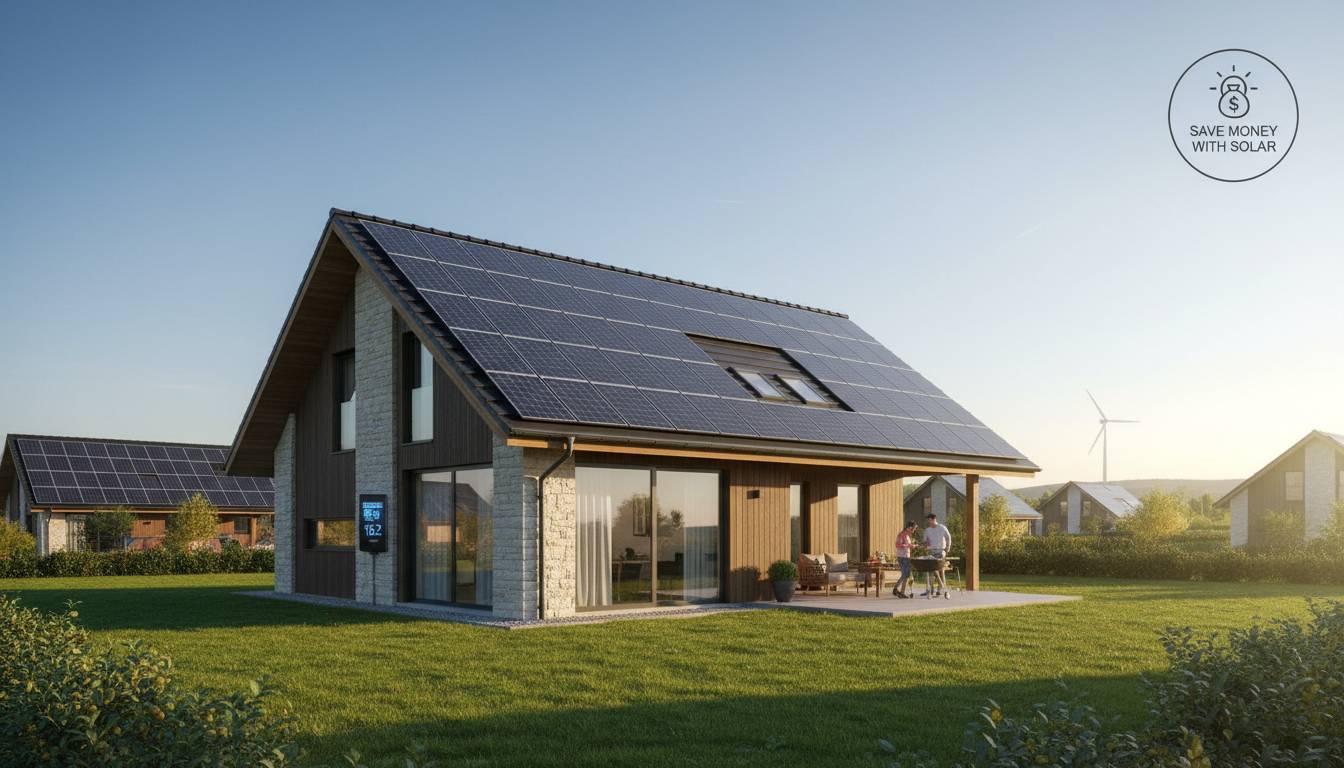
The Inflation Reduction Act of 2022 dramatically expanded federal support for residential energy improvements. Homeowners can claim tax credits covering 30% of costs for qualifying improvements including solar panels, heat pumps, battery storage, and energy-efficient windows and doors. This credit applies to both new construction and existing home improvements, with annual caps varying by improvement type.
State-level programs supplement federal incentives with additional rebates and tax benefits. California offers the Self-Generation Incentive Program, providing up to $3,000 for battery storage installations. New York provides rebates through its Home Energy Assistance Program, while Texas utilities offerrebates ranging from $50 for smart thermostats to $500 for heat pump water heaters. The Database of State Incentives for Renewables and Efficiency (DSIRE) maintains comprehensive listings of available programs by location.
Federal Tax Credit Highlights (2024-2032):
– Solar electric systems: 30% of installed cost (no cap)
– Heat pumps (air source): 30% of installed cost
– Heat pump water heaters: 30% of installed cost
– Energy-efficient windows/doors: 30% of installed cost ($600 max)
– Home energy audits: 30% of audit cost ($150 max)
These incentives dramatically alter the economics of energy improvements. A $15,000 solar panel installation becomes $10,500 after the 30% credit, while a $3,000 heat pump water heater drops to $2,100. When combined with utility rebates and reduced utility bills, payback periods shrink significantly—often to under five years for major improvements.
Practical Implementation Strategies
The Audit-First Approach
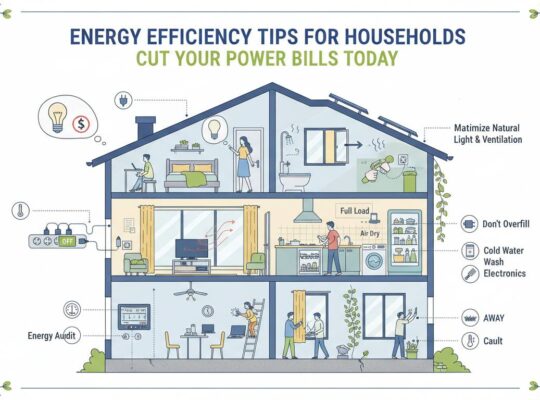
Professional home energy audits identify the most impactful improvements for specific homes. Auditors use blower door tests to measure air leakage, infrared cameras to detect insulation gaps, and detailed analysis of utility bills to establish baseline consumption. The typical cost of $300-$600 often pays for itself within months through targeted improvements the audit reveals.
Audits prioritize improvements based on cost-effectiveness for each home’s unique characteristics. A 1970s ranch with original single-pane windows benefits enormously from window replacement, while a 2010s construction home with modern windows might see greater returns from solar installation or smart home automation. This personalized approach prevents wasted spending on improvements that won’t significantly impact specific properties.
High-Impact Improvements
Insulation and Air Sealing
Adding insulation to attics, walls, and foundations typically costs $1,500-$5,000 but saves $200-$500 annually. The U.S. Department of Energy recommends attic insulation of R-38 to R-49 for most U.S. climates, yet many older homes have only R-19 or less. Air sealing around windows, doors, electrical outlets, and plumbing penetrations costs $200-$500 and prevents the drafts that force HVAC systems to work harder.
HVAC System Optimization
Heating and cooling systems represent the largest energy expense for most households. Replacing filters monthly, scheduling annual professional maintenance, and ensuring ducts are properly sealed can improve efficiency by 15-25%. When replacement becomes necessary, choosing heat pumps—systems that provide both heating and cooling with exceptional efficiency—qualifies for the 30% federal tax credit while reducing energy costs by 30-50% compared to traditional systems.
Lighting and Appliances
Switching from incandescent to LED bulbs reduces lighting energy use by 75-80% while lasting 25 times longer. The U.S. Department of Energy estimates that LED fixtures save the average household $150 annually. ENERGY STAR certified appliances use 10-50% less energy than standard models, with the most significant savings coming from refrigerators, washing machines, and dishwashers.
Case Study: Complete Home Transformation
Consider the example of a 2,200-square-foot single-family home in suburban Ohio built in 1998. The owners spent $12,500 on efficiency improvements: $4,200 for attic insulation and air sealing, $3,800 for a heat pump system, $2,100 for new ENERGY STAR windows, $1,400 for solar panels (after credits), and $1,000 for LED lighting and smart thermostat installation.
Their annual energy costs dropped from $3,200 to $1,650—a savings of $1,550 per year, or 48% reduction. Combined with the $3,750 federal tax credit (30% of $12,500) and $400 in utility rebates, their net investment was $8,350. At $1,550 annual savings, the payback period was 5.4 years. Over 20 years, assuming 2.5% annual utility rate increases, total savings exceed $42,000—producing a remarkable return on the original investment.
Common Mistakes Homeowners Make
Many well-intentioned efficiency efforts fail to deliver expected savings due to common pitfalls. Investing in improvements that don’t address the home’s primary energy waste is the most frequent error. Replacing windows—a expensive improvement with 10-20 year payback—before addressing insulation or sealing air leaks often wastes money that could produce faster returns elsewhere.
Frequent Errors and Solutions:
| Mistake | Impact | Solution |
|---|---|---|
| Wrong improvement priority | Wasted 30-50% of budget | Complete audit first |
| DIY without proper knowledge | Inefficient installation | Hire certified contractors |
| Ignoring maintenance | 15-25% efficiency loss | Schedule annual HVAC service |
| Overlooking behavioral changes | $200+ annual waste | Use smart power strips |
| Ignoring incentives | 10-30% overspending | Research before purchasing |
Another mistake involves selecting equipment based solely on purchase price rather than lifecycle costs. A $400 air conditioner costs less upfront than an $800 high-efficiency model, but the operating cost difference often makes the more expensive unit the better long-term value. The same principle applies to water heaters, windows, and insulation materials—lower initial costs frequently translate to higher total expenditure over equipment lifespans.
Future Trends and Emerging Opportunities
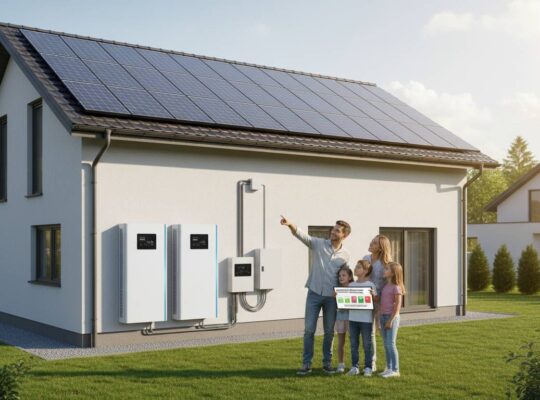
The residential energy landscape is evolving rapidly. Battery storage technology, once prohibitively expensive, now offers grid-independent power for critical systems while qualifying for the 30% federal tax credit. Virtual power plant programs compensate homeowners for allowing utilities to draw stored solar energy during peak demand periods—potentially generating $50-$100 monthly while supporting grid stability.
Smart home technology continues advancing, with artificial intelligence optimizing energy consumption based on occupancy patterns, weather forecasts, and utility rate schedules. These systems can reduce energy waste by automatically adjusting thermostats, turning off unused appliances, and coordinating renewable generation with consumption patterns. Integration between electric vehicles and home energy systems creates additional savings opportunities, with bidirectional charging allowing vehicles to power homes during peak rate periods.
Community solar programs enable renters and homeowners with unsuitable roofs to access solar benefits by subscribing to local solar installations. These programs typically save subscribers 5-15% on electricity costs without any home modifications. As utility rates continue climbing, the value proposition for distributed energy resources—including home solar, storage, and smart management systems—only strengthens.
Conclusion
Energy saving benefits for homeowners extend far beyond reduced monthly utility bills. The financial advantages compound through direct savings, property value appreciation, tax incentives, and protection against future rate increases. Most importantly, these benefits remain largely within homeowner control—unlike other household expenses that rise inevitably with inflation.
The path to meaningful savings begins with understanding your home’s specific energy profile through professional assessment, then prioritizing improvements that deliver the strongest returns. With federal tax credits at historically generous levels and utility programs offering additional support, the economic case for energy efficiency has never been stronger. Every dollar invested in your home’s energy performance generates returns that grow more valuable as energy costs inevitably rise.
Frequently Asked Questions
How much can the average homeowner save annually by making energy-efficient upgrades?
Most homeowners who implement comprehensive energy improvements save $300-$600 annually, with some achieving savings of 30-50% on their utility bills. Individual results depend on your home’s current efficiency, the improvements chosen, local utility rates, and how consistently you maintain optimal settings. A professional energy audit provides the most accurate savings estimate for your specific situation.
What is the fastest way to start saving money on energy costs?
The quickest returns come from behavioral changes and low-cost improvements. Switching to LED bulbs saves $150-$300 immediately. Installing a smart thermostat, typically costing $150-$250, reduces heating and cooling costs by 10-15% from the first month. These combined changes can save $300-$500 annually with minimal investment and no need for professional installation.
Are federal tax credits still available for energy-efficient home improvements in 2024?
Yes. The Inflation Reduction Act established 30% tax credits for many residential energy improvements, including solar panels, heat pumps, battery storage, and certain efficiency upgrades. These credits remain available through at least 2032, though some have annual caps. Consult the ENERGY STAR website or a tax professional for current requirements and eligibility.
Do energy-efficient improvements really increase home resale value?
Multiple studies confirm that energy-efficient features increase home values by 2-4% on average. ENERGY STAR certification, solar panels, and modern HVAC systems appeal to buyers seeking lower operating costs. The premium varies by market and the specific improvements, but energy efficiency consistently provides positive return on investment at resale.
How long does it take for energy-efficient upgrades to pay for themselves?
Payback periods range widely based on improvement type. LED lighting pays for itself in 1-2 years. Insulation upgrades typically payback in 3-7 years. New HVAC systems take 7-12 years, though the 30% federal credit significantly shortens this timeline. Solar panels achieve payback in 6-12 years depending on system size, local rates, and available incentives.