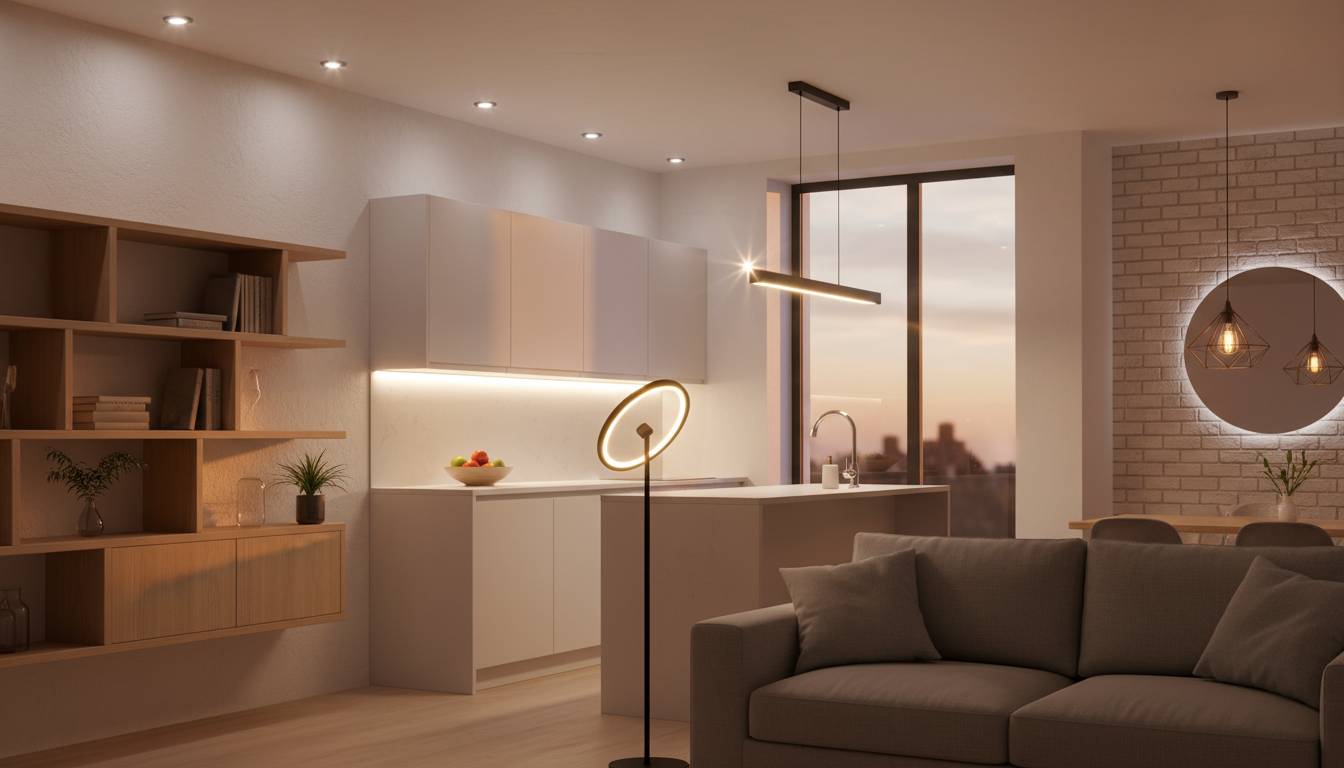
Lighting accounts for approximately 12% of the average U.S. household’s energy consumption, making it one of the easiest areas to reduce utility costs. Switching from traditional incandescent bulbs to energy efficient alternatives can save homeowners $75 to $100 per year, according to the U.S. Department of Energy. With bulbs lasting 25 times longer and using a fraction of the energy, the financial case for upgrading is compelling.
Key Insights
– LED bulbs use up to 75% less energy than incandescent alternatives
– The average lifespan of LED bulbs exceeds 25,000 hours compared to 1,200 hours for incandescent
– ENERGY STAR certified lighting meets strict efficiency guidelines established by the EPA
– Smart lighting systems can reduce lighting energy use by an additional 30% through automation
This guide examines the primary energy efficient lighting options available in 2024, compares their performance characteristics, and provides actionable recommendations to maximize your savings.
Understanding Light Bulb Technologies
Before comparing specific products, it’s essential to understand the fundamental technologies driving energy efficient lighting. Each type operates differently, which directly impacts both efficiency and performance.
Incandescent Bulbs: The Traditional Standard
Incandescent bulbs produce light by heating a tungsten filament until it glows. While these bulbs remain the least expensive to purchase upfront, they convert only about 10% of their energy into visible light—the remainder becomes heat. This inefficiency explains why incandescent bulbs are being phased out under federal efficiency standards. The remaining 90% of energy wasted as heat also increases cooling costs during summer months, creating a double penalty for households in warmer climates.
Halogen Incandescent: An Improved Classic
Halogen bulbs represent an incremental improvement over traditional incandescent technology. They use a halogen gas cycle that allows the filament to operate at higher temperatures, producing whiter light and slightly better efficiency—approximately 25% more efficient than standard incandescent. However, they still waste significant energy as heat and maintain the same relatively short lifespan of 2,000 to 3,000 hours. Halogen bulbs remain widely available but are increasingly considered a transitional technology on the path toward solid-state lighting.
Compact Fluorescent Lamps (CFLs): The First Efficiency Wave
CFLs represent the first mass-market alternative to incandescent technology. They work by passing electricity through a gas-filled tube, causing phosphors to emit visible light. This process uses approximately 70% less energy than incandescent bulbs and lasts about 10 times longer—typically 8,000 to 10,000 hours. However, CFLs contain small amounts of mercury, requiring special disposal procedures. Many consumers also report that CFLs produce a less pleasant light quality and take time to reach full brightness after being switched on.
Light Emitting Diodes (LEDs): The Modern Standard
LEDs have emerged as the dominant energy efficient lighting technology. They produce light through electroluminescence—a process where electrons move through a semiconductor material, releasing photons. This method is extraordinarily efficient, converting most electrical energy into visible light rather than heat. LEDs also offer unprecedented versatility in color temperature, dimming capability, and form factor. The technology has advanced rapidly since commercial introduction in the early 2000s, with prices dropping by more than 90% while performance continues improving.
| Technology | Lifespan (Hours) | Energy Use vs. Incandescent | Typical Cost per Bulb | Mercury Content |
|---|---|---|---|---|
| Incandescent | 1,200 | 100% (baseline) | $1-3 | None |
| Halogen | 2,000-3,000 | 75% | $3-7 | None |
| CFL | 8,000-10,000 | 25-30% | $2-5 | Yes (small amount) |
| LED | 25,000+ | 20-25% | $3-15 | None |
Comparing Performance Characteristics
Understanding how different lighting technologies perform across key metrics helps consumers make informed purchasing decisions. Energy efficiency involves more than just wattage—it encompasses light quality, longevity, and operational costs.
Brightness and Color Temperature
Brightness is measured in lumens rather than watts, as wattage only indicates energy consumption. A standard 60-watt incandescent produces approximately 800 lumens. LEDs achieving the same brightness typically consume only 8 to 12 watts. Color temperature, measured in Kelvin (K), describes the perceived warmth or coolness of light. Warm white (2700K-3000K) resembles traditional incandescent light and works well in living spaces and bedrooms. Neutral white (3500K-4000K) suits kitchens and bathrooms, while cool daylight (5000K-6500K) provides optimal visibility for task areas and reading.
Dimming Compatibility
Not all energy efficient bulbs work with dimmer switches, and compatibility issues can cause flickering, buzzing, or reduced bulb lifespan. Most LED bulbs are dimmable, but they require dimmers specifically designed for LED technology. Standard incandescent dimmers often function poorly with LEDs, causing problems at low light levels. CFLs generally cannot be dimmed at all. When planning lighting installations, verify dimmer compatibility before purchasing bulbs.
Cold Weather Performance
LEDs perform exceptionally well in cold temperatures, actually becoming more efficient as temperatures drop. This makes LEDs ideal for outdoor applications in northern climates. CFLs, conversely, struggle in cold environments—starting slowly and producing reduced light output in temperatures below 50°F. For outdoor lighting in cold climates, LEDs are the clear choice.
Room-by-Room Lighting Recommendations
Different rooms have distinct lighting requirements based on function, size, and typical usage patterns. Matching bulb technology to these needs optimizes both energy savings and user satisfaction.
Living Rooms and Bedrooms
These spaces typically benefit from warm-white lighting (2700K) that creates a comfortable, relaxing atmosphere. Dimmable LEDs provide flexibility for movie nights, reading, and entertaining. A typical living room with six to eight light fixtures can achieve complete illumination using 9-watt LED bulbs, consuming roughly 54 to 72 watts total compared to 360 to 480 watts with incandescent alternatives. The annual energy savings for converting an average living room exceeds $50 per year in most utility regions.
Kitchens and Bathrooms
These task-oriented spaces require brighter, cooler lighting (3500K-4000K) that mimics natural daylight and provides accurate color representation. Recessed lighting, pendant fixtures, and vanity lights should use 12 to 15-watt LEDs rated for damp locations in bathrooms. Kitchens benefit from layered lighting approaches combining ambient ceiling fixtures with under-cabinet task lighting, all using LED technology for maximum efficiency.
Outdoor Lighting
Exterior fixtures face challenging environmental conditions including temperature extremes, moisture, and UV exposure. LEDs rated for outdoor use handle these conditions effectively while providing instant full brightness—critical for security lighting. Motion-sensor security lights and pathway lighting using LEDs can operate for years without bulb replacement, significantly reducing maintenance requirements for homeowners.
Garages and Basements
These utility spaces often see extended operating hours, making energy efficiency particularly valuable. LED shop lights consuming 40 to 60 watts provide illumination equivalent to 200-watt incandescent fixtures. For detached garages or workshops without climate control, LEDs’ cold-weather performance provides additional advantages over fluorescent alternatives.
Smart Lighting Systems: Adding Intelligence to Efficiency
Smart lighting represents the next evolution in energy efficient illumination, combining LED technology with automation and remote control capabilities.
How Smart Lighting Works
Smart bulbs connect to home Wi-Fi networks or dedicated hubs, allowing control through smartphone apps, voice assistants, or automated schedules. Users can adjust brightness, change color temperature, and control individual fixtures or groups from anywhere with internet connectivity. Integration with other smart home devices enables sophisticated automation—lights turning on at sunset, adjusting based on occupancy, or syncing with home security systems.
Energy Savings Through Automation
Smart lighting systems deliver additional efficiency gains beyond the inherent savings of LED technology. Scheduled dimming during daylight hours, automatic shutoff when rooms are unoccupied, and motion-activated lighting in low-traffic areas can reduce lighting energy consumption by an additional 30% compared to standard LEDs. Geofencing features can ensure lights never remain on accidentally when households leave for work.
Popular Smart Lighting Platforms
Major platforms including Philips Hue, LIFX, and Wyze offer compatible product ranges spanning bulbs, light strips, and fixtures. Integration capabilities vary—some platforms require proprietary hubs while others connect directly through Wi-Fi. Compatibility with voice assistants like Amazon Alexa, Google Assistant, and Apple HomeKit enables hands-free control and integration with broader smart home ecosystems.
Calculating Your Return on Investment
Understanding the complete financial picture helps justify the upfront costs of transitioning to energy efficient lighting.
Initial Costs Versus Lifetime Savings
While LED bulbs cost more individually than incandescent alternatives, their extended lifespan dramatically changes the economic calculation. A single LED bulb operating for 25,000 hours costs approximately $3-15 to purchase but only about $30-40 in electricity over its lifetime (at national average residential rates). An incandescent bulb, by comparison, would require approximately 21 replacements over the same period, costing $21-63 in bulbs plus approximately $150 in electricity. The LED generates $100 or more in lifetime savings per bulb.
Regional Variations in Savings
Electricity rates vary significantly across the United States, ranging from around 10 cents per kilowatt-hour in some states to over 30 cents in others. Households in high-cost utility regions save proportionally more by switching to efficient lighting. Additionally, states with time-of-use rate structures—where electricity costs more during peak afternoon and evening hours—benefit particularly from smart lighting that can shift consumption to lower-cost periods.
Rebates and Incentives
Many utility companies offer rebates for ENERGY STAR certified lighting products, reducing or eliminating the price premium for efficient bulbs. Some utilities provide free LED bulbs through direct installation programs. The ENERGY STAR website maintains a searchable database of current rebates by location. Additionally, many retailers offer periodic sales on LED products, particularly around seasonal holidays.
Common Mistakes When Switching to Efficient Lighting
Avoiding these pitfalls ensures you capture maximum value from your lighting upgrade investments.
Selecting Incorrect Color Temperatures
Purchasing bulbs with inappropriate color temperatures creates unsatisfactory lighting conditions. A 5000K bulb in a bedroom produces harsh, clinical light that interferes with sleep preparation. Conversely, warm 2700K bulbs in home offices can reduce visual acuity for detailed tasks. Match color temperature to room function and personal preferences.
Ignoring Dimmer Compatibility
Installing non-dimmable LEDs on dimmer circuits causes flickering, buzzing, and premature bulb failure. Conversely, using LEDs rated for dimming with incompatible dimmers creates the same problems. Always verify compatibility between dimmer switches and LED bulbs—manufacturer packaging typically indicates whether bulbs are dimmable and lists compatible dimmer brands.
Purchasing Based Only on Price
The cheapest LED bulbs often lack quality components affecting performance and longevity. Inferior drivers can cause flickering, poor dimming performance, or early failure. Established brands typically offer better quality control and longer warranties. Look for ENERGY STAR certification, which ensures products meet independent testing standards for performance and reliability.
Overlooking Outdoor-Rated Products
Interior LED bulbs used in outdoor fixtures fail prematurely due to inadequate moisture and temperature resistance. Always select bulbs specifically rated for outdoor or damp locations when installing in exposed fixtures, covered porches, or bathrooms. The added cost ensures reliable performance throughout the bulb’s rated lifespan.
Frequently Asked Questions
How much can I save by switching all my bulbs to LED?
The average U.S. household can save $75 to $100 annually by replacing incandescent bulbs with LED alternatives, according to the U.S. Department of Energy. This calculation assumes conversion of approximately 40 bulbs throughout an average home. Households with older incandescent lighting or those operating lights for extended periods will see greater savings. The total lifetime savings per household can exceed $2,500 over the combined lifespan of the bulbs.
Are LED bulbs safe for enclosed fixtures?
Not all LED bulbs are suitable for enclosed fixtures. Heat buildup shortens LED lifespan significantly. Look for bulbs specifically rated for enclosed fixtures, which are designed with heat sinks that work effectively in semi-enclosed housings. Using standard LEDs in fully enclosed recessed cans or garage door opener fixtures can cause premature failure due to inadequate heat dissipation.
Do LED bulbs really last 25,000 hours?
Yes, quality LED bulbs rated for 25,000 hours typically achieve this lifespan under normal operating conditions. However, “normal” conditions matter—operating LEDs in high-temperature environments, using incompatible dimmers, or powering with unstable voltage can significantly reduce actual lifespan. Purchasing ENERGY STAR certified products ensures bulbs meet published lifespan claims through independent testing.
Can I use smart bulbs in any fixture?
Smart bulbs require constant power to maintain their wireless connectivity, which creates limitations. They cannot be used with occupancy sensors that cut power entirely when rooms are empty, nor with some smart switches that physically interrupt power flow. Smart bulbs work best in standard on/off fixtures where they remain continuously powered. For fixtures controlled by three-way switches or smart switches, consider smart switches rather than smart bulbs.
What’s the difference between ENERGY STAR and non-certified LED bulbs?
ENERGY STAR certification indicates products have been independently tested to meet strict performance standards established by the U.S. Environmental Protection Agency. Certified bulbs must deliver accurate lumen output, appropriate color rendering, consistent color temperature, and reliable dimming performance. They also must maintain these characteristics over their rated lifespan. Non-certified bulbs may underperform in any of these areas, though many offer acceptable performance at lower price points.
Should I dispose of my old incandescent bulbs?
Incandescent and halogen bulbs can be safely disposed of in regular household trash—they contain no hazardous materials. CFLs, however, contain small amounts of mercury and should be taken to designated recycling locations—many home improvement stores accept CFLs for proper disposal. Most LED bulbs can also be recycled at electronics recycling centers, though they’re not classified as hazardous waste. Check with your local waste management authority for specific recycling guidelines in your area.
Conclusion
Transitioning to energy efficient lighting represents one of the simplest and most effective ways to reduce household energy costs. LED technology has matured to offer superior performance across virtually all metrics—efficiency, lifespan, light quality, and versatility—while becoming increasingly affordable. The combination of immediate utility savings, extended bulb lifespans, and available rebates makes this an ideal time to complete the transition.
Start by identifying your highest-use fixtures—those operating several hours daily—and replace those bulbs first to capture savings immediately. Gradually replace remaining bulbs as they fail or when you encounter sales on quality LED products. Consider smart lighting additions in areas where automation provides meaningful convenience benefits. Within one to two years, most households can achieve complete conversion to efficient lighting while generating meaningful reductions in monthly utility expenses.