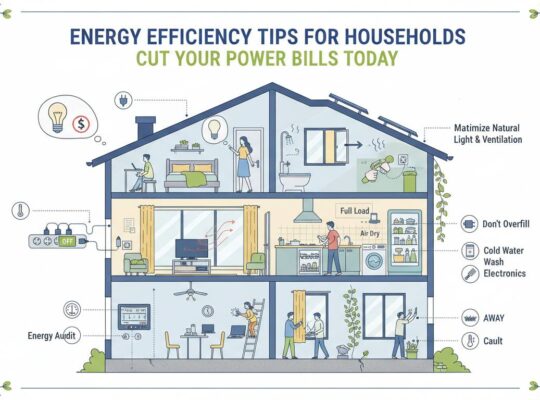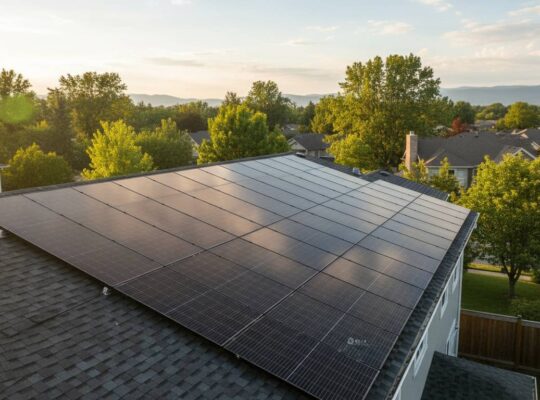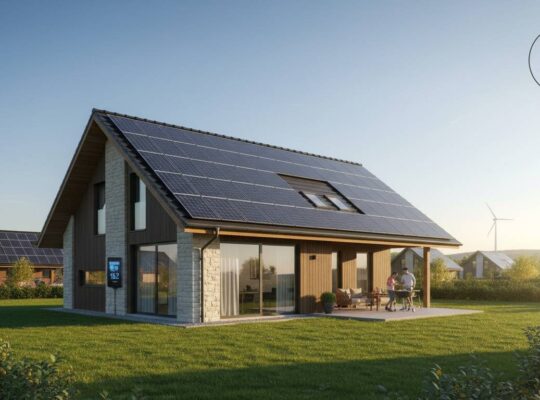
Reducing your home energy consumption isn’t just about lowering monthly bills—it’s about maximizing comfort, increasing property value, and contributing to environmental sustainability. For the average U.S. household, energy costs consume approximately $2,060 annually on utility bills, making efficiency improvements one of the most impactful investments homeowners can make.
Key Insights
– The average U.S. household spends $2,060 per year on energy (U.S. Energy Information Administration, 2024)
– Heating and cooling account for roughly 50% of home energy use
– Energy-efficient upgrades can reduce utility bills by 25-30% annually
– Most cost-effective improvements pay for themselves within 3-7 years
– Small behavioral changes can save $200-$500 per year without any investment
This guide provides actionable strategies across every major category of home energy use, from quick wins you can implement today to longer-term upgrades that deliver substantial returns.
Understanding Your Home’s Energy Profile
Before making changes, understanding where your energy goes is essential. Residential energy consumption breaks down into distinct categories, each offering different optimization opportunities.
📊 RESIDENTIAL ENERGY CONSUMPTION BREAKDOWN
| Category | Average % of Home Energy Use | Annual Cost (National Average) |
|---|---|---|
| Heating | 42% | $865 |
| Cooling | 17% | $350 |
| Water Heating | 14% | $288 |
| Appliances | 13% | $268 |
| Lighting | 9% | $185 |
| Electronics | 5% | $103 |
Source: U.S. Energy Information Administration, 2024
The dominance of heating and cooling explains why HVAC improvements typically deliver the highest returns. However, ignoring smaller categories—lighting, electronics, and behavioral habits—means leaving money on the table.
The Energy Audit Foundation
A home energy audit identifies exactly where efficiency losses occur. Professional audits, costing $200-$500, use blower door tests, infrared cameras, and detailed analysis to pinpoint air leaks, insulation gaps, and inefficient systems. The U.S. Department of Energy estimates that air leaks alone can add 10-20% to heating and cooling costs.
For budget-conscious homeowners, a self-audit works as a starting point:
- Check weatherstripping around doors and windows
- Examine insulation levels in attics and walls
- Identify drafts using a lit incense stick or thermal leak detector ($15-30 at hardware stores)
- Review utility bills for seasonal patterns
- Note which rooms feel consistently too hot or cold
This preliminary assessment guides prioritization, ensuring you invest in improvements that actually impact your specific situation rather than following generic advice.
High-Impact HVAC Improvements
Heating and cooling represent the largest energy expense for most homes, making HVAC optimization the priority area for efficiency gains.
Sealing Air Leaks
Air leakage through cracks, gaps, and penetrations forces your HVAC system to work harder than necessary. The Environmental Protection Agency’s ENERGY STAR program reports that sealing air leaks can save homeowners 15% on heating and cooling costs annually.
Critical sealing locations include:
– Recessed lights in ceilings
– Plumbing and electrical penetrations
– Wall junctures with floors and ceilings
– Window and door frames
– Attic hatchways and pull-down stairs
– Dryer vent and exhaust fan openings
Weatherstripping doors and windows costs $3-$10 per linear foot and provides immediate returns. Caulking gaps costs $3-$5 per tube and lasts 20+ years when properly applied.
Optimizing Insulation
Inadequate insulation forces HVAC systems to compensate for heat transfer through walls, ceilings, and floors. The North American Insulation Manufacturers Association reports that 90% of existing homes are underinsulated by current standards.
| Insulation Type | R-Value per Inch | Best Application | Cost per Sq. Ft. |
|---|---|---|---|
| Fiberglass Batts | 3.1-4.0 | Walls, attics | $0.50-$1.00 |
| Blown-in Cellulose | 3.2-3.7 | Existing walls, attic floors | $1.00-$2.00 |
| Spray Foam (Open-cell) | 3.5-3.7 | Cathedral ceilings, irregular spaces | $1.50-$3.00 |
| Spray Foam (Closed-cell) | 6.0-7.0 | Foundation walls, high-performance | $3.00-$5.00 |
| Mineral Wool | 3.0-3.3 | Fire-resistant applications | $1.50-$3.00 |
Costs vary by region; figures represent national averages
The U.S. Department of Energy recommends different R-values depending on climate zone. Most southern states need R-30 to R-49 in attics, while northern states require R-49 to R-60. Adding insulation to inadequate attics typically costs $1,500-$2,500 and saves $200-$600 annually depending on climate and existing conditions.
Upgrading to Efficient Systems
When HVAC equipment reaches 10-15 years of age, replacement with modern high-efficiency models delivers significant savings. The Department of Energy provides specific guidance on evaluating replacement decisions:
Heat Pump Advantages: Modern heat pumps deliver 3-4 units of heat per 1 unit of electricity consumed, making them 300-400% efficient. In moderate climates, they can replace both heating and cooling systems. The Inflation Reduction Act provides instant rebates of $2,000-$8,000 for heat pump installations, dramatically reducing payback periods.
Cooling Efficiency: Central air conditioning efficiency is measured by SEER2 (Seasonal Energy Efficiency Ratio 2). Minimum new systems must rate 13.4 SEER2 (as of 2023), but high-efficiency models reach 18-26 SEER2. The efficiency difference between a 14 SEER and a 22 SEER system translates to roughly 35% less electricity for equivalent cooling.
CASE STUDY – Maryland Homeowner:
A 2,400 square foot colonial home in Maryland replaced a 20-year-old HVAC system with a high-efficiency heat pump. The $12,000 installation (after $4,500 in IRA rebates) reduced annual energy costs from $3,200 to $1,840—a 42% reduction. The homeowner achieved a payback period of approximately 4 years through energy savings alone, not counting improved comfort and maintenance reduction.
Lighting and Electronics: Low-Cost High-Return Changes
Lighting and electronics represent smaller but highly manageable portions of energy use. These categories offer immediate savings with minimal investment.
LED Lighting Transition
The U.S. Department of Energy reports that residential lighting consumes about 10% of household electricity. LED bulbs use 75% less energy than incandescent bulbs and last 25 times longer.
Quick comparison:
| Metric | Incandescent | LED |
|---|---|---|
| Watts (equivalent brightness) | 60W | 9W |
| Lifespan | 1,200 hours | 25,000 hours |
| Annual cost (4 hrs/day) | $8.76 | $1.31 |
| Replacement frequency | Every 1.3 years | Every 17 years |
Switching all frequently-used bulbs in a typical home saves $75-$150 annually. For a household with 30 bulbs, the one-time cost of LED replacements ($30-$60) pays back within the first year while providing superior light quality and color options.
Smart Power Management
Phantom load—energy consumed by devices in standby mode—accounts for 5-10% of residential electricity use according to Lawrence Berkeley National Laboratory. Smart power strips and advanced power delivery systems eliminate this waste.
Recommended smart solutions:
– Smart power strips ($20-$40): Automatically cut power to peripheral devices when the main device (TV, computer) turns off
– Smart thermostats ($100-$250): Learn schedules, adjust automatically, and allow remote control—saving 10-15% on heating and cooling
– Smart plugs ($10-$25): Enable scheduling and voice control for any device
The Nest Learning Thermostat, specifically, has demonstrated 10-12% heating savings and 15% cooling savings in published studies, paying for itself within two years for most households.
Water Heating: Second-Largest Expense
Water heating ranks as the third-largest energy expense in most homes, trailing only heating and cooling. Several strategies address this category effectively.
Temperature Optimization
The U.S. Department of Energy recommends setting water heater temperatures to 120°F. This temperature kills most bacteria (including Legionella), prevents scalding, and reduces standby heat loss from the tank.
Reducing temperature from the common default of 140°F to 120°F saves $30-$60 annually per household in electric water heating costs, with minimal impact on comfort for most uses.
Insulation Improvements
Water heater blankets cost $20-$40 and reduce standby heat loss by 25-45% for electric water heaters, or 10-25% for gas models. This represents annual savings of $12-$30 depending on fuel type and climate.
Critical note: Blankets must not block air vents on gas water heaters or cover the thermostat access panel on electric models.
Timing Water Heating
For households on time-of-use electricity rates (common in many utility territories), water heating during off-peak hours reduces costs by 20-40%. Timer controllers ($30-$80) automatically heat water during low-cost periods, maintaining adequate supplies through peak morning and evening usage.
Behavioral Changes: No-Cost Efficiency
Beyond equipment and upgrades, daily habits significantly impact energy consumption. These changes require no investment but demand consistency.
High-impact behavioral adjustments:
– Adjust thermostat by 2-3°F: Each degree of heating reduction saves approximately 3% on heating bills
– Run full loads only: Dishwashers and washing machines use relatively fixed energy regardless of load size
– Use cold water for laundry: Heating water accounts for 90% of energy used in clothes washing
– Close vents in unused rooms: Redirects airflow to occupied spaces, though complete closure in forced-air systems can create pressure imbalances
– Unplug rarely-used devices: Eliminates phantom loads completely
These behaviors collectively save $100-$300 annually without any financial outlay. While individual changes seem minor, their cumulative impact rivals more visible efficiency investments.
Common Mistakes to Avoid
Homeowners frequently undermine their efficiency efforts through well-intentioned but counterproductive approaches.
| Mistake | Impact | Better Approach |
|---|---|---|
| Closing HVAC vents in unused rooms | Can reduce system efficiency 10-15%, increase pressure | Use zoned systems or accept slight overconditioning |
| Over-setting water heater | 10° increase adds 3-5% to heating costs | Maintain 120°F unless specific need exists |
| Ignoring seasonal maintenance | HVAC efficiency drops 5-15% with dirty filters | Replace filters quarterly; service annually |
| Using space heaters as primary heat | 3x more expensive than central heating | Address underlying comfort issues properly |
| Leaving lights on “to save bulbs” | Uses far more electricity than bulb cost | Install occupancy sensors if forgetting is common |
Recommended Tools and Resources
For Monitoring
- Sense Energy Monitor ($300-$400): Identifies individual device consumption through electrical signatures
- Kill A Watt Monitor ($20-$30): Measures individual device consumption; excellent for identifying energy vampires
- Utility smart meter apps: Most utilities provide detailed usage tracking through free apps
For Implementation
- ENERGY STAR-certified products: The ENERGY STAR database lists qualified products meeting strict efficiency criteria
- Database of State Incentives for Renewables and Efficiency (DSIRE): Comprehensive listing of federal, state, and local efficiency incentives
- ENERGY STAR Home Advisor: Free online tool providing customized efficiency recommendations based on your location and home type
For Assistance
- Weatherization Assistance Program (WAP): Federal program providing free efficiency upgrades for qualifying low-income households
- Utility rebate programs: Most utilities offer $50-$500 rebates for efficient appliances, thermostats, and HVAC equipment
- Home Energy Score: Standardized assessment (similar to car MPG) available in many regions for $50-$150
Frequently Asked Questions
How much can I realistically save by making my home energy efficient?
Most homeowners who implement comprehensive efficiency improvements reduce their utility bills by 25-30% annually. This translates to $500-$600 savings per year for the national average household. However, savings vary significantly based on your starting point—homes with major inefficiencies see the largest improvements. A home that hasn’t been updated since the 1980s might achieve 40%+ savings, while an already-efficient newer home might only save 10-15%.
What is the fastest way to lower my energy bills?
The quickest returns come from combining behavioral changes with low-cost improvements. Start by lowering your thermostat by 2-3 degrees, switching to LED bulbs, and sealing obvious air leaks around windows and doors. These three actions cost under $50 and save $150-250 annually. Within one month, you’ll see noticeable bill reductions while planning larger investments.
Do smart thermostats really save that much money?
Yes, independent studies consistently show 10-15% savings on heating and cooling costs. The savings come from automatic schedule optimization, learning your preferences, and enabling remote adjustments when plans change. At an average cost of $150-250 installed, most households achieve full payback within 2-3 years while gaining significantly improved comfort control.
Should I get a home energy audit before making improvements?
Yes, especially if your home has multiple efficiency issues. A professional audit ($200-$500) pinpoints exactly where losses occur, preventing wasted money on improvements that don’t address your primary issues. However, if you have an obvious problem (like single-pane windows or a 30-year-old furnace), you can proceed with known solutions without waiting for an audit.
Are energy-efficient windows worth the cost?
If your current windows are single-pane or have damaged seals, replacement provides substantial benefits. However, window replacements cost $8,000-$20,000 for an average home and may take 15-30 years to pay back through energy savings alone. Consider window replacement primarily for comfort and condensation issues, or when combined with other exterior renovations. Storm windows and cellular shades provide much of the benefit at a fraction of the cost.
What incentives are available for energy efficiency upgrades in 2024?
The Inflation Reduction Act provides substantial federal incentives through 2032, including up to $8,000 for heat pumps, $2,500 for electric panel upgrades, and 30% tax credits (capped at $1,200 annually) for many efficiency improvements. Many states offer additional rebates. Check DSIRE.org and your utility company’s website for current local programs, which change frequently.
Conclusion: Building Your Efficiency Strategy
Effective home energy efficiency combines quick wins with strategic investments. Start by conducting a basic self-audit to identify your home’s biggest energy drains, then prioritize actions that deliver the best returns:
Immediate actions (this week):
– Switch to LED bulbs in high-use fixtures
– Lower thermostat 2-3 degrees
– Seal obvious air leaks with weatherstripping and caulk
Short-term investments (this year):
– Install a smart thermostat
– Add water heater insulation
– Replace air filters and service HVAC
Medium-term upgrades (1-3 years):
– Upgrade to a heat pump or high-efficiency HVAC
– Add insulation to underinsulated attics
– Replace windows if budget allows
Every efficiency improvement compounds with others. A home that has air leaks sealed, insulation upgraded, and HVAC optimized will see dramatically better results than from any single change. The combination of immediate behavioral changes, thoughtful equipment investments, and available incentives makes 2024 an excellent time to prioritize energy efficiency.
Your utility company, local government, and the ENERGY STAR program all offer resources to guide your decisions. Start with the changes that fit your budget and address your most significant energy losses, then build toward a comprehensive efficiency strategy over time.