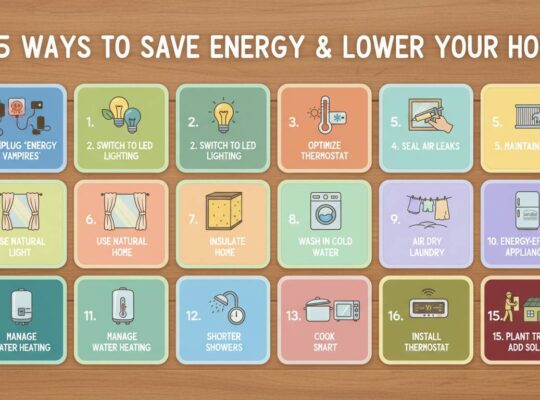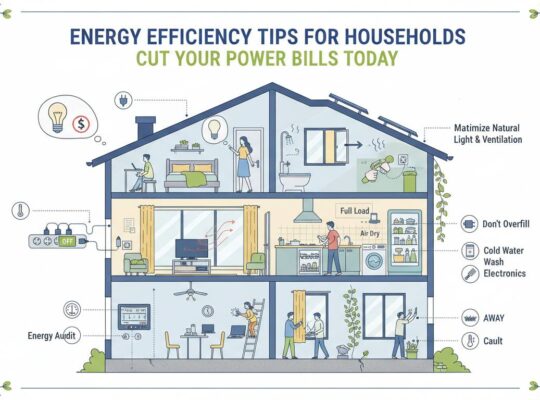
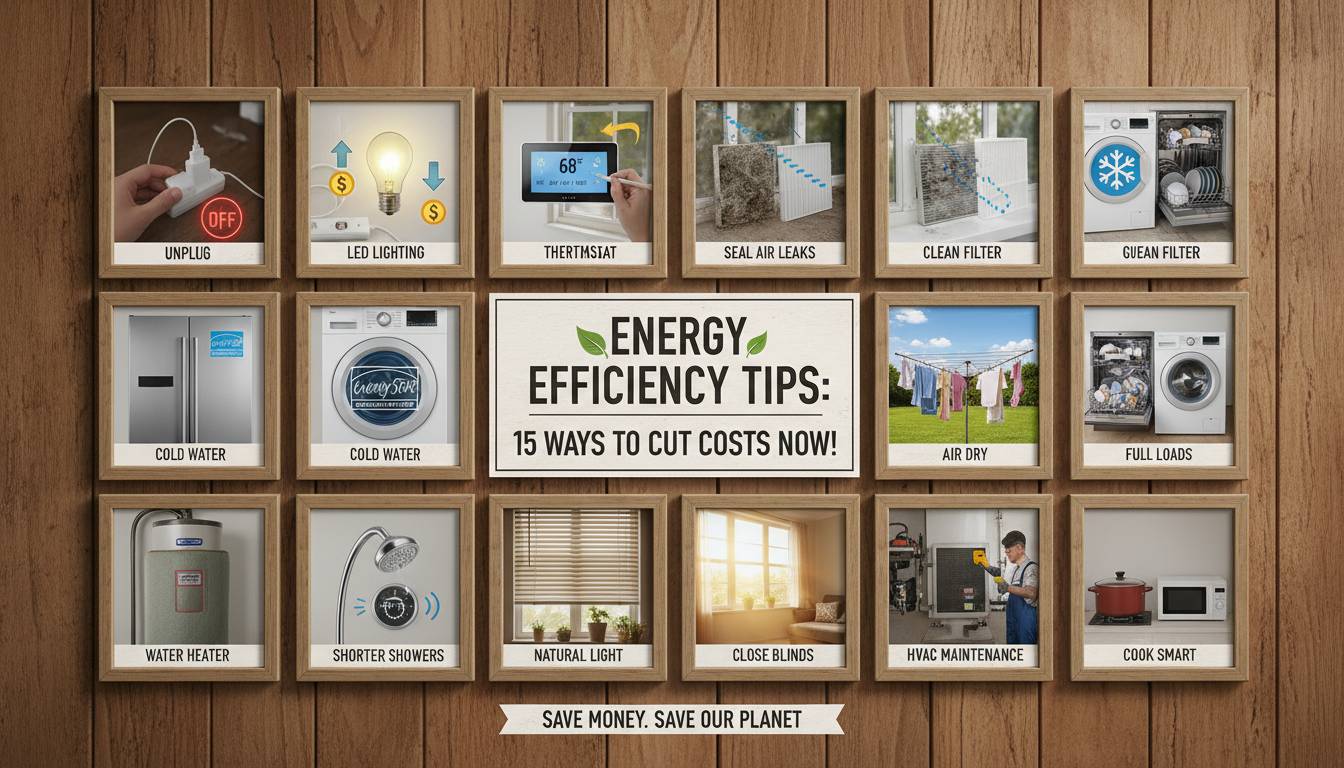
Reducing your energy consumption doesn’t require living in discomfort or making drastic lifestyle changes. By implementing strategic upgrades and adjusting daily habits, the average U.S. household can save $500 to $1,500 annually on utility costs. These 15 actionable strategies deliver measurable results without demanding significant upfront investment.
Understanding Your Home Energy Consumption
Before targeting savings, you need to understand where your money goes. U.S. households spend approximately $2,200 annually on electricity and natural gas combined, with heating and cooling accounting for nearly half of that total, according to the U.S. Energy Information Administration. Water heating consumes another 14-18%, while lighting and appliances make up the remaining energy draw.
📊 HOME ENERGY BREAKDOWN
| Category | Percentage of Energy Use | Annual Cost (National Average) |
|---|---|---|
| Heating and Cooling | 47% | ~$1,000 |
| Water Heating | 14% | ~$300 |
| Appliances | 13% | ~$285 |
| Lighting | 12% | ~$265 |
| Electronics | 4% | ~$90 |
| Other | 10% | ~$220 |
This distribution reveals why focusing on HVAC optimization and water heating delivers the fastest return on investment. Small changes in high-consumption areas outperform dramatic reductions in low-draw categories.
Quick Wins Under $50
Several high-impact improvements cost less than a tank of gas.
Seal Air Leaks Around Windows and Doors
Air leakage accounts for 10-25% of energy loss in typical homes. Weatherstripping and caulk cost between $10 and $30 and take under two hours to apply. Focus on gaps exceeding 1/8 inch around window frames, door bottoms, and penetrations for electrical outlets and plumbing. The Department of Energy estimates proper sealing can save $200 annually in heating and cooling costs.
Switch to LED Bulbs
LED bulbs use up to 75% less energy than traditional incandescent bulbs and last 25 times longer. Replacing the five most frequently used bulbs in your home costs approximately $25 and saves $75 per year in electricity costs. Over each bulb’s 25,000-hour lifespan, that single switch saves roughly $225 in energy and replacement costs.
Unplug Phantom Loads
Devices in standby mode consume 5-10% of your electricity. Gaming consoles, televisions, and chargers left plugged in draw power continuously. Using smart power strips eliminates this waste automatically. A quality smart power strip runs $20-40 and can save $100-200 annually for households with multiple electronics.
Smart Technology Investments
Technology has transformed energy management from guesswork into precision control.
Install a Smart Thermostat
Smart thermostats learning your schedule and adjusting temperatures automatically save 10-15% on heating and cooling bills. The Nest Learning Thermostat, ecobee SmartThermostat, and Honeywell T6 Pro represent the leading options, with prices ranging from $120 to $250. Installation typically takes 30-60 minutes for most homeowners. Energy Star certified models guarantee at least 8% heating and 6% cooling savings, translating to approximately $130 annual savings for the average household.
👤 Michael Thomas, Home Performance Specialist at Efficiency Vermont, notes: “Smart thermostats provide the highest per-dollar return of any technology we recommend. Most homeowners recoup their investment within 12-18 months through optimized heating and cooling schedules.”
Smart Power Strips for Entertainment Centers
Home entertainment systems with multiple components draw significant standby power. Advanced smart strips with occupancy sensing automatically cut power when devices enter standby mode. The TP-Link Kasa Smart Power Strip and Wemo Smart Plug Bundle retail for $25-40 and can reduce entertainment center energy consumption by 40-50%.
Energy Monitoring Systems
Devices like the Sense Energy Monitor or Emporia Vue connect to your electrical panel to identify energy-hungry appliances. These systems cost $250-400 and provide real-time consumption data, helping you identify unexpected draw from aging appliances or faulty equipment. Most users discover savings of 5-10% simply by identifying and addressing hidden waste sources.
Heating and Cooling Optimization
Your HVAC system represents your largest energy expense, making optimization critical.
Change HVAC Filters Regularly
Clogged filters restrict airflow, forcing systems to work harder and consume more energy. Replacing standard 1-inch filters every 30-90 days (depending on usage and pet ownership) maintains efficiency and extends system lifespan. A year’s supply of filters costs $20-60, while the efficiency gain typically saves $50-150 annually in energy costs.
Schedule Professional HVAC Maintenance
Annual professional maintenance improves efficiency by 5-15%, according to the U.S. Department of Energy. Service visits cost $100-300 depending on location and system complexity but pay for themselves within one to two years. Technicians clean coils, check refrigerant levels, calibrate thermostats, and identify potential failures before they become expensive emergencies.
Use Ceiling Fans Strategically
Ceiling fans cost approximately $0.01 per hour to operate versus $1.50 per hour for central air conditioning. In cooling mode, running ceiling fans in occupied rooms allows you to raise thermostat settings by 4 degrees without sacrificing comfort. This adjustment alone saves 10-15% on cooling costs. Remember to reverse fan direction in winter—set blades to spin clockwise at low speed to push warm air downward from the ceiling.
Close HVAC Vents in Unused Rooms
If your home has zoned heating/cooling or independent room controls, closing vents in unused spaces prevents conditioned air from wasting energy. However, forcing closed vents in single-zone systems creates pressure imbalances that reduce overall efficiency. This strategy works only in properly zoned homes.
Lighting Upgrades That Pay Off
Lighting presents one of the fastest payback opportunities in energy efficiency.
Beyond the Basics: LED Conversion
Beyond bulb replacements, consider LED tube retrofits for fluorescent fixtures, LED under-cabinet lighting in kitchens, and motion-sensor-activated lighting in closets, garages, and basements. The initial investment of $50-150 in comprehensive LED conversion typically pays back within one to two years while providing superior light quality.
Dimmer Switch Installation
Dimmers reduce energy consumption proportional to light output while extending bulb lifespan. Installing dimmers in living rooms, dining rooms, and bedrooms costs $15-30 per switch plus installation. Combined with LED bulbs, dimmers enable exact light level matching while consuming only the energy actually needed.
Water Heating Efficiency
Water heating typically ranks as the second-largest energy expense in most homes.
Lower Your Water Heater Temperature
The default 140°F setting exceeds most household needs. Reducing temperature to 120°F saves 4-22% in water heating costs while preventing scalding and reducing mineral buildup. This simple adjustment saves $30-60 annually for typical households.
Insulate Your Water Heater and Pipes
Water heater blanket insulation costs $20-40 and reduces standby heat loss by 25-45%. Pipe insulation adds another $10-20 and eliminates heat loss during transit to faucets. Combined savings typically reach $50-100 annually.
Install Low-Flow Fixtures
Low-flow showerheads use 2.0 gallons per minute versus standard 2.5-5.5 gpm models. At $15-40 per showerhead, plus $10-20 per faucet aerator, the investment pays back within one to two years. A family of four can save $50-100 annually while maintaining adequate water pressure.
👤 Sarah Chen, Sustainability Director at the American Council for an Energy-Efficient Economy, explains: “Water heating efficiency is often overlooked but delivers reliable savings. The combination of temperature reduction, insulation, and low-flow fixtures typically achieves 20-30% reduction in water heating costs.”
Addressing Air Leaks and Insulation
Structural improvements deliver permanent, compounding savings year after year.
Conduct a Simple Blower Door Test
Home energy audits identify air leakage locations with remarkable precision. Many utility companies offer free or discounted audits ($100-300 value). The audit process uses calibrated fans to measure air exchange rates and identifies specific locations where conditioned air escapes.
Add Attic Insulation
The U.S. Department of Energy recommends R-38 to R-60 insulation in attics, equivalent to 12-20 inches of fiberglass or cellulose. Homes with inadequate insulation—common in houses built before 1980—lose 25-35% of heating and cooling through the attic. Adding insulation to reach recommended levels costs $1,500-3,000 but saves $200-600 annually, with payback periods of three to seven years depending on fuel costs and existing insulation levels.
Seal Ductwork Leaks
Duct systems lose 20-30% of conditioned air through leaks, joints, and disconnected sections. Professional duct sealing costs $300-600 but saves $200-400 annually in typical homes. Mastic sealant rather than duct tape provides permanent fixes—duct tape degrades within five years while mastic lasts for decades.
Behavioral Changes That Matter
Technology and infrastructure matter, but daily habits amplify or undermine efficiency investments.
Optimize Laundry Practices
Washing clothes in cold water saves 90% of energy used by wash cycles, as heating water accounts for 90% of washing machine energy consumption. Air-drying clothes even partially—using drying racks or outdoor lines—eliminates dryer energy use entirely. These changes save $50-150 annually while extending clothing lifespan.
Master Cooking Efficiency
Using lids on pots reduces cooking time by 20-30% by trapping heat. Microwaves use 50-70% less energy than conventional ovens for appropriate foods. Oven batching—cooking multiple dishes simultaneously—maximizes heat use rather than heating an empty oven multiple times.
Strategic Thermostat Adjustments
Lowering thermostat by 2 degrees in winter saves approximately 5% on heating costs. Raising cooling settings by 2 degrees in summer achieves similar cooling savings. Programmable schedules that reduce conditioning during work hours and sleeping hours add 10-15% additional savings without sacrificing comfort.
Frequently Asked Questions
How much can the average household save by implementing all these tips?
Most households can achieve $500-$1,500 in annual savings through comprehensive energy efficiency improvements. The exact amount depends on current efficiency levels, local energy prices, climate zone, and household size. Homes with poor existing efficiency typically achieve savings at the higher end of this range.
What is the fastest way to start saving on energy costs?
Switching to LED bulbs and adjusting your thermostat by 2 degrees provide immediate savings with zero upfront cost. These changes alone save $100-200 annually. For those willing to invest, installing a smart thermostat delivers the fastest payback of any purchased upgrade.
Are energy efficiency upgrades worth it for renters?
Renters can implement many cost-saving measures including LED bulbs, low-flow showerheads and faucet aerators, smart power strips, and behavioral changes. These items remain with the renter when moving but deliver ongoing savings. Landlord permission is required for permanent changes like smart thermostats or insulation upgrades.
How do I know which improvements will save the most money?
Home energy audits identify the highest-impact opportunities for your specific home. Utility companies often subsidize audit costs, and auditors provide prioritized recommendations with estimated savings and payback periods for each improvement.
What incentives exist for energy efficiency upgrades?
Federal tax credits cover 30% of qualified efficiency improvements through 2032 under the Inflation Reduction Act, with annual caps varying by improvement type. Many states offer additional rebates, and utility companies frequently provide incentives for smart thermostats, insulation, and appliance upgrades. The Database of State Incentives for Renewables and Efficiency (DSIRE) provides comprehensive incentive information by location.
How long do energy efficiency upgrades last?
Most efficiency improvements provide 10-30 years of service. LED bulbs last 25,000-50,000 hours (15-25 years with typical use). Smart thermostats last 10-15 years. Insulation and air sealing provide permanent improvements. The one-time investment delivers ongoing savings throughout the product lifespan.
Putting It All Together
Energy efficiency improvement follows the principle of diminishing returns—your first changes deliver the highest return per dollar invested. Start with the free and low-cost behavioral changes and quick upgrades, then progressively tackle larger investments as your budget allows.
The most effective approach prioritizes changes based on your home’s specific weaknesses. A drafty 1970s home benefits dramatically from air sealing and insulation, while newer construction might see greater returns from smart technology and appliance upgrades.
Combine multiple strategies for compound savings. The household that uses a smart thermostat, maintains HVAC systems, converts to LED lighting, and practices conscious energy habits will consistently outperform those relying on any single solution.
Energy efficiency isn’t about sacrifice—it’s about optimization. Modern efficiency strategies maintain or improve comfort while reducing environmental impact and utility costs simultaneously. Start with one change today, build momentum with each improvement, and watch your annual energy expenses decline while your home becomes more comfortable and sustainable.