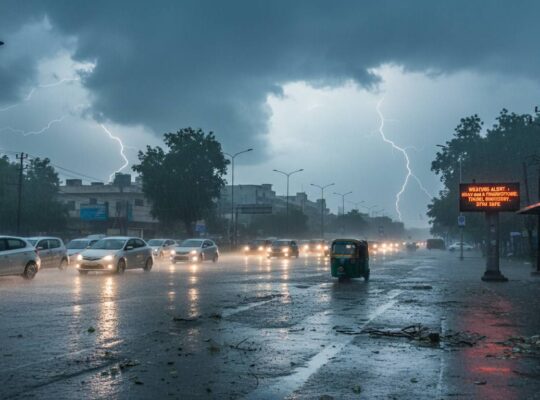
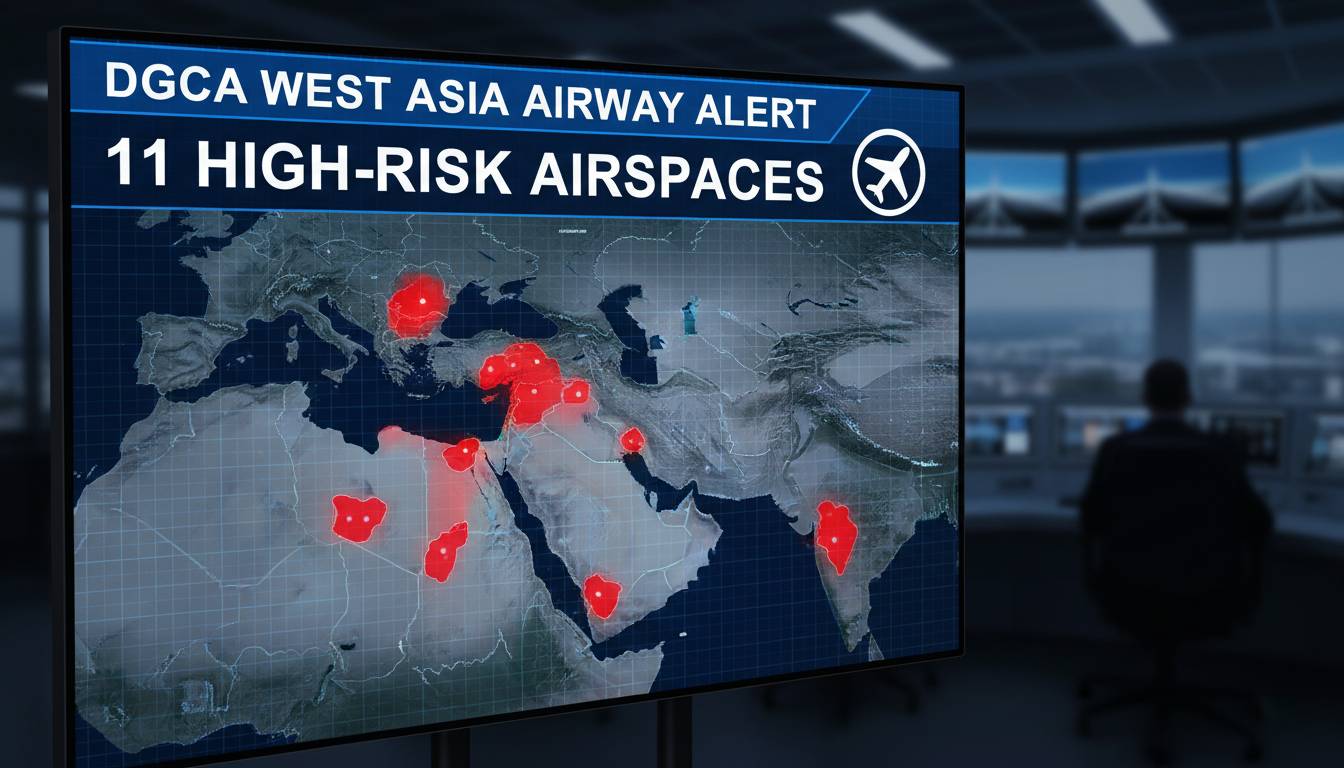
India’s aviation regulator moved to restrict exposure to conflict-zone airspace after military escalation across West Asia disrupted one of the world’s busiest long-haul corridors. The Directorate General of Civil Aviation, or DGCA, told Indian carriers to avoid 11 high-risk airspaces, citing a European Union Aviation Safety Agency conflict-zone bulletin first issued on February 28, 2026. For travelers and airlines, the warning matters because it affects routes linking India with Europe, North America and the Gulf, and it has already forced cancellations, reroutings and schedule changes.
The advisory was issued on February 28, 2026, and initially aligned with EASA’s Conflict Zone Information Bulletin 2026-03, which covered all altitudes in 11 flight information regions across Bahrain, Iran, Iraq, Israel, Jordan, Kuwait, Lebanon, Oman, Qatar, Saudi Arabia and the United Arab Emirates. EASA later extended the bulletin several times, including to March 18, 2026, according to the agency’s active notice page. The user-supplied date of March 28 could not be verified from the official EASA material reviewed here, so this article uses the confirmed dates available in public records.
⚠️
11 airspaces were flagged as high risk for all flight levels.
Named in EASA CZIB 2026-03 and referenced by Indian media reports on the DGCA advisory issued February 28, 2026. EASA’s latest public revision reviewed here shows validity extended to March 18, 2026.
11 Airspaces Covered by the Conflict-Zone Warning
| Country | FIR named by EASA | Status in bulletin |
|---|---|---|
| Bahrain | Bahrain FIR (OBBB) | High risk |
| Iran | Tehran FIR (OIIX) | High risk |
| Iraq | Baghdad FIR (ORBB) | High risk |
| Israel | Tel Aviv FIR | High risk |
| Jordan | Amman FIR (OJAC) | High risk |
| Kuwait | Kuwait FIR (OKAC) | High risk |
| Lebanon | Beirut FIR (OLBB) | High risk |
| Oman | Muscat FIR (OOMM) | High risk |
| Qatar | Doha FIR (OTDF) | High risk |
| United Arab Emirates | Emirates FIR (OMAE) | High risk |
| Saudi Arabia | Jeddah FIR (OEJD) | High risk |
Source: EASA CZIB 2026-03 public bulletin page and printable notice | accessed March 20, 2026
February 28 Triggered a Safety Shift Across a Core East-West Corridor
The immediate catalyst was a sharp deterioration in regional security conditions on February 28, 2026, which led EASA to publish CZIB 2026-03 for the Middle East and Persian Gulf. The bulletin said the information was being shared because it was considered necessary to ensure the safety of flights over zones of interest and to indicate areas of high risk. Indian media reports said the DGCA then directed Indian operators to refrain from operating in the affected airspace and to closely monitor Aeronautical Information Publications and Notices to Airmen issued by the countries involved.
That matters operationally because Gulf and West Asia airspace is not a niche corridor. It is a central bridge for flights between South Asia and Europe, and for some services onward to North America. AP reported on February 28 that major hub airports in Dubai, Abu Dhabi and Doha were directly affected by the disruption, and aviation analytics firm Cirium estimated that the three largest airlines operating there typically handle about 90,000 connecting passengers per day. AP also reported more than 1,800 flight cancellations by major Middle Eastern airlines during the disruption.
How the Advisory Evolved
February 28, 2026: EASA issues CZIB 2026-03 for 11 West Asia and Persian Gulf airspaces, initially valid until March 2, 2026.
February 28, 2026: Indian media report DGCA advises Indian airlines to avoid the 11 high-risk airspaces and monitor NOTAMs and AIPs.
March 2, 2026: EASA extends the bulletin to March 6, 2026.
March 6, 2026: EASA revision extends validity to March 11, 2026.
March 11, 2026: EASA says the bulletin is extended again, this time to March 18, 2026.
410 Flight Cancellations Showed the Early Domestic Impact
The first measurable effect for Indian aviation was a wave of cancellations and network changes. Business Today reported that DGCA said 410 flights were cancelled on February 28, 2026, as the West Asia airspace disruption compounded operating stress for Indian carriers. The same report listed the 11 countries named in the advisory and said the closure of Gulf airspace, alongside Pakistan-related routing constraints, would pressure airline earnings because international operations are a major revenue source for Air India and IndiGo.
Air India’s own public updates show how quickly the disruption spread beyond flights directly serving the Gulf. On March 5, 2026, the airline group said passengers booked for travel from any point in the West Asia region, with tickets issued until March 4 and original travel between February 28 and March 8, could rebook within one month without extra charges. In a separate advisory, Air India said flights to New York JFK and Newark would operate with technical stops at Rome because of the continuing situation in the Middle East.
Verified Operational Effects Mentioned by Public Sources
| Metric | Figure | Source and date |
|---|---|---|
| Indian flight cancellations | 410 flights | DGCA figure cited by Business Today for February 28, 2026 |
| Major Middle East airline cancellations | More than 1,800 flights | AP report dated February 28, 2026 |
| Typical daily connecting passengers at Dubai, Abu Dhabi, Doha hubs | About 90,000 | Cirium estimate cited by AP on February 28, 2026 |
| Extra Air India flights announced | 78 flights | Air India press release for March 10-18, 2026 period |
Source: Business Today, AP, Air India | published February 28 to March 8, 2026
Why 11 FIRs Created a Wider Rerouting Problem
The significance of the alert is not just the number of countries. It is the geographic clustering. The 11 FIRs sit across the Gulf and adjacent West Asian corridor used by airlines moving between India and Europe, and by some services connecting onward to the United States. When multiple neighboring FIRs are treated as high risk at all altitudes, carriers lose flexibility to thread through isolated safe pockets. That raises block times, fuel burn, crew planning complexity and the need for technical stops. This is an inference from the geography of the listed FIRs and the operational changes disclosed by airlines.
Air India’s March 8 statement adds context. The carrier said it would operate 78 additional flights between March 10 and March 18, 2026, to five European gateways and New York JFK, supported by extra services to the Maldives and Sri Lanka, because demand for reliable travel options remained elevated amid the West Asia situation. That suggests the disruption did not end with the first weekend of closures; airlines were still rebuilding capacity and passenger flows more than a week later.
ℹ️
The March 28 date could not be confirmed in official material reviewed for this article.
The public EASA bulletin history verified here shows extensions from March 2 to March 6, then March 11, then March 18, 2026. Readers should treat any later date as unverified unless supported by a regulator or airline notice.
March 18, Not March 28, Is the Latest Official End Date Verified Here
For readers tracking the exact validity window, the most important fact is that the latest official end date verified in the sources reviewed is March 18, 2026, from EASA’s active CZIB page. Earlier versions were valid until March 2, then March 6, then March 11. Because the user prompt references March 28, precision matters: no official source located in this reporting confirmed a March 28 validity date for the 11-airspace warning.
That does not mean the risk disappeared after March 18. It means only that this article is limited to what can be verified publicly as of March 20, 2026. Airlines and regulators can issue new NOTAMs, route restrictions or extensions with little notice, so passengers on India-Europe, India-Gulf and some India-US itineraries still need to check carrier advisories and flight status pages before departure. Air India’s public updates are one example of how quickly schedules and routings can change.
Frequently Asked Questions
Which 11 airspaces were labeled high risk?
The public EASA bulletin reviewed for this article names Bahrain, Iran, Iraq, Israel, Jordan, Kuwait, Lebanon, Oman, Qatar, Saudi Arabia and the United Arab Emirates, covering all altitudes in the listed FIRs. The bulletin was first issued on February 28, 2026.
Did DGCA itself publish the list publicly?
Public reporting on February 28, 2026 said DGCA advised Indian airlines to avoid the affected airspaces and monitor NOTAMs and AIPs. The list of 11 airspaces matches the EASA conflict-zone bulletin cited in those reports.
Is the alert valid until March 28, 2026?
No official source reviewed here confirms March 28. The latest verified public EASA revision available in this reporting extends the bulletin to March 18, 2026. Earlier validity dates were March 2, March 6 and March 11.
How did the warning affect flights?
Business Today cited a DGCA figure of 410 cancelled flights on February 28, 2026. AP reported more than 1,800 cancellations by major Middle Eastern airlines and said Cirium estimated about 90,000 daily connecting passengers normally pass through Dubai, Abu Dhabi and Doha.
Could US-bound passengers be affected?
Yes. Air India said some flights to New York JFK and Newark would operate with technical stops at Rome because of the continuing Middle East situation. That shows the disruption reached beyond Gulf destinations and affected long-haul network planning.
Disclaimer: This article is for informational purposes only. Information may have changed since publication. Always verify information independently with airlines, regulators and official flight advisories before making travel decisions.