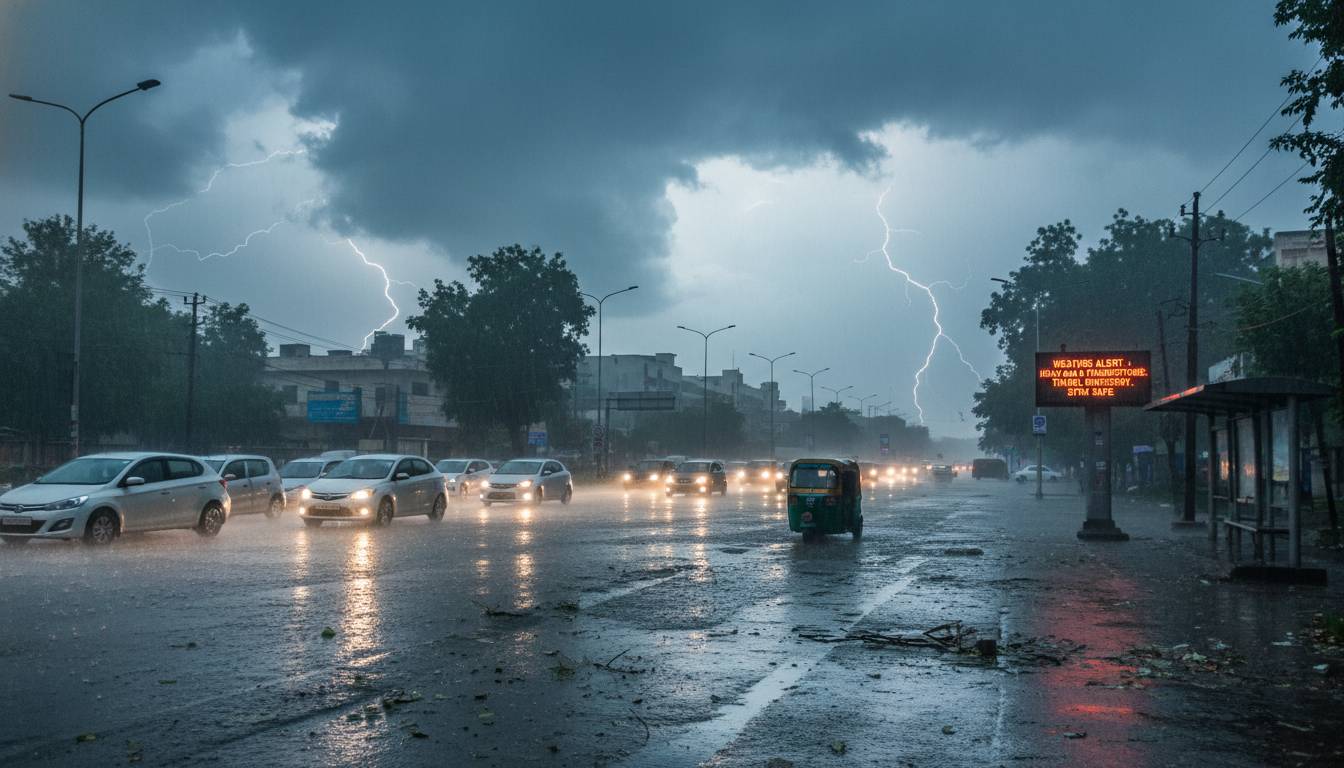
Rain and thunderstorms swept across Delhi-NCR on Friday, March 20, 2026, disrupting road movement and prompting renewed caution for commuters as the India Meteorological Department, or IMD, maintained storm-related warnings for the region. Reports of waterlogging, gusty winds, and traffic delays have again put focus on how quickly weather can affect flights, roads, and daily travel across the capital region.
For readers tracking the latest Delhi-NCR weather situation, the key facts are straightforward: the region is seeing thunderstorm activity, official advisories continue to urge caution during travel, and transport disruption risk rises sharply during intense morning or afternoon spells. IMD-linked reporting has repeatedly warned residents to avoid unnecessary travel during active storm windows, while local coverage has pointed to waterlogging and congestion on major corridors during similar events in Delhi and adjoining NCR cities.
⚠️
Travel risk rises fastest during heavy rain bursts.
IMD-linked advisories cited by multiple Indian news outlets have told residents to avoid unnecessary travel, stay indoors where possible, and watch for waterlogging, lightning, and traffic disruption during thunderstorm periods.
Delhi-NCR Weather Disruption Snapshot
| Issue | What has been reported | Why it matters |
|---|---|---|
| Thunderstorms | Storm activity with rain and gusty winds across Delhi-NCR | Raises risk of lightning, poor visibility, and delays |
| Travel advisory | Residents advised to avoid unnecessary travel during active spells | Road congestion and safety risks increase quickly |
| Waterlogging | Repeatedly reported on key roads during similar rain events | Can slow traffic and affect airport access routes |
| Flight impact | Past Delhi storm events have affected airport operations | Passengers may need extra buffer time |
Source: IMD-linked advisories and Indian media reports reviewed on March 20, 2026.
Why Storm-Linked Travel Warnings Matter in Delhi-NCR
Delhi-NCR’s weather disruptions are rarely just about rainfall totals. The bigger issue for commuters is the combination of thunderstorms, short-duration heavy showers, gusty winds, and localized water accumulation. That mix can reduce visibility, slow arterial traffic, and create bottlenecks on roads linking Delhi with Noida, Gurugram, Ghaziabad, and Faridabad. Coverage of comparable IMD warning days has shown that even moderate rainfall can trigger long delays when it coincides with office-hour traffic.
IMD advisories cited in recent Delhi weather reports have emphasized practical precautions rather than dramatic language: stay indoors during thunderstorm peaks, secure doors and windows, avoid sheltering under trees, and postpone non-essential travel if possible. In one report, the department also warned people not to touch stray electric wires and flagged the possibility of waterlogging in several places. Those details matter because they show the advisory is not only about inconvenience; it is also about electrical and road safety during unstable weather.
What 60 kmph Wind Warnings Signal for Roads and Flights
One recent Delhi-NCR monsoon-related report said adjoining areas could face thunderstorms with wind speeds reaching up to 60 kmph. While that figure came from a separate event, it offers useful context for why airlines, airport operators, and traffic authorities react quickly when storm cells move over the capital region. Gusty winds can slow ground handling, complicate aircraft turnaround timing, and increase the chance of temporary delays even when rainfall itself is not extreme.
That pattern has shown up before. Reporting on earlier Delhi storms noted that airlines such as IndiGo and Air India issued passenger advisories asking travelers to leave extra time for airport access because rain slowed traffic movement. Another report on a severe Delhi storm described operational disruption at Indira Gandhi International Airport after strong winds and heavy rain. Those examples do not prove identical disruption on March 20, 2026, but they do establish the operational pattern that travelers should plan around when thunderstorms hit the NCR transport network.
Storm Advisory Timeline for Delhi-NCR
September 2024: Waterlogging and traffic disruption were reported after overnight rain across NCR corridors, showing how quickly road conditions can deteriorate.
May 2025: IMD-linked reporting said Delhi-NCR faced heavy rain and thunderstorms, with residents advised to avoid needless travel and remain indoors.
August 2025: Delhi-NCR rain led to traffic chaos and flight-delay concerns, with airline advisories urging passengers to allow extra travel time.
March 20, 2026: Fresh storm-related concern returned as Delhi-NCR again dealt with rain and thunderstorm conditions affecting commuter movement.
How Waterlogging Turns a Rain Spell Into a Citywide Delay
The most persistent transport problem in Delhi during rain events is not always the heaviest downpour. It is the uneven distribution of drainage stress. Reports from previous storm days identified water accumulation on roads in and around places such as Najafgarh-linked corridors, Rohtak Road stretches, and other low-lying routes. Once even a few choke points slow down, congestion spreads outward into feeder roads and expressway approaches.
That is why travel advisories tend to sound broader than the weather map alone might suggest. A thunderstorm over one part of the city can affect airport runs, office commutes, school pickups, and intercity movement across NCR. In January 2026, Hindustan Times reported that rain combined with other restrictions contributed to severe traffic jams in Delhi, underscoring how weather can amplify existing congestion pressures.
ℹ️
Waterlogging is the multiplier.
Past Delhi rain coverage shows that localized flooding, not just total rainfall, often drives the longest delays by choking a small number of critical roads and intersections.
March 20, 2026 Travel Checklist as Storm Risk Persists
For commuters in Delhi-NCR today, the practical response is to build time buffers and monitor official updates before leaving. If travel is unavoidable, the safest approach is to check IMD bulletins, airline notifications, and local traffic advisories before departure. Travelers heading to the airport should allow extra time because road speeds can drop sharply during active rain bands, even when flights are still operating. Similar guidance has appeared in prior Delhi storm advisories from both weather and transport-linked reporting.
Residents should also treat lightning risk seriously. IMD-linked advisories carried by local media have warned against unnecessary outdoor exposure during thunderstorm periods. That means avoiding open areas, not standing near unstable structures, and delaying short discretionary trips if the storm window is active. For office workers, school families, and air passengers, the main takeaway is simple: weather disruption in Delhi-NCR tends to escalate quickly, and the cost of leaving late is often lower than the risk of getting stranded on a flooded or gridlocked route.
Frequently Asked Questions
Frequently Asked Questions
Is Delhi-NCR under a weather-related travel advisory?
Yes. IMD-linked reporting reviewed on March 20, 2026 shows repeated official guidance for residents to avoid unnecessary travel during thunderstorm and heavy-rain periods because of waterlogging, lightning, poor visibility, and traffic disruption risk.
Can rain in Delhi affect flights even if the airport stays open?
Yes. Prior Delhi storm coverage shows flights can face knock-on delays from gusty winds, ramp constraints, and slower road access to the airport. Airline advisories in earlier events asked passengers to leave extra time due to traffic and weather-related disruption.
Why does Delhi traffic worsen so quickly during thunderstorms?
Past reporting points to a combination of localized waterlogging, blocked drainage, reduced visibility, and heavy commuter volumes. Even when rainfall is uneven across the city, a few flooded stretches can slow major corridors and create wider NCR congestion.
What precautions has IMD advised during thunderstorm activity?
IMD-linked advisories cited by local media have told residents to stay indoors where possible, avoid unnecessary travel, secure windows and doors, avoid touching stray electric wires, and remain alert for waterlogging and lightning hazards.
What should commuters do before leaving home in Delhi-NCR today?
Check IMD weather updates, airline notices if flying, and local traffic advisories before departure. Build extra travel time, especially for airport trips and cross-border NCR commutes, because delays can intensify quickly once rain bands develop.
Conclusion
Delhi-NCR’s latest spell of rain and thunderstorms is a reminder that weather alerts in the capital region are as much about mobility as meteorology. The immediate concern is not only rainfall, but the chain reaction it can trigger across roads, airport access, and public safety. With IMD-linked advisories again urging caution, commuters and travelers are best served by checking official updates, allowing extra time, and avoiding non-essential trips during active storm periods.
Disclaimer: This article is for informational purposes only. Information may have changed since publication. Always verify information independently and consult qualified professionals for specific advice.