
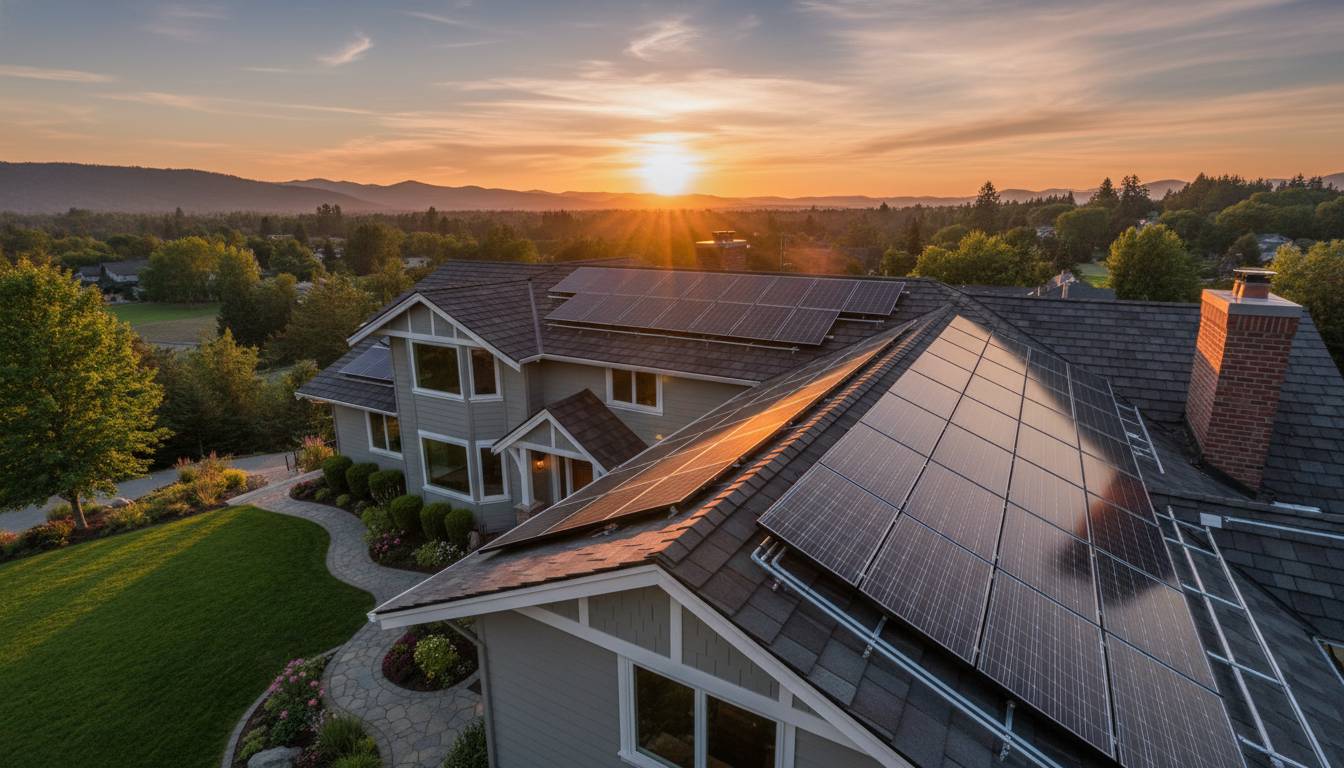
Solar energy has transformed from a niche environmental choice into a mainstream home investment. With electricity prices climbing and solar technology costs falling, homeowners increasingly ask whether installing panels makes financial sense. The answer depends on your location, energy usage, roof conditions, and available incentives—but the data reveals clear patterns that can guide your decision.
Understanding the True Cost of Solar Installation
The national average cost for residential solar panel systems ranges from $15,000 to $25,000 after the federal tax credit, depending on system size and location. This translates to approximately $2.50 to $3.50 per watt of installed capacity. A typical 6-kilowatt system, which adequately serves a 1,500-square-foot home, costs around $18,000 before incentives.
Key Cost Components:
- Solar panels (modules): 40-50% of total cost
- Inverter (string or microinverters): 10-15% of total cost
- Mounting equipment and racking: 8-12% of total cost
- Installation labor: 15-25% of total cost
- Permits and interconnection fees: 3-5% of total cost
The federal Solar Investment Tax Credit (ITC) provides a 30% deduction on installation costs through 2032, dropping to 26% in 2033 and 22% in 2034. This incentive significantly reduces upfront costs and accelerates payback timelines.
Several factors affect your specific costs. Roof accessibility, the need for electrical upgrades, local permitting requirements, and whether you choose premium monocrystalline panels versus standard polycrystalline all influence the final price. Southern states typically see lower installation costs due to higher contractor competition and more favorable permitting environments.
Calculating Your Potential Savings
The financial case for solar hinges on reducing or eliminating your monthly electricity bills. The average American household spends approximately $150-$200 monthly on electricity, totaling $1,800-$2,400 annually. Over a 25-year panel lifespan, this amounts to $45,000-$60,000 in utility costs without solar.
Annual Savings Estimates Based on Electricity Bills:
| Monthly Bill | Annual Savings (Year 1) | 25-Year Value (3% inflation) |
|---|---|---|
| $100 | $1,200 | $44,500 |
| $150 | $1,800 | $66,700 |
| $200 | $2,400 | $88,900 |
| $300 | $3,600 | $133,400 |
These projections assume consistent electricity rate increases averaging 3% annually, which aligns with historical trends. Some homeowners achieve complete energy independence, eliminating electric bills entirely through solar plus battery storage systems.
However, actual savings depend critically on net metering policies in your utility service area. Net metering credits excess solar production back to your account at retail electricity rates, effectively allowing you to “bank” power for nighttime or cloudy days. States including California, New Jersey, Massachusetts, and New York mandate favorable net metering terms. Other utilities offer less generous compensation, such as wholesale rates instead of retail, which reduces solar’s economic value.
The Payback Period: When Investment Turns to Profit
Solar panels typically reach their payback point—where accumulated savings exceed total costs—within 6 to 12 years, depending on your circumstances. This means 13 to 19 years of “free” electricity before system degradation reduces output significantly.
Factors That Shorten Payback Period:
- High local electricity rates ($0.15/kWh or higher)
- Strong net metering policies
- Optimal roof orientation (south-facing with minimal shading)
- Available state and local solar incentives
- High household energy consumption
Factors That Extend Payback Period:
- Poor roof conditions requiring replacement before installation
- Limited sun exposure or excessive shading
- Low electricity rates in your region
- Unfavorable net metering or no net metering
- Financing solar with high-interest loans
The typical solar panel degrades approximately 0.5% to 0.8% annually, meaning a 25-year system will produce about 80-88% of its original output. Most manufacturers warranty 80% production at 25 years, providing confidence in long-term performance.
Benefits Beyond Financial Savings
While monthly bill reduction drives most purchasing decisions, solar offers additional advantages worth considering.
Environmental Impact: A typical 6-kW residential solar system offsets approximately 7-10 tons of carbon dioxide emissions annually—the equivalent of planting 150-200 trees. For environmentally conscious homeowners, this represents meaningful climate action.
Energy Independence: Solar with battery storage protects against utility rate volatility and power outages. During grid failures, a properly configured solar-plus-battery system keeps your home powered regardless of external conditions.
Increased Property Value: Studies from the Lawrence Berkeley National Laboratory and Zillow consistently find that homes with solar panels sell for approximately 4.1% more than comparable non-solar homes. This premium often exceeds the net cost of installation, making solar a rare home improvement that pays for itself even if you move.
Fixed Energy Costs: Unlike utility rates that climb indefinitely, your solar costs are essentially fixed after installation. This predictability becomes increasingly valuable as electricity prices rise.
Key Considerations Before Going Solar
Despite strong financial fundamentals for many homeowners, solar isn’t ideal for everyone. Several factors warrant careful evaluation.
Roof Condition and Orientation: Solar panels last 25-30 years, but your roof must outlast them. If your roof needs replacement within 10 years, complete that project before installing solar. Ideal installations face south, southeast, or southwest with minimal obstructions from trees or buildings.
Homeownership Duration: Solar makes the most sense if you plan to stay in your home for at least 7-10 years. If you might move sooner, transaction costs and buyer uncertainty may erode potential savings.
Shading Analysis: Even partial roof shading from trees, chimneys, or neighboring buildings dramatically reduces system output. Professional solar designers use satellite imagery and shade analysis software to evaluate your site’s potential.
HOA Restrictions: Some homeowner associations impose aesthetic restrictions on solar panels. While many states have adopted solar rights laws limiting HOA interference, confirm your community’s rules before proceeding.
Credit and Financing: Solar loans and leases require credit approval. Poor credit may result in higher interest rates or lease terms that reduce financial benefits. Purchasing outright or with cash maximizes savings, though solar loans with reasonable rates ($5-8% APR) often remain financially sensible.
Solar Alternatives and Considerations
Traditional grid-tied solar without battery storage remains the most cost-effective option for most homeowners. However, several alternatives deserve consideration depending on your goals.
Community Solar: If your roof proves unsuitable for panels, community solar subscriptions let you purchase or lease a portion of a shared solar farm’s output. Credits on your utility bill offset your subscription cost, typically saving 5-15% compared to standard electricity rates.
Solar Leases: Leasing avoids upfront costs but sacrifices long-term savings. Monthly lease payments often equal or exceed previous electricity bills, offering minimal net benefit while capturing none of the tax credits or increased property value.
Grid-Timing Strategies: Time-of-use rate structures charge higher prices during peak afternoon hours when solar production peaks. Using major appliances and charging electric vehicles during midday maximizes the value of solar-generated electricity.
Making Your Decision: A Practical Framework
Evaluating solar worthiness requires honest assessment of your specific situation. Consider this decision framework:
Solar Likely Makes Sense If:
– Your electricity bills exceed $100 monthly
– You own your home and plan to stay 7+ years
– Your roof receives good sun exposure with minimal shading
– Your utility offers net metering or favorable buyback rates
– State or local incentives are available beyond federal credits
Solar May Not Be Worth It If:
– You rent your home
– Your roof is heavily shaded or needs replacement soon
– You plan to move within 5-7 years
– Your utility offers no net metering and low buyback rates
– Your electricity costs are already very low
The average homeowner who installs solar sees positive returns within a decade while securing lower, more predictable energy costs for 25+ years. With the 30% federal tax credit available through 2032, the financial window remains favorable.
Frequently Asked Questions
How long do solar panels last?
Residential solar panels typically last 25-30 years, with most manufacturers warrantying 80% power output at the 25-year mark. While efficiency gradually declines (about 0.5-0.8% annually), panels continue producing electricity well beyond their warranty period.
Will solar panels work during power outages?
Standard grid-tied solar systems shut down during outages for safety reasons—they cannot backfeed power to the grid while utility workers might be repairing lines. However, solar-plus-battery systems can provide backup power during outages when properly configured with battery storage.
Do solar panels require a lot of maintenance?
Solar panels require minimal maintenance. Annual cleaning removes dust, leaves, or debris that might reduce efficiency. Most systems need inverter replacement once after 10-15 years. Monitoring apps track production, making performance issues easy to detect.
What happens if I sell my home with solar panels?
Homes with solar panels typically sell for 4-10% more than comparable homes without solar, according to multiple studies. The transfer process depends on your financing method—owned systems transfer with the home, while leased systems may require buyer assumption or payoff.
Are there any hidden costs with solar installation?
Beyond the obvious equipment and installation costs, expect permitting fees ($500-$2,500 depending on jurisdiction), potential tree trimming costs, possible electrical panel upgrades ($1,000-$3,000 if your panel lacks sufficient capacity), and inspection fees. A comprehensive quote should itemize all these expenses.
Is the federal tax credit refundable if I owe no taxes?
The Solar Investment Tax Credit is non-refundable—you can only offset taxes owed up to the credit amount. However, you can carry forward unused credit to future tax years. Consult a tax professional to understand how the credit applies to your specific situation.