
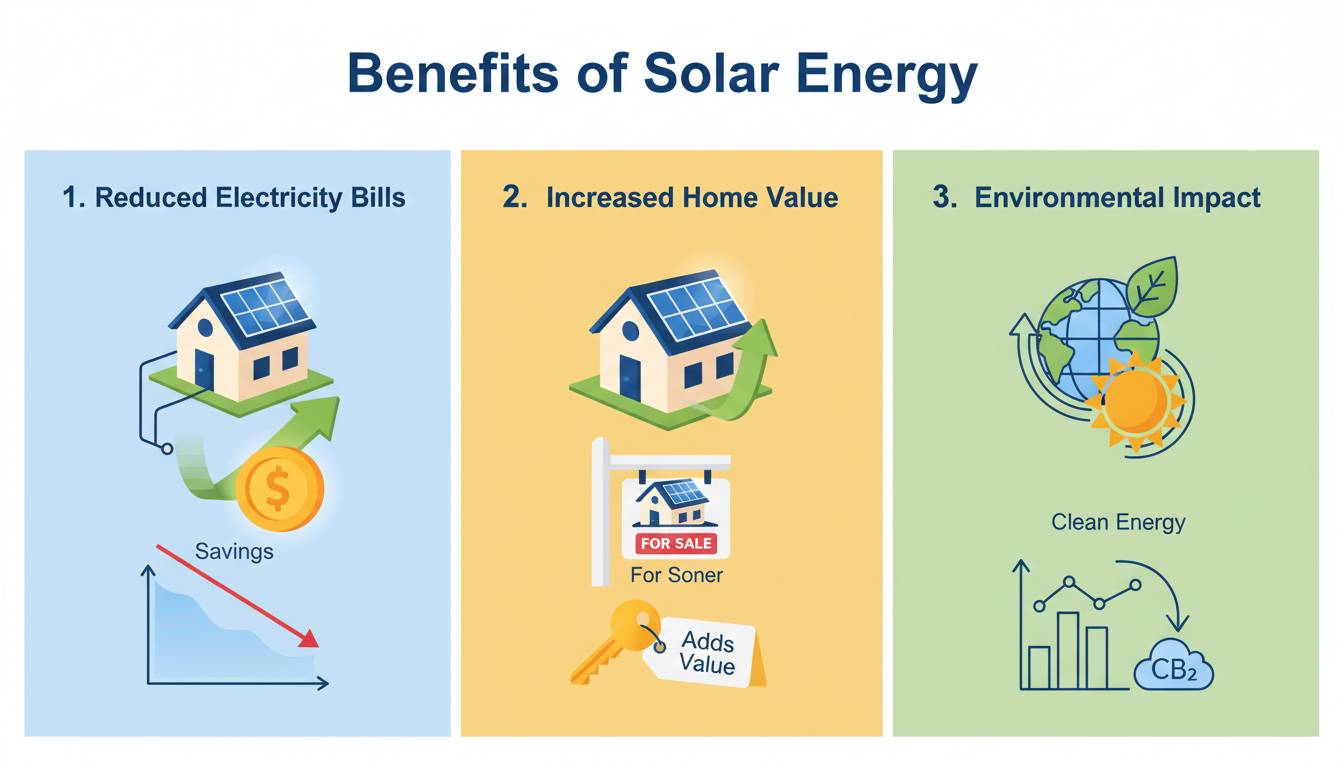
Solar energy has transformed from a futuristic concept into a mainstream home upgrade, with over 4 million residential solar installations across the United States as of 2024. Yet the question persists: is solar energy worth it for the average homeowner? The answer isn’t simple—it depends on your location, electricity costs, roof conditions, and financial situation. This comprehensive analysis breaks down every factor you need to consider before making this significant investment.
Key Insights
– Average residential solar system costs have dropped 70% over the past decade
– Most homeowners see ROI within 6-12 years, with 25-30 year system lifespans
– Your electricity rates and state incentives largely determine solar’s value
– Roof orientation, shading, and local climate significantly impact performance
Understanding Solar Investment Basics
Solar photovoltaic (PV) systems convert sunlight into electricity, reducing your dependence on grid power and potentially eliminating your monthly electric bill. A typical residential system ranges from 5 to 15 kilowatts (kW), with most homeowners opting for 6-8 kW systems.
The fundamental value proposition is straightforward: instead of paying your utility company for electricity for the next 25-30 years, you make an upfront investment (or finance it) to generate your own power. Over time, this shift from paying for electricity to owning your generation system can result in substantial savings.
According to the Solar Energy Industries Association (SEIA), the average residential solar installation cost in 2024 is approximately $2.80 per watt before incentives, meaning a typical 8 kW system costs around $22,400 before federal tax credits and rebates.
How Residential Solar Works
Your solar panels generate direct current (DC) electricity, which passes through an inverter to become alternating current (AC)—the electricity your home uses. When your panels produce more than you consume, excess power flows back to the grid, often earning you credits through net metering programs. When your panels don’t produce enough (at night or during cloudy days), you draw from the grid as usual.
This arrangement allows you to offset most or all of your electricity consumption while maintaining the reliability of grid connection without batteries.
The Real Costs of Going Solar
Understanding the complete cost picture requires looking beyond the sticker price. The true cost of a residential solar system includes several components:
| Cost Component | Average Cost (8 kW System) | Notes |
|---|---|---|
| Solar panels | $12,000 – $16,000 | Monocrystalline panels cost more but perform better |
| Inverter | $1,500 – $3,000 | String inverters vs. microinverters |
| Mounting equipment | $1,000 – $2,500 | Roof type affects mounting complexity |
| Labor | $3,000 – $5,000 | Varies significantly by region |
| Permits and inspections | $500 – $1,500 | Required by local jurisdictions |
| Total (Before Incentives) | $18,000 – $28,000 |
Available Incentives That Reduce Costs
The federal Investment Tax Credit (ITC) remains the most significant incentive. As of 2024, homeowners can deduct 30% of their solar system cost from their federal taxes. This credit applies to both purchased systems and financed installations, though leased systems have different tax implications.
Many states offer additional incentives:
- State tax credits (ranging from $1,000 to $5,000 or more)
- Property tax exemptions (solar additions don’t increase property taxes in most states)
- Utility rebates (some utilities offer $200-$500 per kW installed)
- Solar Renewable Energy Credits (SRECs), though these markets vary by state
After applying the 30% federal tax credit, an 8 kW system that costs $22,400 becomes approximately $15,680—still a significant investment, but considerably more manageable.
Financing Options
For homeowners who can’t pay cash, several financing paths exist:
- Solar loans: Secured or unsecured loans specifically for solar, with rates typically ranging from 4.99% to 8.99% APR
- Home equity loans or HELOCs: Often lower rates but use home as collateral
- Power Purchase Agreements (PPAs): No upfront cost, but you pay for electricity generated (not recommended if maximizing long-term savings is your goal)
- Leases: Similar to PPAs with fixed monthly payments
Financial Benefits and Savings
The financial case for solar rests on two pillars: reduced electricity bills and increased property value.
Electricity Bill Reduction
The average U.S. household spends approximately $175 per month on electricity, according to the U.S. Energy Information Administration. Over 25 years, that’s $52,500 in payments (assuming 3% annual utility rate increases—a conservative estimate given historical volatility).
A well-sized solar system can offset 80-100% of these costs. Using the $175 monthly average:
| Scenario | Monthly Savings | 25-Year Savings (with 3% rate increase) |
|---|---|---|
| 80% offset | $140 | $67,000 |
| 100% offset | $175 | $83,800 |
| 100% offset + battery | $175 + $0 backup | $83,800 + outage protection |
Property Value Increase
Research from the Lawrence Berkeley National Laboratory consistently shows that homes with solar sell for approximately 4.1% more than homes without solar. On a $400,000 home, that’s a $16,400 premium—potentially more than the net cost of the system after incentives.
Zillow’s analysis confirms this premium, noting that solar’s value proposition resonates strongly with environmentally conscious buyers and those seeking energy independence.
Hidden Factors That Affect ROI
Several lesser-known factors significantly impact whether solar delivers the expected returns:
1. Net Metering Compensation Varies Dramatically
Not all net metering programs are equal. Some states require utilities to credit solar-generated electricity at the full retail rate, while others have transitioned to “net billing” or “buy-all, sell-all” models that compensate at wholesale rates (often 30-50% lower than retail).
Before going solar, understand your state’s net metering rules and any recent changes or proposed changes to these programs.
2. System Degradation and Performance
Solar panels degrade over time, typically at a rate of 0.5% to 0.8% annually. A 25-year-old system will produce approximately 80-88% of its original output. However, premium panels from manufacturers like SunPower, Panasonic, and REC often come with 25-year warranties guaranteeing at least 85% rated output.
3. Roof Replacement Timing
If your roof needs replacement within the next 5-10 years, factor this into your decision. Removing and reinstalling solar panels costs $1,500-$3,000. In some cases, it makes sense to install a new roof first, then add solar.
4. Maintenance Costs
While solar systems require minimal maintenance, they’re not maintenance-free:
- Annual cleaning: $150-$300 if professionally done, or DIY with $50-100 in equipment
- Inverter replacement: $1,500-$3,000 around years 10-15
- Monitoring system: Often included, but some premium systems cost $100-$300 annually
Is Solar Worth It in Your State?
Solar economics vary dramatically by location. The combination of electricity rates, solar irradiance, and state incentives creates vastly different return profiles.
| Region | Average Electricity Rate | Annual Solar Production (8 kW) | State Incentives | Payback Period |
|---|---|---|---|---|
| California | $0.28/kWh | 12,000-14,000 kWh | Strong | 5-7 years |
| New York | $0.23/kWh | 10,000-11,500 kWh | Excellent | 6-8 years |
| Texas | $0.14/kWh | 12,500-14,000 kWh | Limited | 10-14 years |
| Florida | $0.14/kWh | 13,000-14,500 kWh | Good | 8-11 years |
| Northeast (generic) | $0.20/kWh | 9,500-11,000 kWh | Moderate | 7-9 years |
| Midwest | $0.13/kWh | 10,500-12,000 kWh | Limited | 11-15 years |
States Where Solar Makes Most Sense
California, New Jersey, Massachusetts, New York, and Connecticut offer the best combinations of high electricity rates, strong net metering policies, and state-specific incentives. In these states, payback periods commonly fall under 8 years, making solar an excellent investment.
States Where Solar Economics Are Weaker
States with very low electricity rates (below $0.12/kWh) and limited incentives—such as many in the Midwest and Southeast—offer longer payback periods of 12-20 years. Solar can still make sense here, but the financial case is less compelling.
When Solar Makes Sense (and When It Doesn’t)
Solar Likely Makes Sense If:
- Your electricity rates exceed $0.15/kWh
- Your roof receives minimal shading (south, east, or west-facing)
- You plan to stay in your home for at least 7-10 years
- Your roof is in good condition or needs replacement soon
- Your state has favorable net metering rules
- You can afford the upfront cost or secure favorable financing
Solar Probably Doesn’t Make Sense If:
- You rent your home
- Your roof has significant shading
- You plan to move within 5-7 years
- Your electricity rates are very low (under $0.10/kWh)
- Your roof requires immediate, costly replacement
- Your homeowners association prohibits solar (some states have solar rights laws that override this)
Making the Decision: Key Considerations
Before committing to solar, work through these decision factors:
1. Get Multiple Quotes
Prices vary significantly between installers. Obtain at least three quotes from companies with strong local reputations. Watch for quotes significantly lower than others—quality of equipment and installation matters enormously.
2. Understand the Equipment
Prioritize tier-1 solar panels from manufacturers with strong warranties and longevity track records. The difference between premium and budget panels becomes apparent over years of operation.
3. Calculate Your Specific ROI
Use a detailed solar calculator (available from the National Renewable Energy Laboratory) or work with your installer to model your specific savings based on:
- Your actual electricity consumption
- Your roof’s orientation and pitch
- Local solar irradiance data
- Your specific net metering arrangement
4. Read the Full Contract
Before signing, understand:
- Total system cost and all fees
- Warranty terms (panels, inverter, labor)
- Production guarantees
- Maintenance responsibilities
- What happens if the installer goes out of business
Frequently Asked Questions
How long does it take for solar panels to pay for themselves?
Most homeowners see payback periods between 6 and 12 years, depending on electricity rates, system cost, incentives, and sun exposure. With a 25-30 year system lifespan, this leaves 15-25 years of essentially free electricity.
Do solar panels work on cloudy days?
Yes, solar panels still generate electricity on cloudy days, though at reduced efficiency—typically 10-25% of their rated output. They also generate electricity during overcast conditions, just not as much as on sunny days.
What happens to my solar panels during a power outage?
Standard grid-tied solar systems automatically shut down during outages for safety reasons (to prevent sending electricity to lines being repaired). However, if you install a battery backup system (like Tesla Powerwall), you can maintain power during outages.
Is my roof suitable for solar?
South, east, or west-facing roofs with minimal shading work best. Flat roofs can accommodate solar with tilted racking systems. Roofs over 20-25 years old may need replacement before or shortly after solar installation.
Will solar eliminate my electric bill completely?
In most cases, solar offsets rather than eliminates your bill. You’ll still pay minimum connection fees (typically $10-$25 monthly) to remain grid-connected, which provides backup power and allows you to sell excess generation.
How much maintenance do solar panels require?
Solar panels require minimal maintenance—annual cleaning and occasional visual inspections. In most climates, rain naturally keeps panels clean. Budget $150-$300 annually if hiring professionals, or clean them yourself with basic equipment.
Conclusion
Solar energy can be a genuinely worthwhile investment for many U.S. homeowners—but it’s not universally right for everyone. The decision hinges on your specific circumstances: electricity rates, sun exposure, roof condition, financial situation, and how long you plan to stay in your home.
For homeowners in states with high electricity rates and strong incentives, solar frequently delivers returns exceeding $50,000 over the system’s lifetime—an compelling investment. For those in regions with cheap electricity and limited support, the economics are softer but may still make sense given increasing utility rates and environmental considerations.
The key is doing your homework before committing. Get multiple quotes, understand your state’s net metering policies, calculate your specific payback period, and honestly assess how long you’ll remain in your home. With that preparation, you can confidently determine whether joining the millions of American households generating their own power makes sense for you.