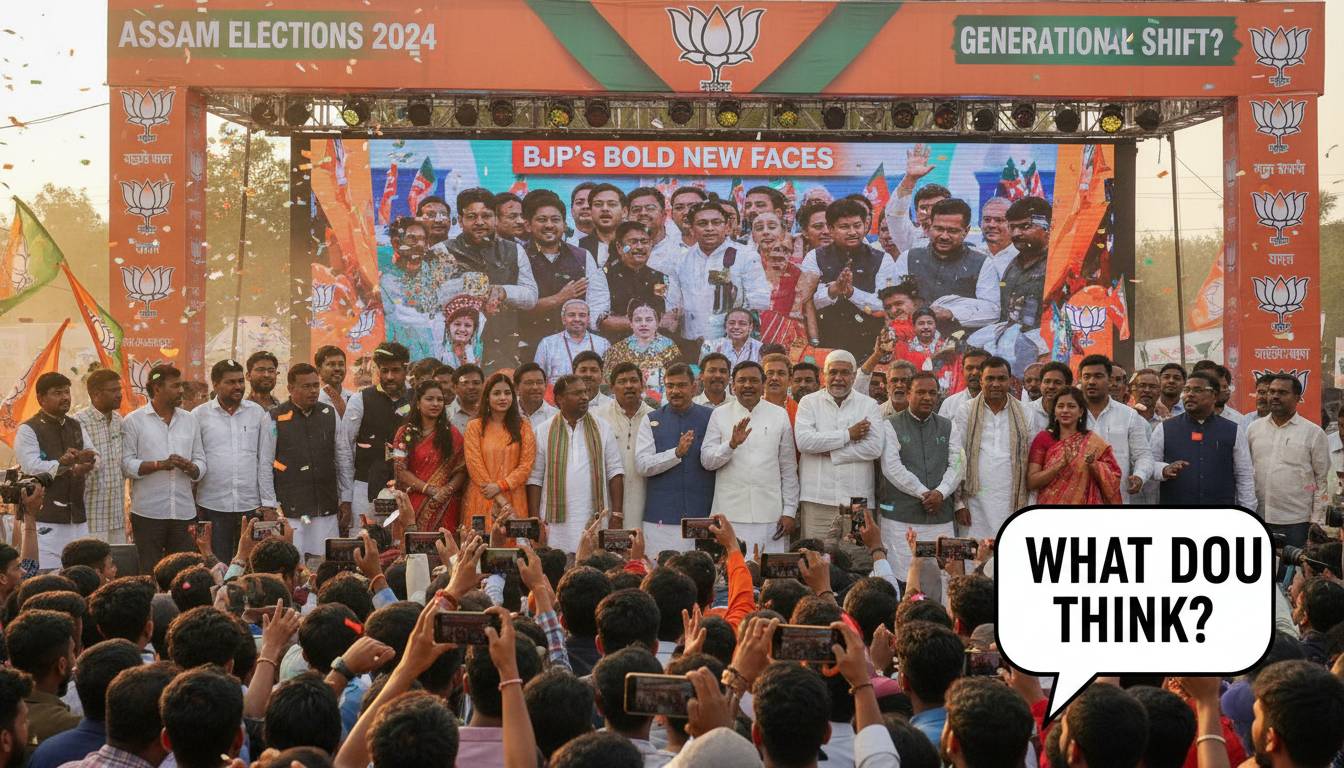
The Bharatiya Janata Party has moved another step in Assam’s 2026 Assembly election buildup by releasing a second list carrying two names, one each for Dalgaon and Sissiborgaon. The update follows the party’s phased rollout strategy flagged by Assam BJP president Dilip Saikia and Chief Minister Himanta Biswa Sarma in late February and early March 2026, as the ruling alliance sharpens seat-level messaging before the formal campaign peaks.
ℹ️
The immediate story is narrow but politically important.
The BJP’s second list contains only two constituencies, signaling a selective, phased nomination strategy rather than a full slate release, in line with public statements by party leaders reported on February 28 and March 9, 2026 by The Assam Tribune.
Assam’s election season has already seen parties use early candidate announcements to shape momentum. Congress released its first list of 42 candidates on March 3, 2026, according to The Times of India, putting pressure on the BJP-led alliance to show where it wants continuity and where it wants fresh faces. Against that backdrop, a second BJP list focused on Dalgaon and Sissiborgaon is less about volume and more about signaling.
What is verified so far
| Item | Verified detail | Source |
|---|---|---|
| Release pattern | BJP said candidate names would be announced in phases after Dol Utsav | The Assam Tribune, February 28, 2026 |
| Mid-March timing | CM Himanta Biswa Sarma said the candidate list would come by March 16–17 | The Assam Tribune, March 9, 2026 |
| Opposition benchmark | Congress released 42 candidates in its first list | The Times of India, March 3, 2026 |
| Constituency reference | Sissiborgaon appears in the updated Assam delimitation document | Election Commission of India delimitation file |
Source: The Assam Tribune, The Times of India, Election Commission of India | accessed March 21, 2026
March 2026 timing gives the two-seat list outsized weight
The timing matters because BJP leaders had already prepared voters for a staggered announcement. On February 28, 2026, Dilip Saikia said the Assam BJP would declare candidates in phases after Holi, or Dol Utsav, according to The Assam Tribune. On March 9, 2026, Sarma said the list would be released by March 16 or 17, again through The Assam Tribune. A second list with only two names fits that script and suggests the party is still calibrating seat-sharing, local equations, and winnability in the remaining constituencies.
That approach is not unusual in Assam politics. Candidate selection often reflects alliance arithmetic, caste and community balances, incumbent performance, and district-level faction management. A short list can also indicate that negotiations are still active in other seats, especially where allies expect accommodation or where the BJP wants to avoid early rebellion from ticket aspirants.
Candidate-list timeline in Assam’s 2026 contest
February 28, 2026: Assam BJP president Dilip Saikia says candidate names will be announced in phases after Dol Utsav, according to The Assam Tribune.
March 3, 2026: Congress releases its first list of 42 candidates, including Gaurav Gogoi from Jorhat, according to The Times of India.
March 9, 2026: Chief Minister Himanta Biswa Sarma says BJP’s candidate list will come by March 16–17, according to The Assam Tribune.
March 21, 2026: Attention centers on BJP’s second list naming candidates for Dalgaon and Sissiborgaon.
Why Dalgaon and Sissiborgaon drew attention first
Dalgaon and Sissiborgaon sit in very different political geographies, which is one reason the pair stands out. Dalgaon is in lower Assam’s politically sensitive belt, where minority voting patterns, opposition coordination, and turnout shifts can alter margins quickly. Sissiborgaon, by contrast, is part of Upper Assam’s electoral terrain, where the BJP has historically tried to consolidate organizational strength and regional identity politics.
The Election Commission of India’s updated delimitation document lists Sissiborgaon Development Block, confirming the constituency’s administrative relevance in the current map. That matters because delimitation and local administrative boundaries often shape booth strategy, campaign logistics, and candidate fit. In practical terms, a nomination in such a seat is not just a name announcement; it is a signal about how the party reads local demographics and organizational readiness.
Dalgaon also carries symbolic value because western and central Assam seats can become testing grounds for broader narratives around governance, welfare delivery, and communal polarization. If the BJP has chosen to spotlight Dalgaon in a short second list, it suggests the party sees the seat as strategically important enough to define early.
📊
Congress set an early benchmark with 42 names.
That larger first list, released on March 3, 2026, increased pressure on the BJP to show movement seat by seat, even if the ruling party prefers a phased approach, according to The Times of India.
42 Congress names vs 2 BJP names shows a different campaign method
The contrast with Congress is sharp. Congress opted for an early, broad first list of 42 candidates on March 3, 2026, according to The Times of India. BJP, by comparison, has telegraphed a more controlled release cycle. That difference does not automatically indicate delay or weakness. It can also reflect the BJP’s alliance management model, where finalizing one seat may depend on decisions in several others.
Still, the optics are important. A two-name second list invites scrutiny because it leaves room for speculation about unresolved contests, internal competition, or tactical withholding. In election coverage, small lists often generate more seat-specific buzz than large ones because each choice appears deliberate. That is especially true when the constituencies are politically distinct, as Dalgaon and Sissiborgaon are.
For voters and local party workers, the practical effect is immediate. Once a candidate is named, campaign committees can be formalized, booth-level mobilization can accelerate, and rival parties can sharpen their own messaging. In Assam’s constituency-driven politics, that organizational start can matter as much as headline momentum.
Why a phased list can matter on the ground
| Factor | Why it matters |
|---|---|
| Alliance talks | Helps avoid clashes with partners before all seats are finalized |
| Local factions | Gives party leadership time to manage ticket aspirants and dissent |
| Campaign rollout | Allows resources to be concentrated on early-declared constituencies |
| Message control | Keeps media focus on each seat rather than diluting attention across many names |
Source: Reported party statements and Assam election coverage | compiled March 21, 2026
What the next 7 to 10 days could reveal in Assam
The next phase of the story is larger than these two constituencies. The real test is whether the BJP follows this second list with a broader tranche that clarifies alliance distribution, incumbent retention, and the balance between experienced leaders and new entrants. Earlier reporting in The Times of India said the party wanted stronger representation for youth leaders and women, a theme that will be easier to assess once more names are public.
There is also a competitive calendar at work. Congress has already put several contests into motion. Opposition parties have discussed joint campaigning in parts of the state, according to The Times of India reporting from early March 2026. That means every delayed nomination carries both risk and flexibility: risk because rivals gain time, flexibility because the BJP can still tailor choices to evolving local equations.
For now, the second list’s importance lies in what it confirms. The BJP is sticking to a phased release strategy, it is willing to make highly selective announcements, and it sees Dalgaon and Sissiborgaon as seats worth defining at this stage of the campaign.
Frequently Asked Questions
What is the main development in this Assam election update?
The BJP has released a second candidate list for the 2026 Assam Assembly election, naming candidates for Dalgaon and Sissiborgaon. The move fits the party’s phased rollout plan described by Dilip Saikia on February 28, 2026 and by Himanta Biswa Sarma on March 9, 2026 in The Assam Tribune.
Why is a two-candidate list getting attention?
A short list suggests the party is making selective, high-priority announcements rather than unveiling a broad slate. That can reflect alliance calculations, local ticket disputes, or strategic sequencing. The contrast is notable because Congress had already released 42 candidates on March 3, 2026, according to The Times of India.
Why are Dalgaon and Sissiborgaon politically important?
The two seats sit in different electoral zones of Assam and can reflect different campaign priorities. Dalgaon is watched for its competitive lower Assam dynamics, while Sissiborgaon is tied to Upper Assam’s organizational and regional politics. Sissiborgaon also appears in the Election Commission of India’s updated Assam delimitation document.
Has the BJP explained why it is releasing names in phases?
Party leaders have publicly indicated that the candidate list would come in stages after Dol Utsav. That explanation was reported by The Assam Tribune on February 28, 2026, and reinforced by the chief minister’s March 9, 2026 timeline for a mid-March release window.
What should voters watch next?
The next major signal is the size and composition of the BJP’s following list or lists. Observers will look for whether the party retains incumbents, increases women and youth representation, and clarifies alliance seat-sharing. Those themes were highlighted in earlier Assam election reporting by The Times of India in February 2026.
Disclaimer: This article is for informational purposes only. Information may have changed since publication. Always verify information independently and consult qualified professionals for specific advice.