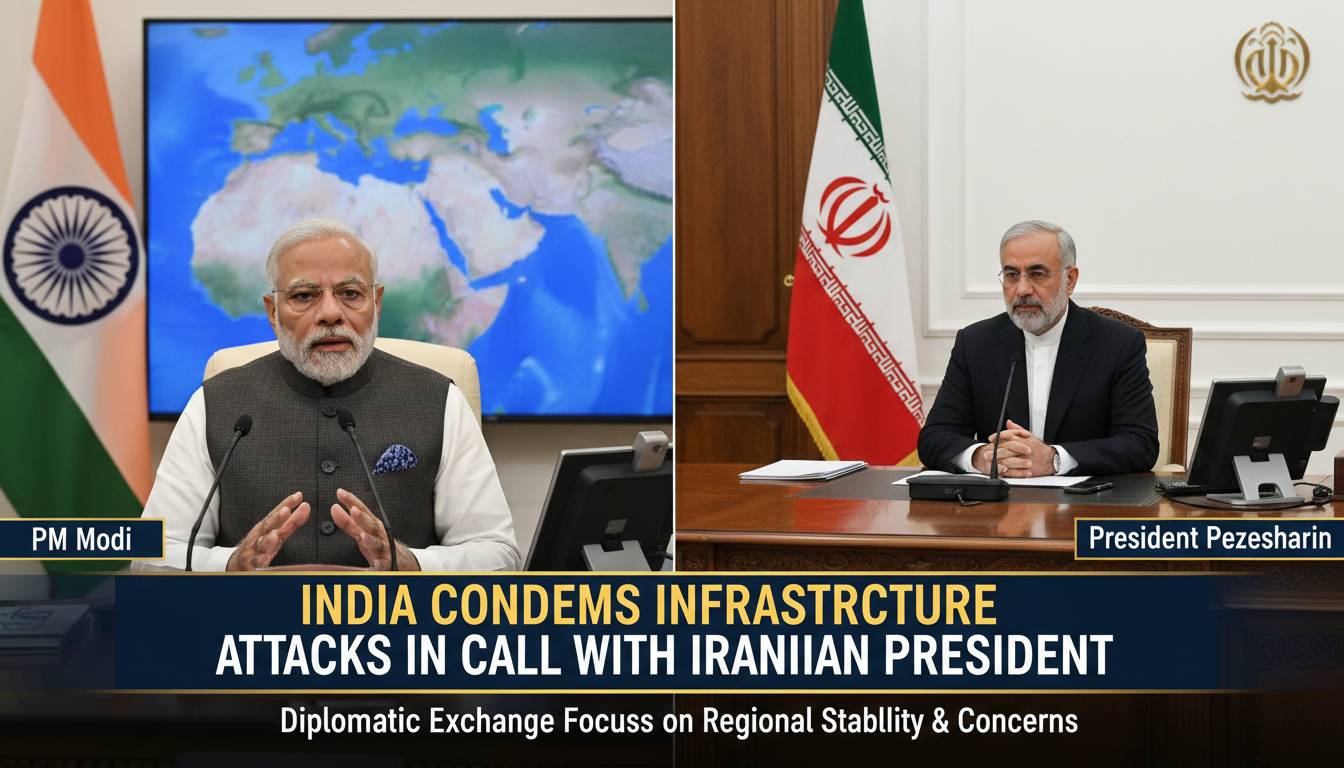
Indian Prime Minister Narendra Modi said on March 12, 2026, that he spoke with Iranian President Masoud Pezeshkian and conveyed Eid greetings while discussing the fast-moving conflict in West Asia. In his public readout, Modi said he expressed deep concern over escalating tensions, civilian casualties, and damage to civilian infrastructure, framing the call as part of India’s wider diplomatic outreach during the regional crisis, according to his statement on X and contemporaneous Indian media reports.
Modi’s call matters because it places India in direct contact with Tehran at a moment when the region is absorbing the effects of a broader military escalation that has drawn in multiple states and put energy, shipping, and civilian infrastructure under pressure. The conversation also signals continuity in New Delhi’s balancing act: maintaining ties with Iran while publicly stressing de-escalation, dialogue, and the protection of non-military targets. Indian media reports said the March 12 call was Modi’s first conversation with Pezeshkian since the outbreak of the latest war in West Asia 13 days earlier.
ℹ️
What Modi said publicly:
Modi stated that he discussed the “serious situation” in the region with President Pezeshkian and expressed “deep concern over the escalation of tensions and the loss of civilian lives as well as damage to civilian infrastructure,” according to reporting that cited his March 12, 2026 post on X.
Verified Details From the March 12 Call
| Item | Detail |
|---|---|
| Date | March 12, 2026 |
| Participants | Prime Minister Narendra Modi and President Masoud Pezeshkian |
| Main message | Eid greetings, concern over escalation, civilian deaths, and infrastructure damage |
| India’s stated position | Dialogue, diplomacy, peace, and regional stability |
| Context | Call took place about 13 days after the latest war in West Asia began |
Source: Indian Express reporting citing Modi’s public statement | Published last week
March 12 Call Came 13 Days Into a Wider Regional War
The timing is central to the story. Indian Express reported that the Modi-Pezeshkian conversation took place 13 days after the start of the war in West Asia, placing the beginning of the latest phase of conflict around late February 2026. That chronology aligns with broader reporting and secondary reference material indicating that a major regional escalation began on February 28, 2026.
By the time Modi spoke with Pezeshkian, India had already been in contact with several Gulf and regional leaders. Indian Express said Modi had spoken to eight leaders in the region, including the heads of the UAE, Qatar, Saudi Arabia, Kuwait, Bahrain, Oman, Jordan, and Israel. That outreach pattern shows New Delhi was not treating the Iran call as an isolated diplomatic gesture, but as one part of a broader crisis-management effort.
Diplomatic Timeline Around India’s Outreach
February 28, 2026: A major new phase of conflict in West Asia begins, according to secondary timeline references and India-related conflict summaries.
March 2, 2026: Modi speaks with UAE President Sheikh Mohamed bin Zayed Al Nahyan and condemns attacks amid rising regional tensions, according to Indian media reports.
March 12, 2026: Modi speaks with Iranian President Masoud Pezeshkian, conveys Eid greetings, and raises concern over civilian casualties and infrastructure damage.
Why Damage to Civilian Infrastructure Became the Core Message
Modi’s wording is notable because it focuses on civilian harm and infrastructure rather than endorsing any military position. In the public account cited by Indian Express, he referred specifically to “damage to civilian infrastructure.” That language fits India’s established preference for de-escalation and for avoiding rhetoric that would lock it into one side’s military narrative.
The infrastructure issue also has broader significance. During the 2026 conflict, reporting and secondary documentation have pointed to attacks affecting energy and other strategic facilities across the region. One secondary reference on the South Pars field attack described strikes on major Iranian gas and oil infrastructure on March 18, 2026, while other conflict summaries referenced attacks on Gulf-linked infrastructure and cyber disruption. Those developments help explain why infrastructure protection has become a diplomatic talking point for governments with major energy and trade exposure in the region, including India.
📊
Why infrastructure matters for India:
India’s diplomatic outreach has tracked attacks affecting Gulf states and regional facilities, with Modi also condemning attacks in calls with Gulf leaders earlier in March 2026, according to Hindustan Times and The Tribune.
India’s Balancing Act: Iran Ties vs Gulf Security Concerns
India’s position is shaped by competing interests. Iran remains important to India for regional connectivity, energy history, and strategic geography. At the same time, India has deep economic and diaspora ties with Gulf states that have faced direct security threats during the current crisis. The result is a calibrated line: condemn attacks on infrastructure and civilian targets, maintain communication with all sides, and call for diplomacy rather than public alignment with military escalation.
This balancing act is visible when the March 12 call is compared with Modi’s earlier Iran-related messaging. In June 2025, after US strikes on Iranian nuclear sites, Indian media reports described Modi as expressing “deep concern” and calling for de-escalation rather than issuing a direct condemnation of the United States. That contrast suggests India’s language is carefully calibrated to the immediate event and audience, with civilian safety and infrastructure protection emerging as the most consistent public themes.
India’s Public Messaging Across Two Iran-Linked Episodes
| Episode | Date | Public emphasis |
|---|---|---|
| US strikes on Iranian nuclear sites | June 22, 2025 | Deep concern, de-escalation, diplomacy |
| Call with President Pezeshkian | March 12, 2026 | Eid greetings, concern over escalation, civilian lives, infrastructure damage |
Source: India Today, Free Press Journal, The Wire, Indian Express | Published 2025-2026
What the March 2026 Conversation Signals for the Next Phase
The immediate significance of the call is diplomatic, not transactional. No official public readout in the sourced material points to a new bilateral agreement, sanctions shift, or security pact. Instead, the value lies in signaling that India wants open channels with Tehran while the conflict remains active and while attacks on infrastructure threaten wider regional spillovers.
For US readers, the broader takeaway is that India is positioning itself as a stabilizing interlocutor rather than a partisan actor in this episode. That matters because India has relationships across the Gulf, with Israel, and with Iran, and because regional instability can affect shipping lanes, energy markets, and expatriate communities. The March 12 call therefore fits a larger pattern of crisis diplomacy rather than a one-off ceremonial exchange tied only to Eid greetings.
Frequently Asked Questions
When did PM Modi speak with Iranian President Masoud Pezeshkian?
Modi said he spoke with Pezeshkian on March 12, 2026. Indian Express reported the date while citing Modi’s public statement on X about the conversation and the regional situation.
What did Modi say during the call?
According to the public readout cited by Indian Express, Modi conveyed Eid greetings and expressed deep concern over escalating tensions, civilian casualties, and damage to civilian infrastructure in the region.
Did India condemn a specific country in the March 12 statement?
In the sourced public reporting, Modi’s statement emphasized escalation, civilian harm, and infrastructure damage, but it did not name a country in the quoted language carried by Indian Express.
Why is the infrastructure issue important in this story?
Infrastructure has become a central concern because the regional conflict has involved attacks and threats affecting civilian and strategic facilities, including energy-linked assets, raising wider risks for trade, energy security, and regional stability.
Was this Modi’s only outreach in the region?
No. Indian Express reported that Modi had spoken to eight other regional leaders during the crisis, while separate Indian media reports documented his March 2, 2026 call with the UAE president condemning attacks.
Disclaimer: This article is for informational purposes only. Information may have changed since publication. Always verify information independently and consult qualified professionals for specific advice.