
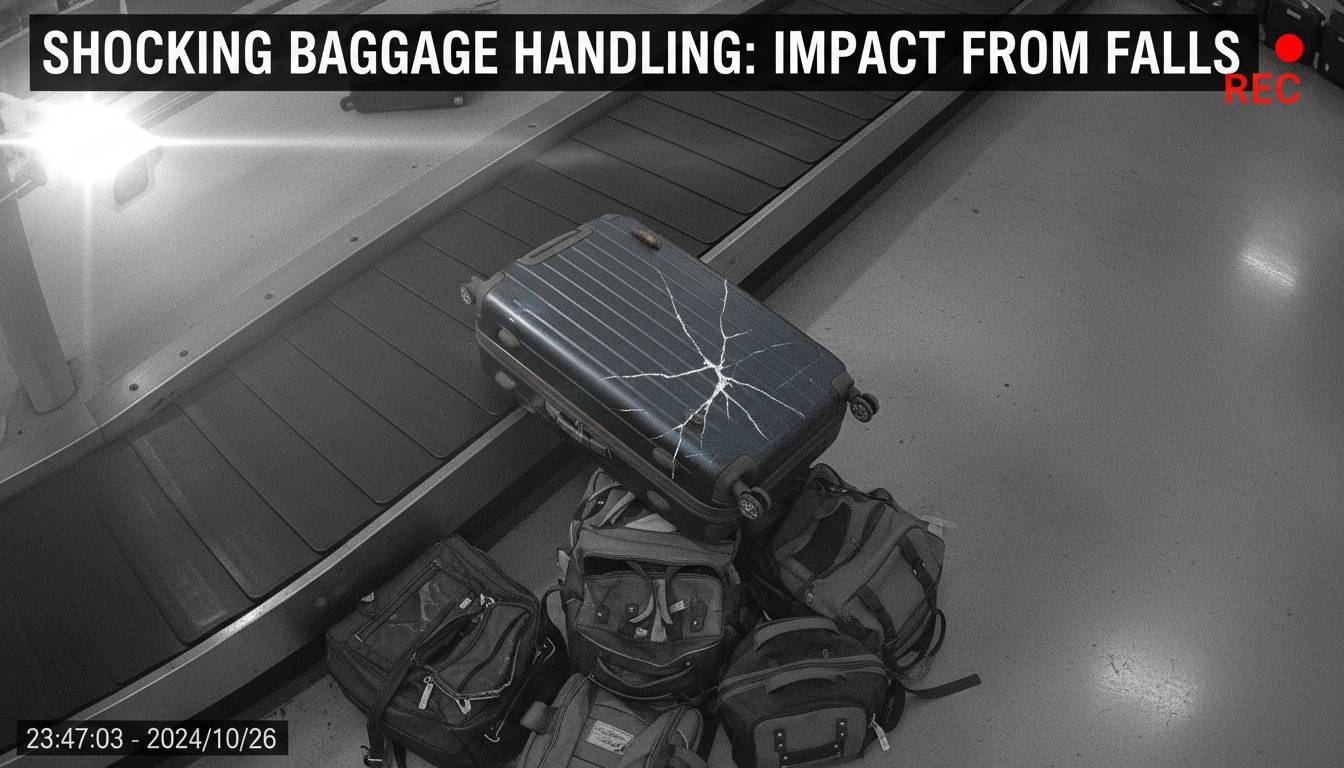
A viral video described online as showing baggage handling at Chicago O’Hare has reignited a familiar traveler concern: what really happens to checked luggage after it disappears at the counter. While the clip itself has circulated mainly through social platforms and reposts rather than a fully verified official source, the broader issue is well documented. U.S. Department of Transportation guidance states airlines are responsible for repairing or reimbursing passengers for baggage damage that occurs while a bag is under the airline’s control, and the agency specifically says carriers cannot exclude liability for damage to wheels, handles, straps, and other checked-bag components.
⚠️
Rough handling is not just a social-media talking point.
DOT says airlines are liable for damage caused while checked baggage is in their custody, subject to liability limits, and cannot automatically deny claims for broken wheels, handles, straps, or similar external components. Source: U.S. Department of Transportation pages on damaged baggage, accessed March 21, 2026.
How Viral O’Hare Footage Turned a Common Travel Frustration Into a Bigger Question
The appeal of this kind of video is obvious. Travelers rarely see the baggage system from the ramp, loading belt, or cargo hold. When footage appears to show bags being tossed, dropped, or slammed onto conveyors, it gives visual form to what many passengers already suspect after finding cracked shells, bent handles, or missing wheels at baggage claim.
What can be verified is more important than what can be inferred from one clip. Publicly available reporting shows that videos of rough baggage handling have gone viral before, including a widely shared 2024 report about luggage being tossed by an airport worker and another social-media discussion in early 2026 centered on suitcases being forcefully slammed onto conveyor belts. Those posts demonstrate recurring public concern, but they do not by themselves establish a complete chain of custody, airport identity, or whether a specific bag was damaged in that moment.
What Is Verified About Damaged Checked Bags
| Issue | Verified information | Source |
|---|---|---|
| Airline responsibility | Airlines must repair or reimburse for damage caused while baggage is under airline control, subject to liability limits | U.S. DOT |
| Excluded excuse | Carriers cannot exclude liability for wheels, handles, straps, and other checked-bag components | U.S. DOT |
| Wear and tear | Airlines are generally not required to cover ordinary wear and tear | U.S. DOT |
| TSA-related damage | If damage appears linked to a TSA inspection, passengers may need to contact TSA directly | American Airlines / TSA referral guidance |
Source: U.S. Department of Transportation and American Airlines baggage guidance | Accessed March 21, 2026
Why Repeated Drops and Conveyor Impacts Can Damage a Suitcase
Suitcases usually fail at their weakest points, not at the center of the shell. Wheels, telescoping handles, zipper tracks, corner seams, and molded attachment points absorb concentrated force. A hard-sided case may survive one drop but crack after repeated impacts at the corners. A soft-sided bag may keep its shape while the frame, wheel housing, or handle assembly loosens underneath.
The viral reaction matters because baggage systems combine several stress points in quick succession: check-in transfer, conveyor sorting, cart loading, unloading, belt transfer, and cargo compartment stacking. Even without malicious handling, each stage adds impact, compression, and twisting force. If a worker throws or drops a bag to keep pace with turnaround times, the risk rises further. That mechanism is consistent with why passengers often report damage to protruding parts first rather than to the entire suitcase body.
Baggage Damage Context Timeline
November 2025: DOT consumer guidance reiterates that airlines are responsible for damaged baggage under their control and cannot exclude liability for wheels, handles, straps, and similar components.
2024: A widely read report on a viral airport baggage-handling clip renews attention on rough treatment of checked bags.
January 2026: Social posts again circulate video of suitcases being slammed onto conveyor systems, showing the issue remains a live consumer concern.
What DOT Rules Say About Broken Wheels, Handles, and Straps
This is the most practical takeaway for U.S. travelers. The Department of Transportation says airlines cannot write blanket exclusions that deny responsibility for damage to common external baggage parts such as wheels, handles, and straps. That matters because those are exactly the components most likely to fail in rough handling scenarios.
There is still an important limit. DOT also says airlines are not required to cover normal wear and tear. In practice, that means the dispute often turns on whether the damage looks like ordinary aging or a specific break caused during transport. A snapped wheel assembly, crushed corner, or jammed telescoping handle reported immediately at arrival is easier to frame as transport damage than cosmetic scuffing discovered days later.
ℹ️
Timing matters for claims.
If you discover damage, report it before leaving the airport when possible. Airline guidance and consumer practice both favor immediate documentation, and some carriers set short reporting windows. American Airlines, for example, says damaged baggage can be reported through its baggage service process, while TSA-related inspection damage may need a separate TSA contact.
Airline Custody vs. TSA Inspection: Who May Be Responsible?
Not every broken suitcase leads to the same claims path. If the damage happened while the bag was being transported, loaded, unloaded, or transferred under airline control, the airline is the primary point of responsibility under DOT rules. If the damage appears tied to a security inspection, airline pages commonly direct passengers to contact the Transportation Security Administration instead. American Airlines explicitly notes that damage from TSA inspections should be taken up with TSA.
That distinction explains why some travelers feel bounced between agencies. The bag may pass through multiple hands and systems before reaching the carousel. Without photos, timestamps, baggage tags, and immediate reporting, proving the exact moment of damage can be difficult.
What Travelers Should Document After Finding a Broken Suitcase
| Step | Why it matters |
|---|---|
| Photograph the damage at baggage claim | Creates a time-stamped record before leaving the airport |
| Keep baggage tag and boarding pass | Links the bag to the specific itinerary and carrier |
| Report immediately to the airline | Supports that damage occurred during transport, not afterward |
| Check for TSA inspection notice | May indicate a separate TSA-related claim path |
Source: U.S. DOT damaged baggage guidance and airline baggage service instructions | Accessed March 21, 2026
Why the O’Hare Video Resonates With Frequent Fliers
The footage resonates because it compresses a hidden industrial process into a few seconds of visible impact. Airports are built for throughput. Bags move through conveyors, carts, belt loaders, and cargo bins under time pressure, especially during tight turnarounds. That does not prove every bag is mishandled, but it does explain why durable packing and prompt claims reporting remain essential.
For travelers, the lesson is less about one airport than about the system itself. If a suitcase has exposed wheels, extended handles, fragile shells, or loosely packed contents, it is more vulnerable. The viral clip may be shocking, but the official rules show the underlying problem is established enough that federal consumer guidance addresses it directly.
Frequently Asked Questions
Can an airline deny a claim for a broken wheel or handle?
Not automatically. The U.S. Department of Transportation says airlines cannot exclude liability for damage to wheels, handles, straps, and other checked-bag components if the damage occurred while the bag was under the airline’s control. That guidance was available on DOT consumer pages accessed March 21, 2026.
What should I do if my suitcase is damaged after landing?
Document the damage immediately, keep your baggage tag and boarding pass, and report the issue to the airline before leaving the airport if possible. Immediate reporting helps distinguish transport damage from later wear. Airline baggage service pages and DOT guidance both support prompt action.
Does rough baggage handling always mean the airline is responsible?
No. If the damage occurred during airline transport, the airline is generally responsible within liability limits. If the damage appears tied to a TSA inspection, the claim path may differ. American Airlines’ baggage page specifically directs passengers to TSA for inspection-related damage.
Are airlines required to pay for normal wear and tear?
Generally no. DOT says airlines are not required to cover fair wear and tear. The key distinction is whether the damage reflects ordinary use or a specific break caused while the bag was in transport, such as a snapped wheel assembly or crushed shell.
Is the viral O’Hare baggage video fully verified by official airport sources?
Based on the publicly available material reviewed here, the broader issue of rough baggage handling is well documented, but the specific viral clip’s full provenance and official airport confirmation are not clearly established in authoritative public records cited in this article. That is why this report focuses on verified baggage-damage rules and documented consumer rights.
Disclaimer: This article is for informational purposes only. Information may have changed since publication. Always verify information independently and consult qualified professionals for specific advice.