The short answer: Yes, renewable energy is worth it for most homeowners—but the degree of value depends entirely on your location, energy usage, roof conditions, and financial situation. Solar panels, wind turbines, and other renewable systems can reduce or eliminate your electricity bills while increasing property value, but they require upfront investment and careful evaluation of your specific circumstances.
This guide breaks down everything you need to make an informed decision about whether renewable energy makes sense for your home.
Key Insights
- Average solar payback period: 6-12 years depending on location and system size
- Federal tax credit: 30% through 2032 (stepping down afterward)
- Electricity cost savings: Typical homeowners save $10,000-$30,000 over 20 years
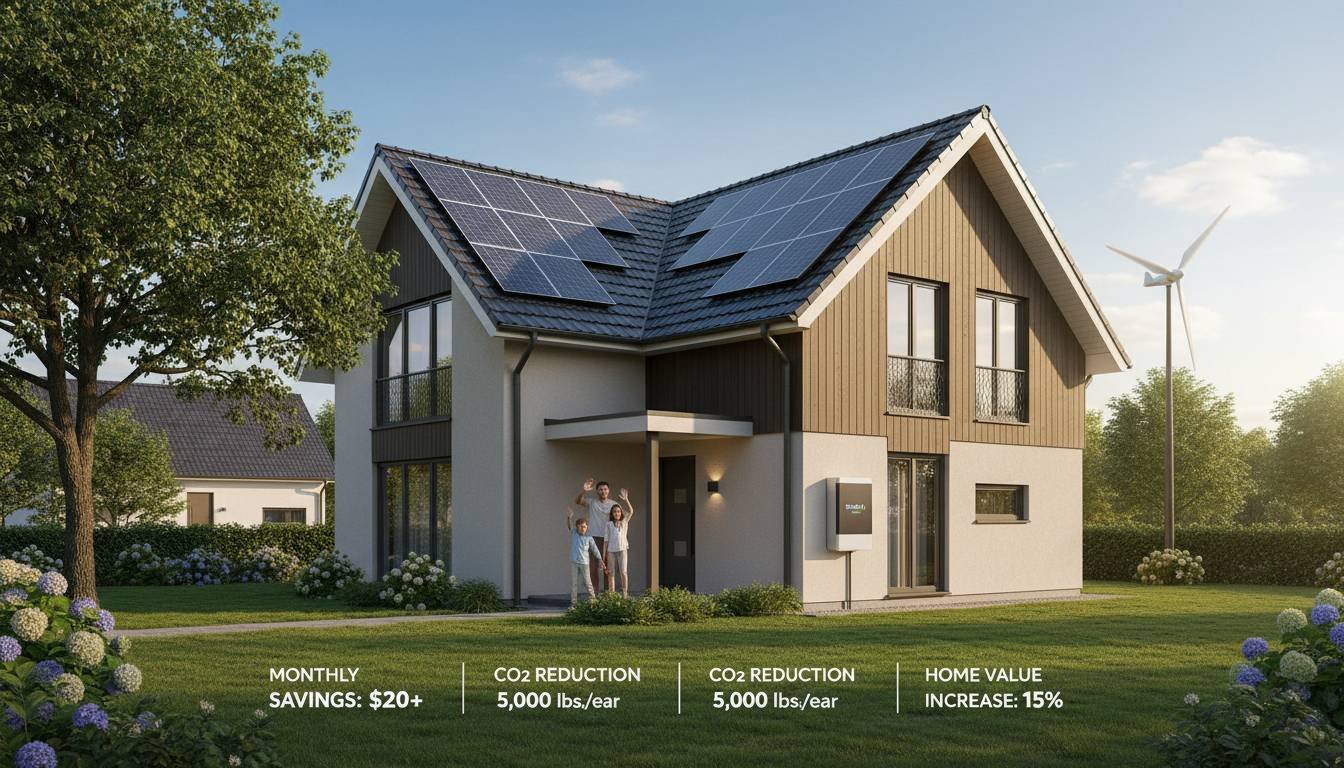
- Property value increase: Solar panels can add 4.1% to your home’s value
- Installation growth: Residential solar installations increased 40% in 2023 compared to 2022 (SEIA)
Understanding Your Renewable Energy Options
Before diving into costs and savings, you need to understand what renewable options are actually available to residential homeowners. The landscape has expanded significantly beyond just rooftop solar.
Primary Residential Renewable Energy Sources
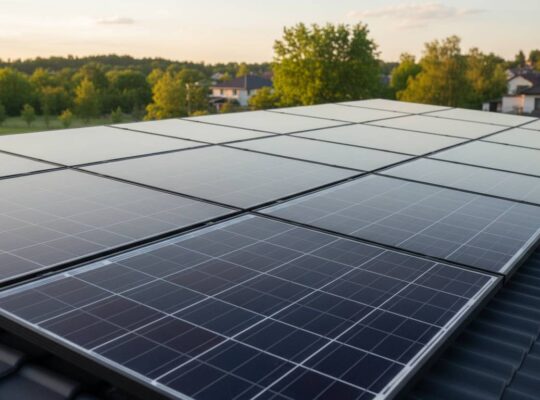
Solar Photovoltaic (PV) Systems represent the most common choice for homeowners. These systems convert sunlight directly into electricity using panels installed on your roof or ground-mounted on your property. Modern panels typically carry 25-year warranties and have become considerably more efficient over the past decade. The average residential system produces between 7-15 kWh per day, depending on your geographic location and roof orientation.
Solar Water Heating takes a different approach, using the sun to heat water directly rather than generating electricity. These systems can handle 50-80% of a household’s hot water needs and typically cost less than full PV systems while offering faster payback periods.
Wind Energy works well for rural properties with consistent wind patterns. Small residential wind turbines can generate substantial power, but they require sufficient land, proper zoning, and wind speeds averaging at least 12 mph. These systems face more regulatory hurdles than solar in many residential areas.
Geothermal Heat Pumps utilize stable underground temperatures for heating and cooling. While not technically “renewable” in the same way solar or wind, these systems dramatically reduce energy consumption and qualify for many renewable energy incentives.
Hybrid Systems combine multiple technologies—for example, solar panels paired with battery storage, or solar combined with geothermal heating. These configurations offer greater energy independence but require larger upfront investments.
The Financial Case: Costs, Savings, and ROI
Understanding the financial mathematics behind residential renewable energy is essential for making a sound decision. The numbers tell a compelling story for most homeowners, but the details matter significantly.
Average Costs for Residential Systems
| System Type | Average Cost (Before Incentives) | Cost After 30% Tax Credit | Payback Period |
|---|---|---|---|
| Solar PV (6 kW) | $17,000 | $11,900 | 7-10 years |
| Solar PV (10 kW) | $26,000 | $18,200 | 6-9 years |
| Solar Water Heating | $5,000-$9,000 | $3,500-$6,300 | 4-7 years |
| Small Wind (10 kW) | $15,000-$50,000 | $10,500-$35,000 | 8-15 years |
| Geothermal Heat Pump | $20,000-$30,000 | $14,000-$21,000 | 5-10 years |
Source: EnergySage, 2024; NREL Annual Technology Baseline, 2023
These figures represent national averages. Your actual costs will vary substantially based on your location, roof characteristics, local labor costs, and system specifications. States with robust solar markets, like California, Texas, and Florida, often see lower installation costs due to competitive installer markets.
Long-Term Savings Projections
The true value of renewable energy emerges over time. Consider a typical homeowner in a state with high electricity costs—California, New York, or Massachusetts, where residential rates exceed 20 cents per kWh.
A 6 kW solar system generating 9,000 kWh annually at $0.22 per kWh would save approximately $1,980 per year in electricity costs. Over 25 years, that’s roughly $49,500 in savings, minus any maintenance costs and occasional system repairs. Factoring in the gradual increase of utility rates (historically 2-3% annually), the actual lifetime savings often exceed $60,000.
In states with lower electricity rates, the savings are proportionally smaller but still meaningful. A homeowner in Texas or Florida might save $15,000-$25,000 over 20 years, while someone in Hawaii—where electricity costs over 40 cents per kWh—could save $80,000 or more.
Non-Financial Benefits Worth Considering
While the financial returns drive most decisions, the additional benefits of residential renewable energy extend well beyond monthly bill reductions.
Energy Independence: Installing solar panels with battery backup creates resilience against grid failures and extreme weather events. The 2021 Texas winter storm and increasing hurricane activity along the coast have made this benefit more tangible for many homeowners.
Environmental Impact: The average residential solar system offsets approximately 100,000 pounds of carbon dioxide over 25 years—the equivalent of planting 1,500 trees. For environmentally conscious homeowners, this qualitative benefit carries significant weight regardless of financial calculations.
Maintenance Advantages: Solar systems require minimal ongoing attention. Most manufacturers recommend basic panel cleaning once or twice yearly and occasional inverter replacement around year 10-15. Unlike HVAC systems or water heaters, there’s no annual servicing requirement or fuel delivery to manage.
Grid Reliability Contribution: Distributed renewable energy generation reduces strain on the electrical grid during peak demand periods. Some utilities now offer additional payments or rate reductions for homeowners who generate power during high-demand hours.
Common Mistakes Homeowners Make
Understanding what typically goes wrong helps you avoid costly errors when evaluating renewable energy investments.
Mistake #1: Focusing Only on Upfront Cost
Many homeowners shop exclusively on price, choosing the lowest bid without evaluating system quality, installer reputation, and warranty terms. The cheapest system often uses lower-quality panels and inverters, resulting in faster degradation rates and shorter lifespans. Better to compare total lifetime value rather than initial cost alone.
Mistake #2: Overestimating Production in Low-Sun Areas
Not all locations receive equal solar resources. A system in cloudy Seattle will produce roughly 60% of what an identical system produces in sunny Phoenix. Some homeowners install systems sized for their theoretical needs but discover actual production falls significantly short of projections.
Mistake #3: Ignoring Future Electricity Rate Increases
Utility companies consistently increase rates over time. A system that doesn’t seem financially compelling at today’s rates often becomes highly valuable as electricity costs rise. Many homeowners regret not installing systems when they were considering the decision just a few years earlier.
Mistake #4: Failing to Account for All Costs
Beyond the equipment and installation, consider permit fees, potential roof repairs if your roof needs work before installation, tree trimming for unshaded exposure, and interconnection fees charged by your utility company. These additional costs can add 10-15% to the total project price.
Mistake #5: Not Checking Homeowner Association Restrictions
Some HOAs have restrictions on solar panel appearance or placement. Before committing, verify that your community allows residential renewable energy systems and understand any aesthetic guidelines you must follow.
How to Determine If Renewable Energy Is Right for You
Evaluating whether renewable energy makes sense for your specific situation requires assessing several key factors. Answer these questions honestly to gauge your fit for residential renewable energy.
Factor #1: Roof Condition and Orientation
Solar panels last 25-30 years, so your roof should be in good condition before installation. If your roof needs replacement within the next 5-7 years, complete that project first to avoid the complication and expense of removing and reinstalling solar panels later.
South-facing roofs in the Northern Hemisphere receive maximum sun exposure, while east and west-facing installations still perform well—typically producing 70-80% of south-facing output. North-facing roofs generally don’t make sense for solar in most US locations.
Factor #2: Your Electricity Usage Pattern
Higher electricity consumers benefit more from solar installations. If your monthly bill exceeds $150, solar likely makes strong financial sense. If you’re already a low-energy user—perhaps you work from home but have a small residence—evaluate whether the investment aligns with your consumption reality.
Net metering policies in your state significantly impact value. Some states credit you at full retail rates for excess power sent to the grid, while others offer considerably less. Check your state’s net metering rules before proceeding.
Factor #3: How Long You Plan to Stay
Solar makes less sense if you’re moving in 3-5 years. While panels increase home value, you need sufficient time to recoup your investment through electricity savings. If you’re planning to sell soon, calculate whether the property value increase will exceed your installation costs.
Factor #4: Available Incentives
Beyond the federal 30% tax credit, many states and utilities offer additional incentives. Some states provide rebates, feed-in tariffs, or property tax exemptions for renewable energy installations. The Database of State Incentives for Renewables and Efficiency (DSIRE) maintains comprehensive lists of available programs.
Making the Decision: A Practical Framework
When evaluating whether renewable energy is worth the investment, consider this decision framework:
Strong Yes: You own your home, plan to stay 7+ years, have suitable roof conditions, receive good sun exposure, have high electricity bills, and live in a state with net metering.
Probably Yes: You have moderate electricity costs, decent but not ideal roof conditions, and plan to remain in your home for 5-7 years, especially if incentives are available.
Probably Not: You rent, plan to move soon, have a problematic roof, live in a low-sun area with very cheap electricity, or face significant HOA restrictions.
Frequently Asked Questions
How long does it take for solar panels to pay for themselves?
Most homeowners see payback periods between 6 and 12 years, depending on your electricity rates, system size, available sunlight, and incentive participation. After the payback period, your electricity is essentially free for the remaining 15-20 years of the system’s lifespan.
Will solar panels work during power outages?
Standard grid-tied solar systems shut off during outages for safety reasons—they can’t feed power into the grid while line workers might be repairing lines. However, adding a battery storage system allows you to maintain power during outages. Tesla Powerwall, LG Chem, and other battery options integrate with solar to provide backup power.
Do solar panels require a lot of maintenance?
Solar panels require minimal maintenance. Annual cleaning helps maintain efficiency, especially in dusty or snowy climates. Most systems come with 25-year warranties covering equipment failure. The primary maintenance cost is occasional inverter replacement, typically needed once during the system’s lifetime at a cost of $1,000-$2,000.
Will installing solar panels damage my roof?
When installed properly by certified professionals, solar panels don’t damage your roof. Installers use mounting hardware that seals to prevent leaks. However, if your roof is near the end of its lifespan, complete necessary repairs before installation to avoid complications.
How do I know if my home gets enough sun for solar?
Most of the continental United States receives sufficient sunlight for solar to make sense. The National Renewable Energy Laboratory provides solar resource maps showing expected production by location. Even cloudier regions like the Pacific Northwest see meaningful solar generation—typically 70-80% of what sunny states produce.
What happens if I install solar and then sell my home?
Homes with solar panels typically sell for 4.1% more than homes without them, according to Zillow research. Buyers can assume the remaining balance on solar loans or purchase the system outright. Solar leases transfer to new owners in most cases, though some buyers prefer assuming ownership rather than lease obligations.
Final Thoughts
Renewable energy represents a sound financial decision for the majority of US homeowners, but the decision isn’t universal. The technology has matured significantly, costs have dropped dramatically, and incentives remain attractive through the early 2030s.
If your circumstances align with the favorable factors—home ownership, suitable property, adequate sunlight, and plans to stay—you’ll likely find renewable energy delivers meaningful value. The key is approaching the decision systematically: evaluate your specific situation, obtain multiple competitive quotes from reputable installers, understand the full cost picture including incentives, and confirm you’re comfortable with the timeline to recoup your investment.
The renewable energy transition is no longer an experimental proposition. Millions of American homeowners have already made the switch, and the technology continues improving. Whether that decision makes sense for you depends on your numbers—but for most people reading this, the math likely works in renewable energy’s favor.
Ready to explore your options? Start by requesting quotes from multiple certified installers in your area. Most provide free assessments comparing system costs, projected savings, and available incentives tailored to your specific property.