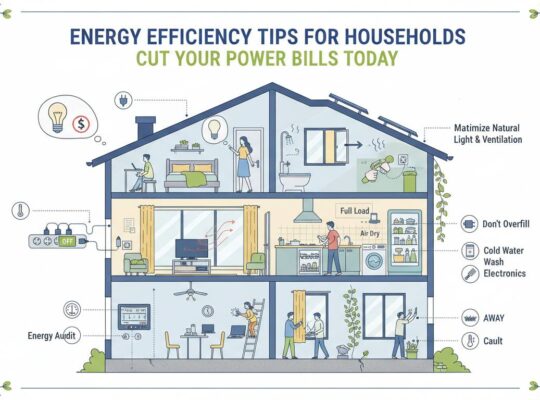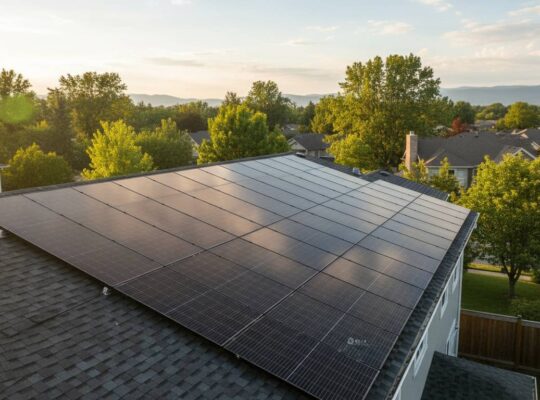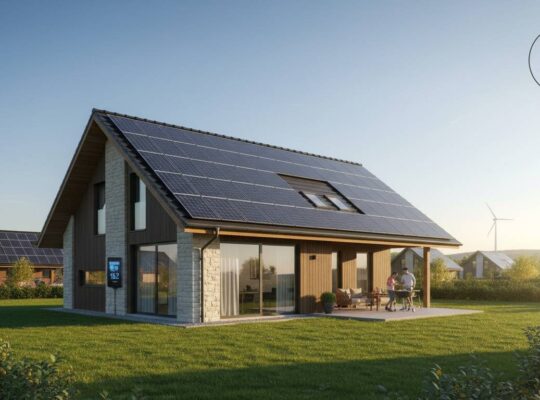
Residential electricity prices have climbed 28% over the past decade, leaving millions of American homeowners searching for ways to gain control over their energy costs. Home energy storage systems—specifically residential battery backups—have emerged as one of the most effective solutions, allowing households to store electricity when rates are low, use it during peak pricing periods, and even go off-grid during outages. With federal tax credits now covering 30% of installation costs through 2032, the financial case for home battery systems has never been stronger.
Key Insights
– Average U.S. households spend $2,060 annually on electricity
– Home battery systems can reduce energy bills by 50-90% in optimal conditions
– The federal Investment Tax Credit covers 30% of battery installation costs through 2032
– Tesla Powerwall holds approximately 70% of the U.S. residential battery market
– Grid-tied systems with battery storage provide an average ROI of 6-10 years
What Are Home Energy Storage Systems?
Home energy storage systems are rechargeable battery units designed to store electricity for residential use. Unlike traditional generators that run on fossil fuels during outages, these systems store energy from your existing power grid or solar panels for later use. The technology has evolved dramatically since the early 2010s, with modern lithium-ion batteries offering greater capacity, longer lifespans, and smarter energy management capabilities than earlier generations.
The most common configuration involves a wall-mounted battery unit installed in a garage, utility room, or exterior wall. These systems connect to your home’s electrical panel and work in tandem with any existing solar installation or grid power. When your utility charges peak rates, the battery discharges to power your home. When rates are low or during sunny days (if you have solar), the battery recharges. This process—known as peak shaving or load shifting—forms the foundation of most residential energy storage strategies.
Most home batteries operate at either 240V or 120V, with capacities ranging from 10 kWh to 30 kWh or more. A typical single-family home uses approximately 30-50 kWh of electricity daily, meaning a well-sized battery system can provide partial or complete backup power during evening hours or grid outages. The systems automatically detect grid failures and switch to battery power within milliseconds, ensuring uninterrupted operation for sensitive electronics and appliances.
How Home Battery Systems Work
Understanding the operational cycle of a home energy storage system helps homeowners maximize their investment. The process involves three primary phases: charging, storing, and discharging—each governed by sophisticated software that optimizes energy usage based on your preferences, utility rate schedules, and grid conditions.
Charging Phase: The battery draws power from either your solar panels (if installed) or the electrical grid during off-peak hours, typically late night to early morning when demand and rates are lowest. Smart energy management systems automatically calculate the most cost-effective charging schedule based on your utility’s time-of-use rate structure. If you have solar, the battery prioritizes storing excess solar generation during daylight hours, effectivelyTime-shifting renewable energy for evening use.
Storage Phase: Modern lithium-ion batteries lose approximately 1-2% of their charge per month when sitting idle, making them highly efficient for long-term storage. The system remains connected to your home’s electrical system, constantly monitoring power flows and maintaining a standby charge ready for deployment. Advanced systems like the Tesla Powerwall and Enphase Encharge include thermal management systems that regulate battery temperature, extending operational life even in extreme climates.
Discharging Phase: When electricity rates spike or the grid goes down, the system automatically discharges stored energy to power your home. This transition happens in milliseconds—fast enough that computers and sensitive electronics experience no interruption. Most systems allow homeowners to set discharge priorities, ensuring critical appliances like medical equipment, refrigerators, or HVAC systems remain powered first during outages.
The intelligent software coordinating these phases learns your household’s energy consumption patterns over time. After several weeks of operation, the system can predict your energy needs and optimize charging and discharging schedules automatically. This automation removes the need for manual management while maximizing your cost savings.
Top Benefits of Residential Energy Storage
The advantages of installing a home battery system extend far beyond simple backup power. While outage protection remains a primary selling point, the financial and environmental benefits often provide greater long-term value for homeowners willing to invest in the technology.
Peak Rate Arbitrage: Time-of-use electricity plans charge significantly higher rates during afternoon and evening hours when demand peaks. In California, for example, rates can exceed $0.40 per kWh during peak periods compared to less than $0.20 per kWh overnight. By discharging your battery during these expensive periods and recharging when rates are low, you can dramatically reduce monthly electricity costs. California homeowners using battery systems report savings of $150-$300 monthly on utility bills.
Solar Maximization: For homes with solar panel installations, batteries solve a fundamental problem: solar panels produce maximum energy during midday, but most household consumption occurs in evening hours. Without storage, excess solar power gets exported to the grid for minimal compensation. With a battery, you capture that midday generation and use it when you actually need power, reducing reliance on grid electricity and maximizing your solar investment’s return.
Grid Independence: During widespread outages—becoming more frequent due to extreme weather events—grid-tied solar systems without batteries shut down entirely for safety reasons. Battery-equipped homes maintain power regardless of grid conditions. During California’s Public Safety Power Shutoffs in 2023, thousands of homeowners with battery systems reported minimal disruption to their daily lives while neighbors sat in darkness.
Environmental Impact: Reducing grid dependence directly decreases your carbon footprint. The average U.S. home produces approximately 7,200 pounds of CO2 annually from electricity alone. By shifting to stored solar energy or charging during off-peak hours when grid electricity comes from cleaner sources, you can cut these emissions substantially.
Increased Property Value: Studies from Lawrence Berkeley National Laboratory found that homes with solar plus storage sell for approximately 4.1% more than homes without solar. As energy costs continue rising and grid reliability decreases, this premium appears to be increasing.
Leading Home Battery Options in 2024
The residential energy storage market has matured significantly, with several manufacturers offering reliable, feature-rich systems. Understanding the strengths of each option helps homeowners make informed purchasing decisions based on their specific needs, existing solar setup, and budget constraints.
| System | Capacity | Backup Rating | Best For | Warranty |
|---|---|---|---|---|
| Tesla Powerwall 3 | 13.5 kWh | Full home backup | Maximum value/features | 10 years |
| Enphase Encharge 10 | 10.1 kWh | Up to 10 circuits | Enphase solar owners | 10 years |
| FranklinWH aPower | 13.6 kWh | Full home backup | Extreme climate areas | 12 years |
| Panasonic EverVolt | 11.4-17.1 kWh | Full home backup | Scalable capacity | 10 years |
| LG RESU | 9.8-16 kWh | Partial backup | Budget-conscious buyers | 10 years |
Tesla Powerwall 3 represents the current market leader, offering 13.5 kWh of usable capacity with an integrated inverter and WiFi connectivity. The system seamlessly pairs with Tesla’s solar products and offers the most sophisticated energy management software in the industry. Its self-installed design reduces labor costs, though professional installation remains recommended for most homeowners.
Enphase Encharge systems excel for homeowners with existing Enphase microinverter solar installations. The modular architecture allows starting with a single unit and expanding as needs grow. Each Encharge unit includes its own inverter, providing true plug-and-play scalability that competing systems cannot match.
FranklinWH aPower distinguishes itself through exceptional cold-weather performance, making it ideal for northern U.S. homeowners. The system’s advanced thermal management maintains operational capacity at temperatures as low as -4°F, where competitors may experience significant capacity reduction.
Panasonic EverVolt offers the most flexible capacity options, with modular units that stack to create systems ranging from 11.4 kWh to over 50 kWh. This scalability makes it suitable for both average homes and larger properties with substantial energy needs.
Costs, Incentives, and ROI
Initial installation costs for residential battery systems typically range from $10,000 to $25,000 before incentives, depending on capacity, brand, and installation complexity. The national average hovers around $16,000-$18,000 for a quality 13-15 kWh system including installation. While this represents a significant upfront investment, the combination of federal tax credits, utility rebates, and ongoing energy savings substantially improves the economics.
The Inflation Reduction Act of 2022 extended the Residential Clean Energy Credit, allowing homeowners to claim 30% of their battery storage installation costs as a federal tax credit through 2032. This credit applies whether or not you have solar panels, though batteries must provide at least 3 kWh of capacity to qualify. For an $18,000 installation, this translates to a $5,400 federal tax credit, reducing your net cost to approximately $12,600.
Many states offer additional incentives on top of the federal credit. California provides the Self-Generation Incentive Program (SGIP), which offers $200-$1,000 per kWh of installed capacity. Texas虽然没有 state-level battery incentives, the absence of state income tax means the full federal benefit flows directly to homeowners. Massachusetts, New York, and several other states also maintain profitable rebate programs.
Calculating simple payback period requires examining your current electricity costs and rate structure. A household paying $200 monthly for power spends $2,400 annually. If a battery system reduces this bill by 50% through peak shaving and solar time-shifting, you save $1,200 yearly. Against a $12,600 net investment (after federal credit), simple payback arrives in approximately 10-11 years. However, utility rates increasing 3-5% annually accelerates this timeline, potentially bringing payback under 8 years for many homeowners.
Installation Considerations
Successful home battery installation requires addressing several practical factors before purchasing equipment. Proper assessment prevents costly mistakes and ensures the system performs as expected for its 15-20 year operational lifespan.
Electrical Panel Capacity: Your home’s electrical panel must have sufficient available amperage to support a new battery circuit. Most systems require a 240V circuit with 50-200 amps depending on capacity. Homes with older 100-amp service panels may require panel upgrades, adding $1,500-$3,000 to installation costs. A licensed electrician should evaluate your panel during the quotation process.
Location Requirements: Batteries require installation in areas with adequate ventilation, temperature stability, and protection from direct weather exposure. Garages and utility rooms typically work well. Outdoor installations require weather-rated enclosures and may experience reduced performance in extreme temperatures. Most manufacturers specify operational temperature ranges between 32°F and 113°F.
Permitting and HOA: Most jurisdictions require electrical permits for battery installations, adding $500-$1,500 to total costs and 2-6 weeks to project timelines. Homeowner associations may have additional restrictions or aesthetic requirements. Some states (including California) limit HOA ability to restrict battery installations, but reviewing association CC&Rs remains essential.
Interconnection Agreements: Connecting a battery system to your utility grid requires approval through a interconnection application process. This ensures your system meets safety standards and won’t damage grid equipment. Most reputable installers handle this process, but timelines vary from 2 weeks to 3 months depending on your utility company and local requirements.
Frequently Asked Questions
How long do home battery systems last?
Most residential lithium-ion batteries maintain 70-80% of their original capacity after 10 years of daily use. Tesla, Enphase, and FranklinWH all offer 10-year warranties guaranteeing minimum capacity retention. With proper installation and moderate usage, systems can remain functional for 15-20 years, though capacity degradation continues beyond the warranty period.
Can I install a battery system without solar panels?
Yes. Battery systems work with grid power alone, charging during off-peak hours and discharging during peak rate periods. However, combining batteries with solar panels significantly improves economics and environmental benefits. Solar pairing typically reduces payback period by 3-4 years compared to grid-only operation.
Will a home battery system work during a power outage?
Absolutely. Grid-tied battery systems automatically detect outages and switch to battery power within milliseconds. Your lights, refrigerator, and other appliances continue operating normally. The system will discharge until depleted or grid power restores, at which point it resumes normal operation.
How much maintenance do battery systems require?
Home battery systems are virtually maintenance-free. Unlike fossil fuel generators, there are no moving parts requiring service, no fuel to refuel, and no filters to replace. The system handles all monitoring and operation automatically. Occasional visual inspection and keeping the area around the unit clear represent the extent of homeowner maintenance responsibilities.
What happens if my battery fully discharges during an extended outage?
If your battery depletes during an extended outage, it will shut down to protect the battery cells from damage. Once grid power restores, the system automatically recharges. For extended outage scenarios, adding solar panels allows the battery to recharge during daylight hours, providing potentially unlimited off-grid operation.
Conclusion
Home energy storage systems represent a maturing technology that addresses multiple pain points for American homeowners: rising electricity costs, increasing power outages, and growing environmental concerns. With federal tax credits covering 30% of installation costs through 2032 and utility rates continuing their upward trajectory, the financial case for residential batteries has reached an inflection point.
The decision to install a home battery system ultimately depends on your specific circumstances—electricity costs, utility rate structure, existing solar equipment, and tolerance for power outages. For households in states with high rates and frequent outages, the economics are compelling today. For others, waiting may make sense as costs continue declining and grid reliability deteriorates further.
Regardless of timing, the fundamental value proposition remains sound: gain control over your energy future, protect your family from grid instability, and reduce your environmental footprint while potentially increasing your home’s value. The technology works, the incentives exist, and the market continues maturing with increasingly sophisticated options for American homeowners ready to make the switch.